
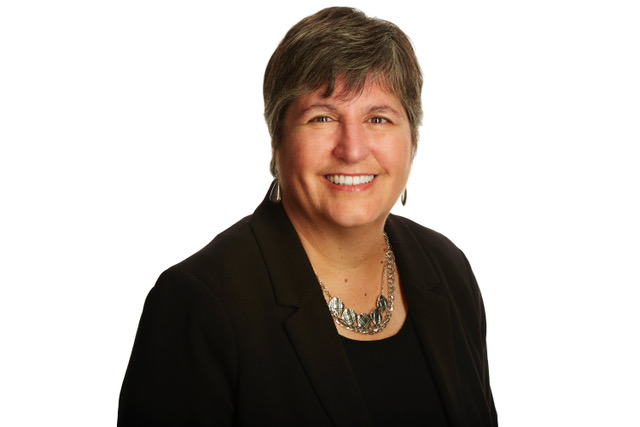
“I have conversations with residents of Ward 4 on a daily basis, and not just during an election campaign. […] Always listening, working to identify and address local issues, making connections and helping residents access services and supports. While the years of elected public service are important, the governance and fiscal responsibilities, it is the every-day conversations and connection to the community that sets my candidacy apart.”
Why do you want to be a city councillor?
I have always worked and volunteered in public service, with vulnerable citizens, families and youth, in the city of Guelph and especially in Ward 4 to create opportunities and to help with unmet needs. As a resident I have had the privilege to participated in city of Guelph consultations to inform and shape our community through priorities and plans. I would like to ensure that city processes and plans meaningfully include neighbourhood residents and individuals with lived experiences so that the city is welcoming to everyone.
I am very pleased with the city’s process in developing the recent Guelph Energy Equity Action Plan and would like to see more of those inclusive processes. For me the development of the Energy Action Plan recognizes that policies do not impact al residents the same way. In this particular case the effects of global warming impact the more marginalized members of our communities with Indigenous Peoples, young people and socially and economically disadvantaged populations being disproportionately affected. The development of this plan through an equity lens puts all people first.
I would advocate that this inclusive process be used for all city consultations and decision making.
What is your background and experience, and how do you think that will serve you as a city councillor?
My personal background is that as a young child I immigrated to Canada from Italy/Malta with my parents. As immigrants my family experienced new-to-Canada settlement struggles like finding employment that fit with their education and qualifications. These early experiences shape my commitment to work with new Canadian families, families struggling to make ends meet and living in poverty.
I have an undergraduate degree from the University of Guelph and graduate studies in Planning, with additional studies in Human Resources, Community Economic Development, Social Planning and Public Engagement. Married with 5 children, two still attached to home.
I have always worked and volunteered on community and public sector issues. The Guelph Youth Music Centre before I had children, Child Care advocacy when I did have children, arts advocacy as a Suzuki String School parent, language education advocacy as a French Immersion parent, and advocacy for student supports as a school board Trustee.
I have worked in adult education, English as a Second Language, as Executive Director of a not-for-profit employment group, on Healthy Community initiatives and community development. I worked extensively with Labour Force Adjustment Committees throughout South West Ontario, this is economic development but with people and skills,.
I ran in the 2006 municipal election and was elected as Trustee to the Upper Grand District School Board. I served for four terms from 2006 – 2022 and held a number of leadership roles including Board Chair, Chair Negotiations Steering Committee, Budget and Audit, Accessibility and Equity, Special Education and Strategic planning.
I bring 16 years of school board and 4 years from this past term on city council of governance and leadership on strategic planning, budgets and audit, and a commitment to fiscal responsibility and long-term financial sustainability.
I am most proud of my responsive volunteer action at the grassroots, especially here in Ward 4 as this is where I see the biggest impact of my efforts for individuals and families. When households struggled with food access during the pandemic I developed a free on-line order and delivery system, established a summer camp following strict public health guidelines so that working families could go to work, and when isolation and food insecurity was on the rise I led the development of a large co-operative garden.
I have conversations with residents of Ward 4 on a daily basis, and not just during an election campaign. This happens at tree plantings, the Fall Fair event, the free recreation programs, and speaking with parents at the splash pad, parks and playgrounds. Always listening, working to identify and address local issues, making connections and helping residents access services and supports.
While the years of elected public service are important, the governance and fiscal responsibilities, it is the every-day conversations and connection to the community that sets my candidacy apart.
Given Strong Mayor Powers, how do you see your role as a city councillor when the mayor can override the will of council with just three votes?
It is my view that the province’s addition of Strong Mayor Powers for the purpose of facilitating housing development has instead created a power imbalance and changed the Mayor’s relationship with city staff, injecting job security fears. My experience this past term has been that Mayor Guthrie has not abused those powers and continued with respectful engagement and dialogue with council members and staff.
We have seen that this has not been the case in some other municipalities.
I see my councillor role as working collaboratively with my colleagues, raising awareness and mutual learning about a particular issue. I also work closely with staff and the community. My hope is that we have a productive council that is able to move forward with decisions.
Affordability is important to a lot of voters, and municipal budgeting can be very difficult. How will you balance the needs of a growing city with the demands for low or zero tax increases over the next term?
There is no golden ticket for this question.
It is not only funding for growth in the city, increasing infrastructure for new development, but also the ongoing maintenance and service delivery costs. The reality is that the city is receiving less revenue. Revenues such as Development Charges that the city collects to pay for infrastructure, parkland acquisition and ongoing maintenance is a sliver of what it was in the past due to provincial changes.
The city’s portion of the property tax levy increase was 3.36% and the remainder was the addition of local boards and services that municipalities are required to fund such as Police and Social Services, for a total property tax levy increase of 7.87%. As our city grows there is the same growth and demand for our Local Boards and Services.
The reality is that the city’s revenue sources are increasingly limited, and we have increasing demands. City council will have to balance and look equitably at what it receives in funding and what projects can be deferred.
Council this past term has done a lot of housing policy, but that hasn’t translated into more shovels in the ground. How will you help close the gap over the next four years?
You’ve heard this before, the city doesn’t build housing.
I would agree that the city has done a lot to ‘cut red tape’ and create the conditions for housing development. I think it is unreasonable to expect that the city and council has any significant ability to adjust the federal, provincial policies or the market levers to impact developers decisions to move forward and put shovels in the ground and build faster.
Council started this last term with a commitment to a provincial housing pledge, we also had a caveat and expectation that the provincial government would provide infrastructure funding, and replace lost Development Charge revenues. There has been limited grant assistance for infrastructure but while the Ontario Big City Mayors have continued to advocate, there has been no replacement for the lost revenues from Development Charges caused by the passing of Bill 23.
I do not agree to increasing financial pressures on the municipality and look to the other levels of government, where taxes are also paid, and the invisible hand of the market to ‘close the gap’.
Aside from the demands for more housing, land use planning also means assuring that there’s enough room to account for growth in business, institutional and commercial land uses, how will you balance all these priorities?
In addition to the city’s housing targets we have an employment target for 2051 of 116,000 jobs. The next phase of the Official Plan update will focus on Employment lands but we are at risk of not meeting our target due to the reduction of Guelph Innovation District employment lands and any additional conversion decisions that may come to council. This is something that planning staff are closely monitoring.
Water availability is a growing concern. How will you ensure that Guelph has the capacity it needs to support this growing city?
We have fully approved development applications that are over 30 years old, with water allocations attached that have not put a shovel in the ground. As a result in 2026 Council approved a ‘use it or lose it’ policy for water and wastewater development project allocations. While the policy timeline is seven years to go from application to building permit, the intention is to push forward development applications. Guelph is becoming increasingly strapped with its water capacity and planning staff continue to monitor the allocations for development.
I would suggest that it is important to watch the provincial pilot transferring water and wastewater decisions and management from the Region of Peel to a newly created dedicated public corporation that will own the infrastructure and provide service. This pilot raises questions of public vs private interest, governance, transparency and accountability to list a few. While there may be some cost savings, there remains a concern for local water resource decision making in the best interest of the public.
Trust in government and institutions is a major issue. How will you keep your constituents well informed about city hall business, and help them feel included when it comes to decision making?
Trust in government and institutions is a real growing concern.
As a current councillor I have organized Townhalls for the Mayor’s Budget and invited the community to come to learn, ask direct questions of staff, the Mayor and your Councillors, and about the city’s priorities and spending.
My style of engagement has been in person, talking to people at events and out in the parks. What I hear from people is that they do not want another website to go to, or another newsletter to fill up their mailbox, and they definitely do not trust AI. I have worked to be out in the community, visible and easy to contact. I am always available to help navigate the city and other systems.
What would you say is *your* issue? What is the one thing you want to talk about on the campaign trail this fall and have a thorough debate about it before this election is over?
While the development of affordable housing is very important, there is also a serious need to protect our stock of low-cost affordable rental housing and advocate with all levels of government for an investment and the immediate development of community public, rent geared to income and supportive housing.
I sincerely respect and appreciate the work that council and city staff have recently undertaken to facilitate affordable housing on three city properties. However, these developments are “affordable” as defined by the province’s Affordable Benchmarks of at least 10% below the average market rent – so approx. $1,253/month for a Studio included in the City’s Affordable Housing Strategy [AI says the Affordable Benchmark is market is now closer to $1,417/month] to $1,881/month for a three bedroom [AI says the Affordable Benchmark is closer to $2,520/month], still out of reach for many young people and families. As a city we need to ensure that there are some housing opportunities even more affordable than this.
In this term I have had conversations with residents whose older, low-cost rental housing has been vulnerable to demolition and redevelopment, renoviction and rent increases. Once again I appreciate the work of council, staff and the encouragement of the community to introduce some retention measures, the Vacant Home Tax, Rental Renovation and Replacement By-laws and I am thankful to our planning staff who are watchful over rental conversions.
High rent costs and low vacancy rates have also contributed to homelessness in our community. This has increased the City’s need to step in and provide additional social service supports to address gaps, such as a Daytime Drop in Space, Youth Emergency Shelter assistance, and Winter assistance to offer temporary accommodation.
While it is true that there is building of new rental units, these have been built with students in mind, at the higher end of the market and at higher rents. There remains a lack of low-cost housing for seniors, accessible units, housing for families and young single adults.
What I would like to discuss is how the city can become further engaged, take on a leadership role and strongly advocate with provincial and federal levels of government for an investment in community, pubic, deeply affordable, rent geared to income housing. This is an investment that was ended by the federal and provincial governments in the early 1990’s and has resulted in families on long wait lists, often for over a decade.
What perspective do you think you will bring to council that is not currently reflected?
This goes back to your first question.
I think that my perspective is informed by the volunteer work that I do in the community and the opportunity for meaningful conversations about living conditions in the city.
Is there anything else you want to tell voters as they make their decision?
Little Known Fact: Our family was used to illustrate a Robert Munsch story ~ ask me some time for the story!

