
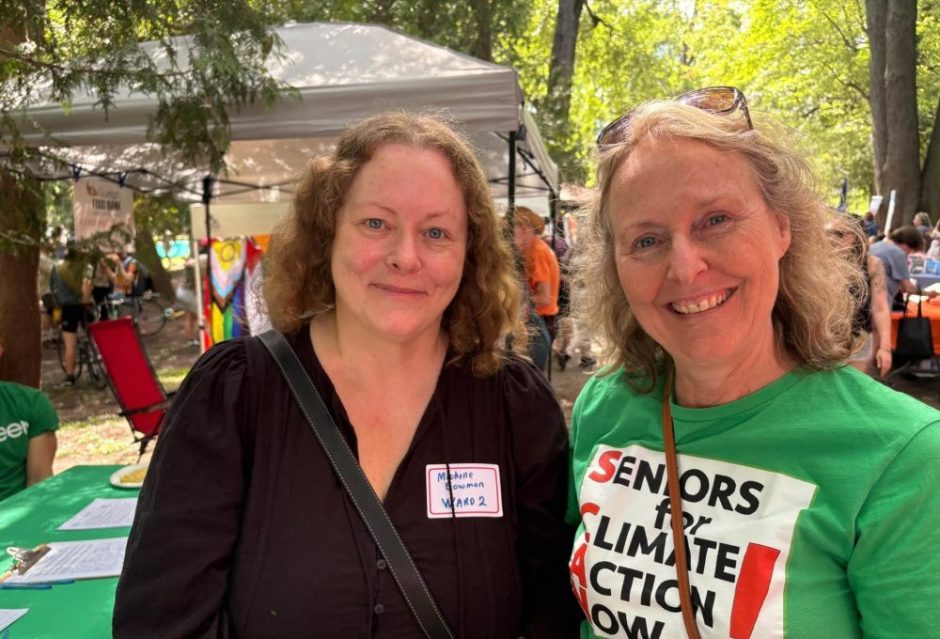
“Representatives on the left and right of the growing political divide can reach consensus. I recognize building consensus will not be easy or sometimes possible, but it happened on council this term and among candidates in this election. Reversing the widening us-versus-them trajectory is worth the effort – Diversity and consensus result in better solutions.”
Why do you want to be a city councillor?
I became an ecologist to help solve current problems by identifying social, economic and environmental relationships and solutions. Ecologists identified these relationships for environmental issues such and acid rain & ozone depletion and we solved the problems.
Our current social, economic and environmental problems all have the same root cause – unequal distribution of limited resources. We know the solution; we just need the political will. For that reason, I can now have a bigger impact as a politician than an ecologist.
#ThinkGloballyActLocally
What is your background and experience, and how do you think that will serve you as a city councillor?
After moving around for school and work, I settled in Guelph 17 years ago for the small-town feel, city amenities and proximity to family. I became involved in politics eight years ago and have volunteered at the municipal, provincial and federal levels of government (See more at http://www.bowman4ward2.ca).
I feel I have enough political experience to know how to get things done on council but not too much; I will still bring new ideas and perspectives. Being a city councillor is a full-time job, and it will be my focus.
Given Strong Mayor Powers, how do you see your role as a city councillor when the mayor can override the will of council with just three votes?
I am optimistic Guelph will elect a mayor that will not use Strong Mayor Powers. Either way, I will help facilitate the relationships and consensus building on council that make Strong Mayor Powers irrelevant.
Affordability is important to a lot of voters, and municipal budgeting can be very difficult. How will you balance the needs of a growing city with the demands for low or zero tax increases over the next term?
There is no silver bullet that will balance the tight city budget, but we can limit property tax levies by examining how each component contributes to our priorities and goals.
We must advocate to upper levels of government for a better deal for cities and to local boards and shared services to help.
We are in affordability crisis and a climate crisis, and it costs more to ignore than to prioritize them.
Municipalities have legislated tools such as increasing revenue (grants, investment income) and modifying tax ratios. I support property tax breaks for small businesses and non-profits over corporations, and for low/fixed income seniors and people on inadequate disability allowances (savings would be passed on to renters).
To get different results we should also try innovative approaches. For example, key performance indicators of whether or not we are on track to meet our strategic goals should guide council budget decisions.
Voters and candidates have proposed many other promising ideas on how to stretch our tax dollars; in collaboration with staff, I look forward to helping to incorporate them into budgeting.
Council this past term has done a lot of housing policy, but that hasn’t translated into more shovels in the ground. How will you help close the gap over the next four years?
Guelph is currently experiencing a modest home “buyers’ market” which should dispel the myth that market supply will solve our housing crisis – people can’t afford to live in Guelph. Building more “affordable homes” as defined by the province will help the top 40% of household wage earners.
We need to return to defining affordable housing as 30% of gross household income as well as return to building social housing that was halted decades ago. Until we pressure upper levels of government to provide truly affordable housing at the scale required, municipalities can apply for grants to build city-owned housing, attract non-profit builders, incentivise other housing models such as co-ops etc.
Aside from the demands for more housing, land use planning also means assuring that there’s enough room to account for growth in business, institutional and commercial land uses, how will you balance all these priorities?
The Employment Land Strategy will be updated during the next term of council. My priorities include incorporating incentives for small businesses such as modified tax ratios and collaborating with upper levels of government to attract green manufacturing jobs.
Guelph needs a new hospital. Although this is under provincial jurisdiction, we can prepare by considering current and future needs, locations within the current city footprint, and setting aside our share of the funds needed.
Water availability is a growing concern. How will you ensure that Guelph has the capacity it needs to support this growing city?
We need to verify current and future supply & demand estimates incorporate up-to-date climate change projections.
Similarly, watermain breaks during severe weather led to increased water use in 2025 so we must ensure our infrastructure is climate change resilient.
Water main inspections and efficiency programs are saving water and should continue/ expand.
Trust in government and institutions is major issue. How will you keep your constituents well informed about city hall business, and help them feel included when it comes to decision making?
Building trust in city government and including voters in decision making is important to me. Ward 2 constituents are currently informed with newsletters, townhalls and on social media platforms, and I would continue these approaches. I also support the idea of including updates with our new water bill.
I have met many seniors at the door this summer who have felt isolated since printed media ended. I would continue to knock on doors to offer printed updates as well as engage more constituents in city government. For those already engaged, I would provide advice on delegating to council and support searchable voting records.
What would you say is *your* issue? What is the one thing you want to talk about on the campaign trail this fall and have a thorough debate about it before this election is over?
A better deal for municipalities – cities are being asked to do more with less and taxpayers are paying the difference in property tax levies. For example, cities are partnering to help build more truly affordable housing with less development charge revenue.
What perspective do you think you will bring to council that is not currently reflected?
Representatives on the left and right of the growing political divide can reach consensus. I recognize building consensus will not be easy or sometimes possible, but it happened on council this term and among candidates in this election. Reversing the widening us-versus-them trajectory is worth the effort – Diversity and consensus result in better solutions.
Is there anything else you want to tell voters as they make their decision?
Guelph is known for its innovators, social & environmental activists, artists, sports teams and more, but many feel we are losing our Guelphness. We can reassert our novelty, empathy, green reputation, creativity and leadership!

