
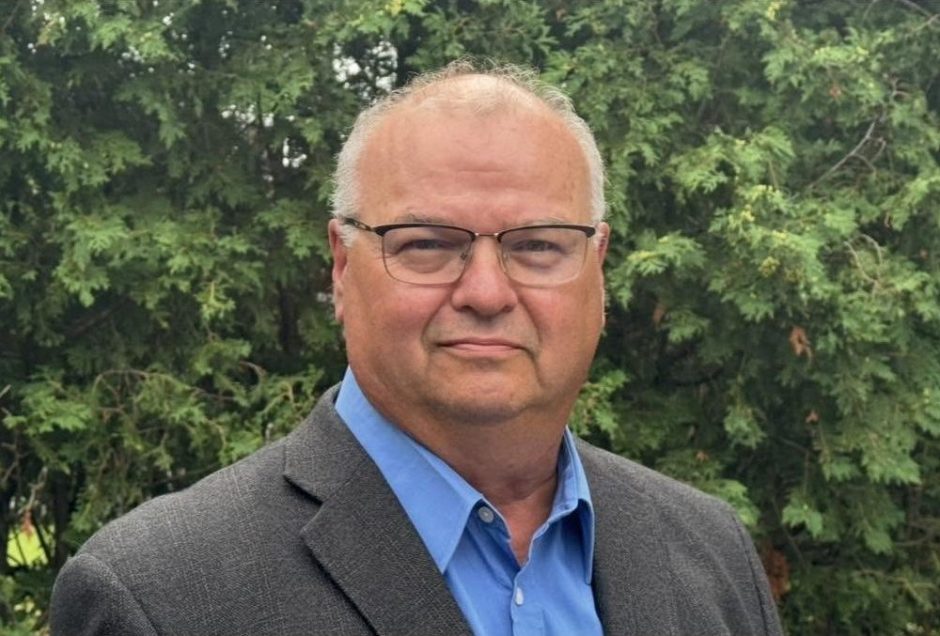
“I’m new to elected office, but I’m not new to serving Guelph. Guelph has given me and my family a great deal over the years, and Ward 4 has been our home for almost three decades. I know this community, I care about its future, and I believe I still have something meaningful to contribute. Representing the residents of Ward 4 would give me the opportunity to continue serving this city. I would be honoured to do it.”
Why do you want to be a city councillor?
Guelph has given me a great deal – a career, a place to raise my family and a community I’m proud to call home.
I’m running because I believe my experience can help Council make thoughtful, practical decisions that deliver results residents can see and feel. That means protecting the services people rely on, ensuring residents pay no more in taxes than necessary to provide them, and continuing to invest responsibly in the future of our city.
I’m new to elected office, but I’m not new to serving Guelph.
What is your background and experience, and how do you think that will serve you as a city councillor?
I spent 34 years with the City of Guelph, culminating in the position of Executive Director of Operations, Transit and Emergency Services and as a member of the City’s Executive Team. Since leaving the City, I have also been asked to assist three other Ontario municipalities during periods of transition.
Unlike a candidate new to City Hall, I understand how complex a municipal organization is and have firsthand insight into the many services it provides to the community. I believe that experience positions me to ask insightful, and at times difficult, questions that can further Council’s understanding of an issue before it makes a decision.
I also understand the respective roles of Council and staff. Council establishes policy, priorities and service expectations and approves the resources necessary to deliver them. Staff is responsible for delivering those services effectively, efficiently and consistently, with Council holding the CAO accountable for the administration’s performance.
I believe my ability to understand the administrative perspective is a strength I can bring to the Council table.
Good decisions require balancing the needs and expectations of residents with the operational realities of delivering municipal services, including staffing, funding and organizational capacity. Understanding those realities doesn’t mean automatically agreeing with staff; it can help me ask better questions, examine alternatives and contribute to better-informed decisions.
Given Strong Mayor Powers, how do you see your role as a city councillor when the mayor can override the will of council with just three votes?
I support Strong Mayor powers. The mayor is the only member of Council elected by voters across the entire city, and I believe it is reasonable that the office carries additional authority and responsibility as a result.
That doesn’t diminish the role of councillors. Each councillor is elected to represent their ward and brings the needs, concerns and perspectives of those residents to the Council table. I would expect the mayor to work collaboratively with Council and seek consensus whenever possible. In my view, that remains the best way to govern.
At the same time, the Province has deliberately granted the mayor specific additional authorities. Those powers should be exercised thoughtfully and selectively, but Council should respect the lawful authority of the mayor to use them.
There may be occasions when I disagree with how that authority is exercised. My responsibility in those circumstances would be to ensure the views and interests of Ward 4 residents, as well as my own reasoning, are clearly presented and considered before those powers are exercised.
Affordability is important to a lot of voters, and municipal budgeting can be very difficult. How will you balance the needs of a growing city with the demands for low or zero tax increases over the next term?
It is an unfortunate reality that costs increase. We all face that. It is easy for a candidate to promise to hold the line on taxes because that is what many voters want to hear. But we also need to be clear about what such a promise means. Providing the same services at the same levels cannot cost the same when the costs of delivering those services have increased. If those increases cannot be offset, a commitment to an arbitrary tax cap ultimately means reducing or eliminating services.
My approach would be threefold.
First, my commitment is to ensure residents pay only those taxes necessary to deliver Council-approved services effectively, efficiently and consistently across the community. That means understanding the cost drivers behind our services and both collaborating with and challenging staff about assumptions, alternatives and opportunities to reduce the tax burden while maintaining service levels. I expect administration to continuously pursue efficiencies. Opportunities can emerge through changes in technology, equipment, service-delivery methods, partnerships or available funding.
Second, if it is the will of Council to limit taxes to a level that requires reductions in services or service levels, I believe residents should understand those consequences and be consulted before those decisions are made.
Third, even in a constrained budget environment, we must continue positioning Guelph for the future. I will not commit to an arbitrary amount, but I believe we need to continue investing responsibly so that the City is prepared for growth and the challenges ahead.
Council this past term has done a lot of housing policy, but that hasn’t translated into more shovels in the ground. How will you help close the gap over the next four years?
There has been significant policy development and funding at all levels of government intended to accelerate housing construction. Guelph Council has taken steps to position the city for growth through zoning changes, process improvements and incentives. Yet housing starts have not accelerated as intended. So where is the disconnect?
Housing construction is an outcome that requires an effective relationship between the City and the development industry. Each has a distinct role to play. When the conditions make a project economically viable, developers have a strong incentive to build. As a councillor, I would want to better understand the bottlenecks preventing approved housing from actually getting built and focus the City’s efforts and resources on those barriers it can influence. We need to identify the constraint before prescribing the solution.
Increasing the range and supply of housing, including rental housing, is an important part of addressing affordability. That includes appropriate intensification within existing neighbourhoods, such as additional residential units and basement conversions, while making appropriate use of existing municipal infrastructure where capacity permits.
But increased market supply will not make housing affordable for everyone. There are residents who cannot afford housing even at definitions of “affordable” used by government. Meeting those needs requires targeted affordable and supportive housing initiatives and collaboration among the City, Wellington County, senior governments, non-profit organizations and the private sector.
I would measure our success not simply by policies, funding announcements or the number of units approved, but by whether housing is actually being built and whether it is meeting the range of housing needs in our community.
Aside from the demands for more housing, land use planning also means assuring that there’s enough room to account for growth in business, institutional and commercial land uses, how will you balance all these priorities?
Council needs to make land-use decisions based on what is best for the city and its residents over the long term. Development decisions can shape a community for generations, and once land is developed, reversing that decision can be extremely difficult.
Housing is clearly a priority, but a growing city also needs land for employment, businesses, institutions and the services that support a growing population. When Council is asked to change an established land use, I would want to understand what we gain, what we give up, and the consequences of both approving and not approving the change.
That means considering how a proposal aligns with the City’s Official Plan and other long-term objectives, the effect on future employment or commercial land, the infrastructure required and whether existing capacity can accommodate the development. If additional infrastructure is necessary, we also need to understand how it will be financed. Public input is an important part of that assessment.
Our Official Plan and established policies should guide these decisions, but circumstances change. At times, revisiting an established policy or position may be necessary when the evidence demonstrates that doing so is in the long-term interests of the city.
Water availability is a growing concern. How will you ensure that Guelph has the capacity it needs to support this growing city?
Guelph is unusual among larger Ontario cities because we rely primarily on groundwater. That makes protecting and planning for our water supply particularly important as the city grows.
The City is already working to increase capacity through conservation, protecting and maximizing existing groundwater sources, and developing additional sustainable sources. I support that work. Growth and water-supply planning need to remain closely connected. We should not plan for growth without understanding how the water and other infrastructure necessary to support it will be provided and financed.
Developing major infrastructure can take many years, so Council also needs to look beyond the immediate planning horizon. We should continually understand the capacity and limitations of our existing system, what options may be available in the future, what they would cost and when decisions may need to be made. We should not wait until we are approaching a constraint before beginning that discussion.
If Guelph eventually reaches a point where existing and potential water sources cannot sustainably accommodate further growth, significant decisions about future growth and water supply would be required.
Those decisions would have substantial financial and long-term implications and would require extensive public involvement.
What would you say is *your* issue? What is the one thing you want to talk about on the campaign trail this fall and have a thorough debate about it before this election is over?
The question I want residents asking during this election is: Are we receiving the value, service and accountability we should expect for the taxes we pay?
This is about more than whether taxes are too high or too low. When residents are asked to pay substantially more, they should understand why, what services and service levels those taxes support, and what outcomes they should expect in return.
My commitment is not to an arbitrary tax number. It is to ensuring that Council-approved services are delivered effectively, efficiently and consistently, and that Council can demonstrate the value residents are receiving for the taxes they pay.
There will be times when additional investment is necessary to maintain services or prepare Guelph for the future. If the need is demonstrated and the value is clear, I would support it – even though, like everyone else, I would prefer not to pay more.
Ultimately, I want residents to be able to look at their municipal tax bill, consider the services they receive in return and conclude: yes, I am receiving value for the taxes I pay.
What perspective do you think you will bring to council that is not currently reflected?
The perspective I would bring comes from having spent much of my career responsible for turning Council decisions into municipal services, first in Guelph and subsequently through my work with three other Ontario municipalities.
That experience has given me an understanding of how decisions made at the Council table translate into budgets, operations and ultimately the everyday experience of residents. Working in other municipalities also gave me the opportunity to see different organizations and approaches to delivering municipal services.
As a councillor, I would bring that experience to evaluating the professional advice provided by staff, asking informed questions and understanding the implications of the choices before Council. But my responsibility would now be different. I would bring that perspective together with what I hear from Ward 4 residents – their needs, concerns and the outcomes they expect from their City – and exercise independent judgement.
I believe that combination of operational understanding and representation of Ward 4 residents is a perspective and strength I can bring to the Council table.
Is there anything else you want to tell voters as they make their decision?
I’m new to elected office, but I’m not new to serving Guelph.
Guelph has given me and my family a great deal over the years, and Ward 4 has been our home for almost three decades. I know this community, I care about its future, and I believe I still have something meaningful to contribute. Representing the residents of Ward 4 would give me the opportunity to continue serving this city. I would be honoured to do it.

