
Just a few more meetings to go before council and council watchers can enjoy summer vacation, but there’s still a lot of important stuff to wrap our heads around before that needed time off. At this month’s Committee of the Whole meeting on Wednesday there was new moves to protect heritage and make an impact on light pollution, but the big news was around whether we should take park land and use if for housing. Here’s the recap…
Committee of the Whole Meeting – July 3
It was a packed agenda at July’s Committee of the Whole meeting; some items were completed smoothly, while others got terribly complicated.
Item #1: Heritage Minimum Standards – Property Standards By-law Amendment. This bylaw establishes what property owners of buildings designated for heritage protection must do in order to keep things in good repair and avoid demolition by neglect, especially if a property is vacant. The delegates on the matter thought that this was good start, but they were also concerned about protecting buildings that are only listed on the heritage registry not to mention the heritage character of whole neighbourhoods.
Committee had some of those same concerns, and there was also some discussion how much protection the City can provide before it becomes an administrative burden. There were also a few questions raised from one of the delegations about a registry of vacant buildings, and the possibility of a vacancy tax, but that work is apparently going to be part of the Affordable Housing Strategy update later this year. The recommendation was approved.
After that, committee rather swiftly approved the renewal of three leases for the Guelph Youth Music Centre, the Royal City Tennis Club Corporation and the Navy League Guelph Branch after some confusion about the length of the term with the administration of the GYMC.
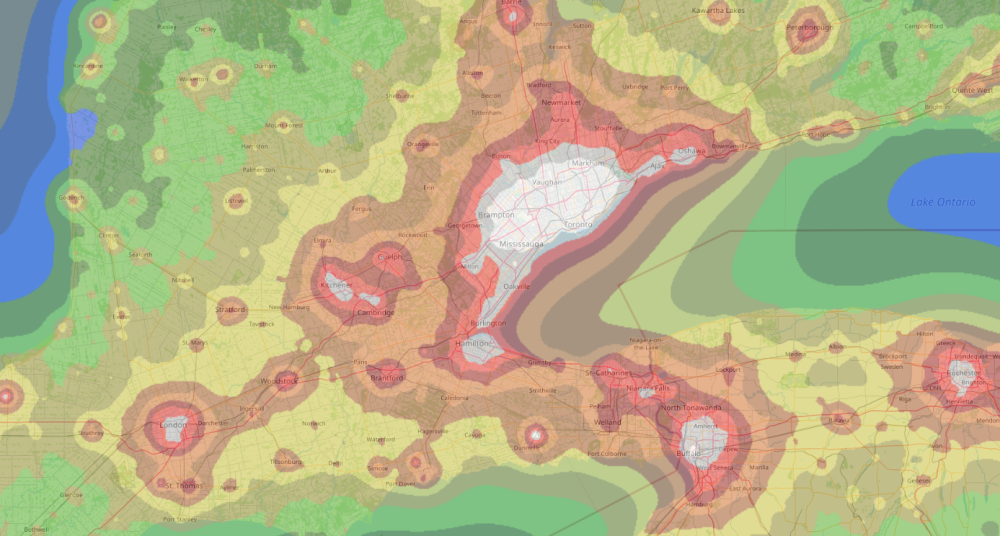
There was one delegate for the Light Pollution By-law Review who was very much in favour of making changes to mitigate light pollution, specifically the light show coming out of the backyard of his neighbour across the street. Committee was sympathetic, but cautious. The bylaw will only stop light trespass from one property to another and offer guidelines to property owners about how best to reduce light pollution more generally, so they didn’t want to give the public the idea that all light pollution issues will soon be coming to an end.
On that point, a line in the staff recommendation was amended to read “regulating light generated from fixtures…” instead of “prohibiting light generated from fixtures…” The amended recommendations were approved.
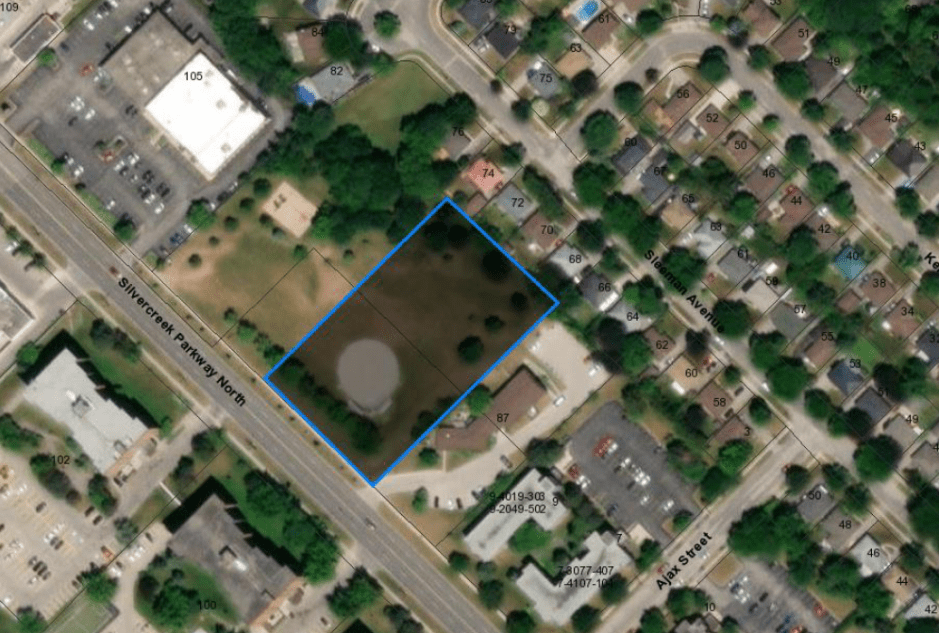
 Then it was time to tackle the meeting’s big item, the Mayoral Direction B3 for Strategic Real Estate Partnerships on Underutilized City-Owned Assets. The assets in question were a 1.3-acre portion of Hugh Guthrie Park and a 1.5-acre portion of Sleeman Park that staff examination determined could be separated off and used to build high density affordable housing.
General Manager of Economic Development and Tourism James Goodram said that he and other staff members didn’t like the idea, but the original mayoral directive to look at parking lots went no where fast due to factors like potential contamination and buried infrastructure that would have to be moved. Delegates were split between housing advocates looking at committee to seize an opportunity, and community members worried about lost parkland and putting additional strain on water resources.
When it was committee’s turn for feedback there was a lot of concern about giving up parkland for housing, especially when the City is not getting the parkland targets it wants, and the tools for getting more parkland have been scaled back by the provincial government. There were also concerns about how work on identifying surplus assets was only partially completed, and why no one was asking how to activating park assets if they’re underperforming, but Mayor Cam Guthrie tried to slow council’s roll before they got too far ahead of the main recommendation and take receipt of the report.
The vote to receive the report barely passed on a thin 7-6 tally. Councillors Phil Allt, Christine Billings, Linda Busuttil, Leanne Caron, Erin Caton, and Michele Richardson all voted against. Allt said that this was a dangerous precedent that sent a message that the City was having a “fire sale” on public land, while Caton noted that there was still a lot of missing information.
Next, Councillor Ken Yee Chew moved two recommendations, one to use $400,000 from the Housing Accelerator Fund money to initiate work to prepare the portions of Sleeman and High Guthrie parks, and the second to have staff prepare a Request for Expressions of Interest. It looked like no one council wanted to second this direction until Councillor Dan Gibson came on to co-sign at the last minute. The debate continued.
Many committee members struggled with the incomplete information in the original report, not only from the analysis of City-owned propertis but the yet-to-begin expanded examination of land owned by the school boards, the County of Wellington and the University of Guelph. There were also concerns about assuring the long-term affordability of the units, working with private developers instead of focusing on social housing, and sacrificing parkland for housing generally. An amendment to make the motion more palatable by explicitly mentioning government- owned or co-operative housing failed 2-11.
Chew said it was important to look at the merits of what was being proposed regardless of how council personally felt about it. It was an opportunity to continue a conversation around revitalising spaces and developing more houses, as well as exploit the best of both worlds with a public and private partnership. He also noted that these areas are in mature neighbourhoods on transit routes with many nearby amenities, and an ideal option for some affordable housing.
Despite that last pitch, Caron made a motion to defer any action on the report until after the Housing Affordability Strategy is complete, and that deferral was approved 10-3 with Guthrie, Gibson and Chew all against.
After a break, committee swiftly approved the new Lobbyist Registry By-law and two additional motions from Councillor Dominique O’Rourke. Her motions petitioned the Government of Ontario to change the Municipal Elections Act so that street name, number and postal codes don’t have to be listed on the City’s website but the information will be available in a physical copy at City Hall for the purposes of verification by election officials in the case of financial donors.
Click here to see the complete recap of the meeting.

