
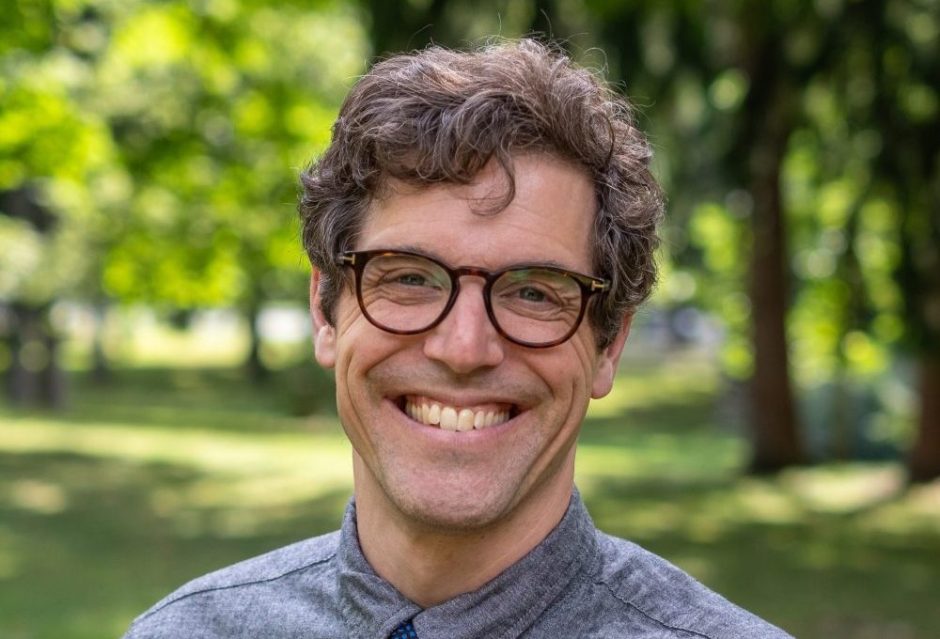
“Having attended Guelph schools from kindergarten to high school, and with my son presently enrolled in grade 1 in a UGDSB Ward 2 school, I’m passionate about working towards improving the quality, equity and accessibility of Guelph’s schools.”
Why do you want to be a school board trustee?
Having attended Guelph schools from kindergarten to high school, and with my son presently enrolled in grade 1 in a UGDSB Ward 2 school, I’m passionate about working towards improving the quality, equity and accessibility of Guelph’s schools.
What’s your background and experience, and how do you think that’s relevant to the job?
I have a strong background in education. I earned a PhD in education from the Ontario Institute for Studies in Education at the University of Toronto, I taught undergraduate students as part of my MSc work at York University, and I coordinated and taught the junior (ages 3-8) math and reading program at a Kumon centre in Toronto for almost three years. This academic and practical work has afforded me a comprehensive understanding of curriculum design, teaching approaches, inclusivity in education, and barriers to learning. I’m honoured to have been employed in a hospital, in classrooms, in laboratories, on film sets, in gardens, and in restaurants throughout my life, so I understand and appreciate the many educational pathways that students can take. Also, part of my current role as the manager of a $1.9M, 3-year research project at McMaster University is to lead our patient engagement effort, which involves meeting with people affected by serious pregnancy complications and bringing their ideas and concerns to the leads of the project – so I believe bringing the needs of Guelph’s community to the UGDSB is a good fit with this skill-set.
How do you see your role as a trustee? What are your main responsibilities?
School board trustees are responsible for setting policy, voting on the yearly budget, appointing and overseeing the CEO, asking pointed questions in meetings, and communicating the concerns of the public to the UGDSB. This last point is now even more important, given the changes to the school board trustee role after Bill 101 was passed by the provincial government this past year, which limits some of the powers of trustees. Now more than ever, we need school board trustees who are approachable, who are good listeners, and who faithfully represent the voices of the communities they serve to their school boards.
Like many governments and boards, school trustees are facing a budget crunch. Without an increase in provincial funding, how do propose to ensure that your board balances student needs with fiscal prudence?
Any decisions around costs savings must primarily be judged by their impact on students, particularly those who most need supports. Every contentious budget line warrants questions around what it costs, who it serves, what evidence shows its necessity, and what the consequences of reducing it would be. Where reductions are unavoidable, I would favour phased changes over abrupt cuts to avoid destabilizing schools. That said, I would use every power I have to advocate strongly and collaboratively for funding that reflects our community’s actual needs, as revealed by speaking with Guelph families, school staff, and our municipal partners.
How will you support teachers and education workers as they begin contract negotiations this fall? How will you support parents concerned about labour disruption?
I am committed to supporting a fair, respectful, and timely bargaining process that keeps students in school and avoids disruption if possible. Nonetheless, teachers and education workers are a critical part of the fabric of our community, and they deserve our support. I would thus advocate for the province to bargain in good faith, on a realistic timeline, and with the resources that are necessary to reach agreements without prolonged uncertainty. Having said that, it’s important to be clear that bargaining is governed by provincial law, and trustees have very limited influence on outcomes. Still, something trustees can do (and should do) in these cases is communicate clearly and honestly with parents and families in an effort to minimize negative impacts on students.
Guelph is a rapidly growing town, how will you ensure that the school system is able to grow and accommodate the new students and the changing demographics?
Guelph’s growth affects many elements of our system, including class sizes, access to French Immersion, school transportation, special education support, and school catchment areas. Ideally, the UGDSB is effectively planning ahead for this growth rather than simply reacting once schools are already over capacity. We should be making sure that this planning aligns with Guelph’s official plan, and with expected housing construction across our city. We also need to be submitting clear, evidence-based requests to the province for additional capital funding to support the construction of new schools and school additions in high-growth areas of Guelph.
Absenteeism seems to be a growing problem in Ontario high schools, what are the ways that you can support teachers and administrators to assure that students are getting the proper instruction?
As I understand it, student absenteeism is often a symptom of other problems, rather than a root problem itself. For instance, students may be missing classes because they’re falling behind academically, because of anxiety or other mental health challenges, because of transportation issues, or because they don’t feel connected or safe at their school. I feel strongly that we have to be very careful with our response to absenteeism, or else we risk pushing our most vulnerable students further away. We need to notice problematic attendance patterns early, and work with parents and families in supportive and non-judgmental ways. We should also make sure teachers aren’t left to try to solve these problems alone, and ensure that they have manageable attendance processes. I feel that schools should communicate attendance expectations clearly to students and families, while promoting the known value of consistent schooling in terms of long-term student success.
School safety is a big concern, from behavioural issues to school resource officers. How can schools be safe places for learning while also not making it feel like kids are learning in a security state?
I believe students can’t learn effectively if they don’t feel safe, and teachers can’t do their jobs effectively or sustainably if they’re working in unsafe schools. When it comes to safety, prevention is our first line of defense, and that means prioritizing inclusive school climates, consistent and concerted efforts to reduce bullying in schools, mental health supports for students and staff, and early intervention when a student’s behaviour is harming others. That said, we have to be very clear that serious harm, harassment, threats and violence will be taken with the utmost seriousness, and will have real consequences. And I don’t think that teachers should be left alone to deal with these complex situations – they need the support of the entire school system to effectively deal with safety concerns. In cases where police are involved in managing an incident, officers’ presence in schools should be minimally disruptive and transient, with their role being confined within the boundaries of acute emergency response.
If you get elected to be a trustee, and considering the increase in provincial influence, do you think you will serve a full four year term?
At present, this is a very difficult outcome to predict – but it is my sincere hope that the province will allow all school board trustees to serve their full four-year terms.
Let’s say I don’t have kids, and thus no proverbial “skin in the game” when it comes to my local school, why should I care about who’s my school board trustee?
Whether or not Guelph citizens have children of their own attending UGDSB schools, we all have “skin in the game” when it comes to the quality of our community’s schooling – after all, today’s students are tomorrow’s neighbours, employees, caregivers, and leaders. High-quality schooling supports strong communities, a capable and nimble workforce, compassionate and excellent caregivers, and leaders who are knowledgeable, innovative and courageous. Healthy schools are a major part of what makes a city a place in which people want to live – a place where families, communities, and businesses thrive. It’s critical to remember that school trustees aren’t just representatives of parents; they’re elected representatives of our entire public – including seniors, renters, employers, and residents without children. Guelph deserves schools that function effectively. Your vote for school board trustee is crucial to making that happen.

