
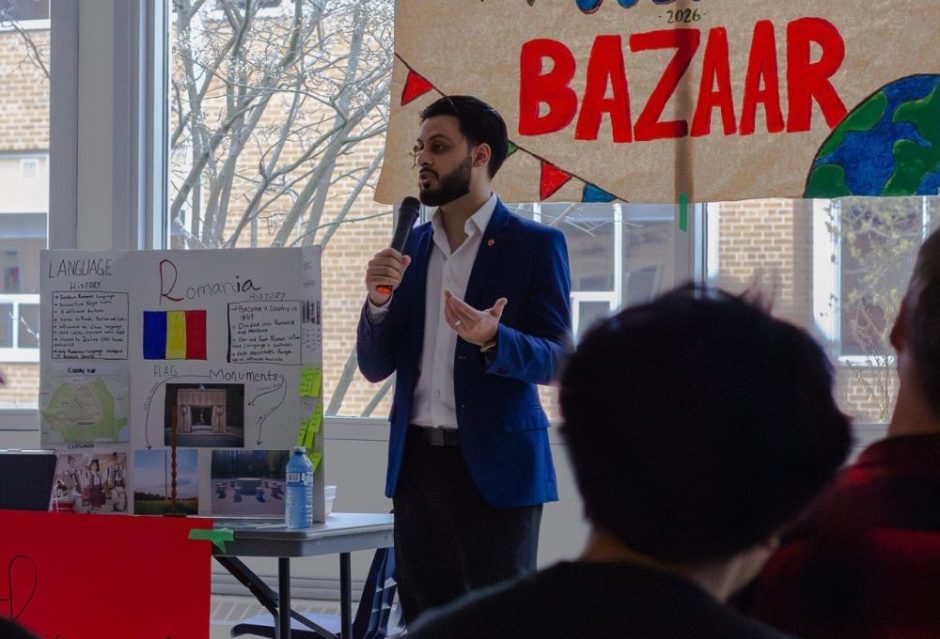
“If elected, I’ll show up, listen to residents and do my best to make sure people feel like they have someone at City Hall who actually cares about their concerns. At the end of the day, I’m running because I love Guelph and I want to help make sure it remains a place where it’s people can afford to live, build a career, raise a family and be proud to call home.”
Why do you want to be a city councillor?
I’ve always been a firm believer in public service and being there for your community. A big part of why I’m running is because I genuinely enjoy helping people. My background in customer service, local community service and politics has taught me how important it is to listen to people, understand what they’re going through, and help find a solution. I think that’s a big part of what being a good City Councillor is about.
City Council has the ability to make a real difference in people’s everyday lives. Whether it’s the services we rely on, how we spend our tax dollars, or the challenges our neighbourhoods are facing, there’s a lot we can do at the local level. I’m also someone who believes strongly in diplomacy. I don’t think you get things done by constantly fighting with people you disagree with. I believe in working with other councillors, finding common ground and actually getting things done for our residents.
I also understand what a lot of Guelph families are going through because I have lived it myself. I grew up here with my mom, who is an ECE at Ken Danby and my two younger brothers. I went to John F. Ross and then the University of Guelph, where I earned my Honours degree in Political Science. I even ran to be Guelph’s MPP in last years Provincial Elections!
Growing up in a lower income family, I learned pretty early how important it is to stretch a dollar as far and wide as possible. I know what it’s like to have to think carefully about where your money is going and I completely understand why rising costs are making things harder for so many people.
That’s a big reason why I want to bring my experience in local politics together with that personal perspective. I’ve spent years learning how local government and politics work, but I’ve also been on the other side of the table as a resident trying to make ends meet.
At the end of the day, I’m running because I care about Guelph. I want to be someone residents can actually reach out to when they have a problem, someone who listens and someone who works with others to find solutions. I think we can do a lot of good at City Council if we put the community and its needs first!
What is your background and experience, and how do you think that will serve you as a city councillor?
I’ve been involved in politics and community work for several years, but I’ve always believed public service shouldn’t start just because you’re running for office. I’ve volunteered with and supported organizations like FDNGGH, FCSGW, the Children’s Foundation, Guelph Food Bank, Rotary, RCM and the Multicultural Festival. I’ve also worked on municipal, provincial and federal campaigns, giving me the opportunity to meet people from all walks of life and hear directly about the issues affecting our community.
Last year, I ran for MPP in Guelph in the 2025 provincial election, where I was the youngest candidate on the ballot. I was also the first political figure in Guelph to publicly endorse the Urban National Park, which I continue to proudly support.
I think I bring a mix of political education and practical community experience along with the various customer service, sales and administrative roles I have worked throughout my professional career. I understand how government works, but I have also spent years listening to residents and learning what matters to them.
I’m proud of my ability to bring people with different perspectives together. Affordability, property taxes, basic services, roads and public safety aren’t just young people’s issues. I hear the same concerns from families and seniors.
I want to bring that experience, along with a collaborative and non partisan approach, to City Council.
Given Strong Mayor Powers, how do you see your role as a city councillor when the mayor can override the will of council with just three votes?
I think strong mayor powers create a different dynamic for Council and councillors will have to be more engaged, informed and willing to work across the table.
I do have concerns about the province giving mayors additional powers that can change the balance between the mayor and Council. Councillors still need to be able to advocate for their residents and scrutinize decisions carefully. At the same time, I don’t think these powers are inherently bad in every circumstance. If Council is deeply divided and stronger mayoral authority can help move significant funding, resources or a project forward that genuinely benefits Guelph residents, I would not be entirely against.
Ultimately, my role would be to understand the issues, listen to residents, question proposals and work with the mayor and fellow councillors to find the best possible outcome. I’m not interested in creating unnecessary conflict with the mayor, but I’m also not interested in simply going along with something because the mayor supports it.
As someone who values diplomacy and collaborative team building, I would work to build support where I can, speak up when I disagree and make sure Ward 1’s interests are represented regardless of who holds the mayor’s office.
Affordability is important to a lot of voters, and municipal budgeting can be very difficult. How will you balance the needs of a growing city with the demands for low or zero tax increases over the next term?
Affordability has to be at the centre of how we approach the city’s budget. I’m not going to promise to lower your property taxes, because anyone who makes that promise is either misleading residents or does not understand municipal finances. The city faces real costs and responsibilities and responsible leadership means being honest about those realities.
My focus would be on providing transparency when it comes to spending. I want to make sure that we’re getting value for every dollar and prioritizing the services residents rely on most. That means better planning, timely infrastructure investments and making sure growth is actually keeping pace with the services and infrastructure our city needs.
Unfortunately, we are no longer a small town. We are a growing city of close to a 160,000 people. I firmly believe that we need to grow our tax base and local economy rather than continually putting more of the burden on existing residents. Supporting responsible development and local businesses can help create job opportunities while making our tax system more sustainable.
Furthermore, I believe it is extremely important to work closely with all levels of government ensuring continuous investments to our city and its residents. This will help keep our taxes stable and predictable!
Ultimately, I want residents to know where their money is going and why. I’m not going to promise that every budget can avoid a tax increase, but I will push for a budget that is reasonable, transparent and focused on delivering value for residents while preparing Guelph for responsible growth.
Council this past term has done a lot of housing policy, but that hasn’t translated into more shovels in the ground. How will you help close the gap over the next four years?
I think we need to focus less on how many housing policies we can pass and more on whether those policies are actually putting shovels in the ground.
We need more options for young people and middle class families, including gentle density housing that gives people more attainable options without simply building more towers. I’d also like to see smarter neighbourhoods where you have grocery stores, parks, schools, transit and other everyday amenities nearby. People shouldn’t have to drive across the city just to pick up groceries.
I also think we should look at incentives for builders and contractors who finish projects on time and do them properly. If someone consistently delivers quality projects without unnecessary delays, there should be a reason for them to keep doing that. At the same time, we need to look at where red tape and unnecessary delays are holding projects up.
Growth also needs to come with the infrastructure to support it. Roads, transit, parks, water and other services need to keep up.
At the end of the day, I want us to judge our housing policies by what actually gets built. We need to build more, but we also need to build smarter and make sure Guelph remains a city where young people, families and existing residents can afford to live.
Aside from the demands for more housing, land use planning also means assuring that there’s enough room to account for growth in business, institutional and commercial land uses, how will you balance all these priorities?
I think we need to focus less on how many housing policies we can pass and more on whether those policies are actually putting shovels in the ground.
We need more options for young people and middle class families, including gentle density housing that gives people more attainable options while respecting existing neighbourhoods and without simply building more towers. I’d also like to see smarter neighbourhoods where you have grocery stores, parks, schools, transit and other everyday amenities nearby. People shouldn’t have to drive across the city just to pick up groceries.
I also think we should look at incentives for builders and contractors who finish projects on time and do them properly. If someone consistently delivers quality projects without unnecessary delays, there should be a reason for them to keep doing that. At the same time, we need to look at where unnecessary red tape and delays are holding projects up.
Growth also needs to come with the infrastructure to support it. Roads, transit, parks, water and other services need to keep up. As I mentioned before, we are no longer a small town but a city of close to 160K people. We need to desperately change our mindset on how we grow before it’s too late!
At the end of the day, I want us to judge our housing policies by what actually gets built. We need to build more, but we also need to build smarter and make sure Guelph remains a city where young people, families and existing residents can afford to live.
Water availability is a growing concern. How will you ensure that Guelph has the capacity it needs to support this growing city?
Water conservation is always going to be an important part of making sure Guelph has enough water for a growing city. Expanding greywater reuse rebates would be one practical way to help reduce individual water use and take some pressure off our system.
I also think we should look at more innovative ways to protect our water supply. Expanding digital twinning to our stormwater system could help us better understand flooding, groundwater recharge and how future growth could impact our water system. We already use these kinds of tools to track things like urban tree cover and our water system, so I don’t think it’s a stretch to apply them more broadly.
Beyond conservation, I think we should continue looking at developing existing test wells and treatment capacity at Dolime as another potential way to strengthen our water supply.
We also need to be careful about how new industries use our water. I would support a temporary pause on new data centres until provincial regulations catch up with the needs of Guelph ratepayers. At the very least, any future project should have closed loop cooling so we aren’t putting unnecessary pressure on our water supply.
For me, it’s about conservation, innovation and making sure we plan ahead rather than waiting until capacity becomes a crisis.
Trust in government and institutions is a major issue. How will you keep your constituents well informed about city hall business, and help them feel included when it comes to decision making?
I think residents deserve a councillor who is accessible and engaged. I’d like to hold semiannual town halls or community meetings where residents can ask questions, raise concerns and hear directly about what’s happening at City Hall. I’d also make it easy for people to get information from me and respond when they reach out.
I’ve heard a lot of frustration about councillors being absent or not being engaged enough. One Guelph councillor only showed up for around 3/4 of council votes last term. I’d get fired if I only showed up for 3/4 of my job, whether that’s the work I’m doing now to stay afloat or my job with the city’s Recreation Department, which I’ve taken a leave of absence from for the election. Residents deserve that same level of commitment from their councillor.
I also think transparency means properly scrutinizing how the city does its work. The recent concerns around downtown construction and patio space are a good example. We shouldn’t just ask who made the mistake after the fact. We should ask why it wasn’t caught earlier.
Residents should feel like City Hall is working with them, not behind closed doors. By implementing a service approach, I want to keep people informed, listen and make sure they have a real voice in decisions affecting their community.
What would you say is *your* issue? What is the one thing you want to talk about on the campaign trail this fall and have a thorough debate about it before this election is over?
I have 3 issues that I care deeply about. Aside from affordability, which I’ve talked about quite a bit already, I think it’s safe to say the Urban National Park is the other issue I’ve been most focused on when it comes to Ward 1.
I championed the Urban National Park during the 2025 provincial election and was the first political figure in Guelph to publicly support it. I saw the potential long before it became an election issue. Whether it’s a tourism destination, movie set, or a hub for environmental research, education and conservation, I think it could be a real gamechanger for Ward 1.
We need more opportunities for people to build a life here. I know how difficult it can be to continue calling Guelph home when good opportunities aren’t keeping pace with rising costs. I want to see a city where young people, families and seniors can afford to stay, work and build their future here. If trends continue to head where they are right now, we will see a larger number of residents leaving to find other alternatives.
Finally, our road infrastructure is another big issue for me. I drive them every day and I’ve personally had broken struts and other damage to my car from dealing with some of our roads, costing me over $1800 to repair. With traffic at an all time high, it should never take me 30 mins to get from the East End to Costco. Residents shouldn’t have to worry about whether driving around their own neighbourhood is going to damage their vehicle or that a simple trip across the city is going to take forever. Which is why we need to invest in growing our current road infrastructure alongside smooth and frequent public transit which can help keep more cars off the roads and improve accessibility!
What perspective do you think you will bring to council that is not currently reflected?
I think I would bring a fresher and more diverse perspective to Council, but more importantly, I bring a perspective shaped by actually growing up here.
As I mentioned earlier, I grew up in a lower income family with my mom and two younger brothers and that has had a big impact on how I see our city. I know what it means to stretch a dollar and I understand why rising costs, property taxes and the lack of opportunities can make it difficult for people to build a life here. At the same time, growing up in Guelph has given me a real appreciation for the people and community that made this city home for me.
I also bring experience that allows me to connect with different groups. As a younger graduate, I understand some of the challenges facing students and young people. As an immigrant myself, I understand some of the pressures that new Canadian families can face.
As a newlywed, I’m also thinking about the future I want to build. I want to choose Guelph as the place where my spouse and I build a life and eventually raise a family. That makes issues like affordability, opportunity and quality of life deeply personal to me.
I think that combination of experiences allows me to offer a different perspective to Council while still understanding that I’m there to represent Ward 1 that works for every neighbour!
Is there anything else you want to tell voters as they make their decision?
If there’s one thing I’d want voters to know, it’s that I’m not running because I think I have all the answers. I’m running because I care deeply about this city and I’m willing to listen and put in the work.
Guelph gave my family an opportunity when we were starting with nothing but 3 suitcases and I’ll always be grateful for that. This is the city where I grew up, went to school, built friendships, got married and now hope to build a future. I want other families to have that same opportunity.
I’m also not someone who believes you have to agree with me on everything to have a conversation. I want to represent people across Ward 1, regardless of their background, age or political beliefs.
If elected, I’ll show up, listen to residents and do my best to make sure people feel like they have someone at City Hall who actually cares about their concerns.
At the end of the day, I’m running because I love Guelph and I want to help make sure it remains a place where it’s people can afford to live, build a career, raise a family and be proud to call home.

