
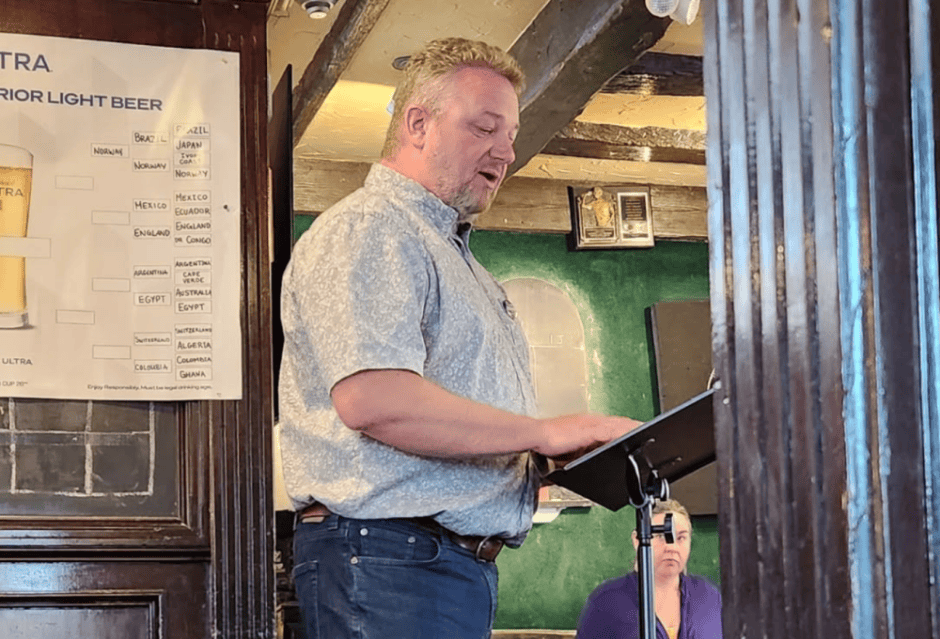
“I am not a typical politician. I am a doer. Throughout my career, I have brought people together around difficult challenges, found resources, built partnerships and turned good ideas into real projects and results. […] I am not running because I want to be a politician. I am running because I believe Guelph has enormous potential, and I want to help bring people together to make good things happen on your behalf.”
Why do you want to be a city councillor?
I care about Guelph and want to do what I can to help this city navigate the difficult future ahead. There are many global issue and local challenges that are making day-to-day life harder for people. I’m running for City Council to bring practical experience and a fresh perspective to City Hall. I want to listen to residents, work with community partners, support local businesses, and help turn good ideas into real results for our community. I have a history of getting things done.
What is your background and experience, and how do you think that will serve you as a city councillor?
I have a broad career background spanning science, innovation, business and community development. Much of my career has been about helping organizations bring people together around a shared vision, set meaningful goals, find the resources to support them, and turn those goals into action.
I was a founding member of Innovation Guelph and, as CEO, helped grow the organization from two people to a team of 17. Together, we built a network of organizations and service providers supporting entrepreneurs and innovators across Guelph. Programs we developed more than a decade ago, including Rhyze, continue today, and many of the companies we worked with have grown and are thriving.
I also have extensive experience working with large organizational budgets and using limited resources to achieve ambitious goals. I have done this with municipalities, universities and private organizations. I understand how to work with the numbers, make difficult choices, identify opportunities and align spending with the outcomes an organization is trying to achieve. That experience will be particularly valuable when dealing with the financial challenges facing Guelph.
Our philosophy at Innovation Guelph was “Business as a force for good.” I still believe strongly in that idea. Economic development is not simply about creating businesses and jobs. It is about building companies and organizations that contribute to the communities around them.
I am also deeply committed to arts and culture. I have been a musician all my life and an active member of Guelph’s music community. Guelph has a unique cultural identity that I want to protect, strengthen and elevate nationally.
I want to bring all of that experience to City Hall: building partnerships, working with complex budgets, bringing people together and turning ambitious ideas into practical results.
Given Strong Mayor Powers, how do you see your role as a city councillor when the mayor can override the will of council with just three votes?
Strong Mayor Powers make effective communication and collaboration on Council even more important. I believe those powers are most likely to become an issue when Council cannot find common ground or develop a strong sense of collective purpose.
I have spent much of my career working with people who bring very different perspectives to the table and helping them find areas of agreement. I think that will be one of my major contributions to Council. When disagreements arise, I am comfortable playing the role of mediator, seeking mutual understanding and finding compromise where possible.
My goal would be to help build a Council that works well enough together that extraordinary powers rarely need to become part of the equation.
Affordability is important to a lot of voters, and municipal budgeting can be very difficult. How will you balance the needs of a growing city with the demands for low or zero tax increases over the next term?
Affordability is a serious concern, but we also need to be realistic about the financial pressures facing the City. Guelph has a significant backlog of infrastructure renewal, along with projects already approved or underway that will require ongoing taxpayer support. At the same time, inflation and rising operating costs are making it increasingly difficult to deliver the same services without spending more.
That means promising zero tax increases year after year simply may not be realistic. My approach would be to scrutinize spending, set clear priorities, and make sure we are getting good value for the taxes we already collect. But we also need to look beyond property taxes.
I believe Guelph should explore new ways of generating revenue through innovative development opportunities and better use of City-owned assets and corporations, including Guelph Junction Railway and Guelph Municipal Holdings. If we can generate additional revenue through assets we already own, that could help reduce some of the pressure on property taxpayers.
Council this past term has done a lot of housing policy, but that hasn’t translated into more shovels in the ground. How will you help close the gap over the next four years?
The problem is no longer just housing policy. We have a significant backlog of projects working their way through the City’s planning and permitting processes, and red tape and delays are contributing to the problem. If we want more shovels in the ground, we need to get better at moving good projects from proposal to construction.
I would look at ways to streamline the permitting process and prioritize projects that provide multiple benefits to the community. For example, a development that creates needed housing while also generating new tax revenue, addressing an environmental or climate challenge, or contributing needed community infrastructure should receive priority.
I would also prioritize responsible infill development. Making better use of existing neighbourhoods and infrastructure can help us add housing without continually expanding outward and taking on the long-term costs associated with sprawl.
Ultimately, I think Council needs to start measuring housing success not by how many policies we pass or applications we receive, but by how many good projects actually get approved and built.
Aside from the demands for more housing, land use planning also means assuring that there’s enough room to account for growth in business, institutional and commercial land uses, how will you balance all these priorities?
We need to stop looking at housing, business, commercial and institutional development as competing priorities. We need all of these. New housing without employment lands, businesses, services and community infrastructure simply creates different problems down the road.
I would support a balanced approach that protects strategic employment and commercial lands while encouraging more mixed-use and infill development where appropriate. We should be looking for opportunities where development can serve several purposes at once, such as adding housing while supporting new businesses, creating jobs, generating tax revenue and making better use of existing infrastructure, including reviving historic sites through creative re-development.
Water availability is a growing concern. How will you ensure that Guelph has the capacity it needs to support this growing city?
I believe in sustainable development, and water needs to be central to how Guelph plans for growth. We rely heavily on groundwater, and the recharge rate of the aquifer ultimately affects how much water we can sustainably draw from it. While the City currently operates a network of wells (about 20), we cannot assume that simply adding more wells will be possible or sufficient to support future growth.
We need to become more innovative about extending the water capacity we already have so we don’t end up like what’s happening in KW. I would like Guelph to incentivize greater use of rainwater harvesting and water reuse technologies in new residential, commercial and institutional developments. Captured rainwater can potentially be used for appropriate non-potable purposes, reducing demand on treated groundwater.
Conservation and efficient infrastructure will remain important, but sustainable development also means designing new buildings and communities differently from the start. If Guelph is going to accommodate significant growth, we should be looking at design principles and technologies that reduce the amount of fresh groundwater each new development requires.
Ultimately, our growth plans have to respect the capacity of our aquifer. We need to think not only about where and how much we build, but how we can grow while protecting and extending the water resources the city depends on.
Trust in government and institutions is a major issue. How will you keep your constituents well informed about city hall business, and help them feel included when it comes to decision making?
I plan to be available to residents by phone and email and to provide regular updates on City Hall through my website, including my Snap Shot blog, and through my YouTube channel.
I also want communication to go both ways. I will actively seek input from Ward 5 residents on important decisions and make sure people have opportunities to raise concerns, share ideas, and understand what is happening at City Hall.
What would you say is *your* issue? What is the one thing you want to talk about on the campaign trail this fall and have a thorough debate about it before this election is over?
I actually think the idea that a campaign needs to be about one issue reflects an older kind of politics. The challenges facing Guelph are complex and interconnected. Housing, homelessness, affordability, economic development, infrastructure, mental health, public safety and community wellbeing cannot be neatly separated.
If I had to choose one issue for a deeper community-wide debate, it would be homelessness because it is where so many of these challenges collide. I would like Guelph to become a living lab for solutions, bringing people and organizations together to test new approaches, measure what works, scale successful ideas, and share those successes with communities across Canada.
I don’t think we need another debate about who is to blame. I think we need a serious discussion about what we are prepared to try.
What perspective do you think you will bring to council that is not currently reflected
I think I would bring the perspective of a researcher, innovator and problem-solver. I value evidence, practical solutions and measurable results. I also have very little patience for political gamesmanship or talking around an issue. If something isn’t working, we should be able to say so, understand why, and try something different.
I believe Council should focus less on politics and more on getting things done. Listen to people, look at the evidence, make a decision, measure the results and be willing to change course when necessary.
Is there anything else you want to tell voters as they make their decision?
I am not a typical politician. I am a doer. Throughout my career, I have brought people together around difficult challenges, found resources, built partnerships and turned good ideas into real projects and results.
That is what I want to bring to City Hall. I am not running because I want to be a politician. I am running because I believe Guelph has enormous potential, and I want to help bring people together to make good things happen on your behalf, and I have the time and dedication to do it.

