
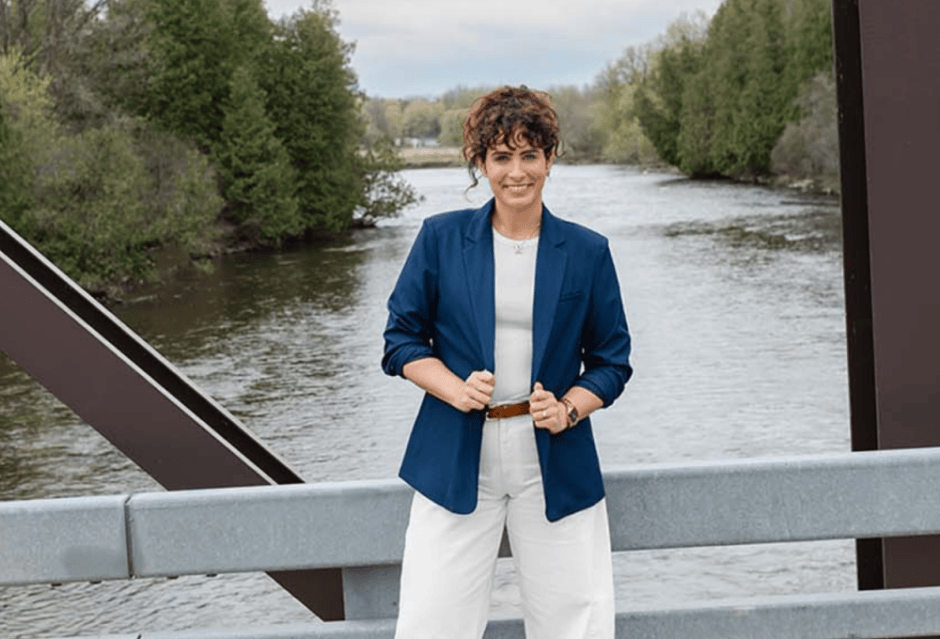
“I don’t accept “because that’s the way we’ve always done it” as an answer. I happily challenge the status quo when it isn’t working. And frankly, what we’re doing now isn’t working. […] I love Guelph. I have always loved Guelph. I love Guelph so much that I believe it deserves four years of my time. Four years of showing up, asking questions, listening to residents and working to get things done.”
Why do you want to be a city councillor?
As a working professional and mother to two young kids, I know what it feels like to deal with everyday life in Guelph. I became frustrated enough with some of what I saw that I decided to stop complaining about it and actually put my name forward.
What is your background and experience, and how do you think that will serve you as a city councillor?
I have over 20 years of experience in Human Resources and Operations, with a career focused on people, problem-solving, and getting things done. I’ve always been a doer in my roles, and I’ll bring that same approach to City Council. Leadership is about relationships and action. I build relationships, listen, and then turn those conversations into action.
Given Strong Mayor Powers, how do you see your role as a city councillor when the mayor can override the will of council with just three votes?
Strong Mayor powers give Guelph’s Mayor additional authority, but they don’t give the Mayor unlimited power. I don’t see Strong Mayor powers as something we need to be afraid of. If we elect a Mayor with integrity who uses good judgment and works collaboratively with Council, I don’t believe it’s something our community needs to fear.
Affordability is important to a lot of voters, and municipal budgeting can be very difficult. How will you balance the needs of a growing city with the demands for low or zero tax increases over the next term?
I don’t think a zero tax increase over the next four years is realistic. A lot of the spending and commitments we’re dealing with today have already been made. My goal would be to stabilize that trajectory and work toward getting annual tax increases down to a reasonable 3-5% by year two, and then maintain that discipline over the following years.
I also think it will take more than one term to meaningfully reset the financial trajectory of the past 15 years. That doesn’t mean we can’t make changes immediately. With fresh business and operational perspectives around the Council table, I believe there are opportunities to reduce unnecessary spending, improve how the City operates, and identify new ways for the City to generate revenue without continually relying on property tax increases.
For me, responsible spending isn’t about cutting for the sake of cutting. It’s about asking, “Do we need this? Is there a better way to do it? And is this the best use of residents’ money?”
Council this past term has done a lot of housing policy, but that hasn’t translated into more shovels in the ground. How will you help close the gap over the next four years?
From the conversations I’ve had with housing developers, my understanding is that some of our policies are being developed primarily from the City’s perspective rather than from the perspective of the people who actually have to build the housing. I think we need to ask more questions and listen to all parties involved. If we better understand what is preventing projects from moving forward, we can ultimately get more shovels in the ground.
Aside from the demands for more housing, land use planning also means assuring that there’s enough room to account for growth in business, institutional and commercial land uses, how will you balance all these priorities?
You can’t prioritize everything equally. That’s one of the realities of leadership. I would look at the evidence, listen to the people affected, understand the financial and long-term implications, and then make a decision based on what I believe is the best overall outcome for Guelph.
I’ve been doing this in my professional career for over 20 years. Leadership isn’t about making everyone happy with every decision. It’s about listening, weighing the information, making a decision, and then being accountable for it.
Water availability is a growing concern. How will you ensure that Guelph has the capacity it needs to support this growing city?
Interesting question. I’m actually hearing this topic a lot at the door, but often from a place of fear. Water is something we have to plan for long before we run out of it, so I think that’s important for people to understand.
Guelph is growing, and we need to make sure our infrastructure and water supply planning stays ahead of that growth. That means continuing to invest in new water sources and treatment capacity, protecting our groundwater, and making sure we don’t approve growth without understanding whether we have the infrastructure to support it.
Trust in government and institutions is a major issue. How will you keep your constituents well informed about city hall business, and help them feel included when it comes to decision making?
Organizational culture matters to me. The lack of trust in our municipal government is something I am passionate about, and I believe rebuilding that trust starts with better communication. Residents are too often left trying to figure out what is happening behind closed doors or between meetings.
We need to go back to the basics of communication: clearly explaining what is being discussed, why decisions are being considered, what the options are, and how residents can have their voices heard before decisions are made.
It appears to me that by the time the City offers a meeting for the general public, the decision has often already been largely made. If residents are being invited to participate after important decisions have already been made, I have to ask: what is the purpose of the meeting? That can feel incredibly frustrating and, frankly, insulting to residents who have taken the time to show up and participate.
As someone who has spent the last several months going back through Council votes and sharing voting records, I’ve seen firsthand how difficult some of the information is to understand. Even the way some motions and questions are worded isn’t realistic for residents to easily understand. If we want people to feel included in local government, we need to make it more welcoming.
What would you say is *your* issue? What is the one thing you want to talk about on the campaign trail this fall and have a thorough debate about it before this election is over?
Accountability. I believe residents deserve to understand how we spend their money, how decisions are made, and whether we’re actually listening to the people those decisions affect. Based on what I’m hearing at the door, and my personal experience during last summer’s appointment process, I believe there is a significant gap between what constituents are asking for and what they are seeing from City Hall. We need to talk about why.
What perspective do you think you will bring to council that is not currently reflected?
I don’t accept “because that’s the way we’ve always done it” as an answer. I happily challenge the status quo when it isn’t working. And frankly, what we’re doing now isn’t working.
Is there anything else you want to tell voters as they make their decision?
I love Guelph. I have always loved Guelph. I love Guelph so much that I believe it deserves four years of my time. Four years of showing up, asking questions, listening to residents and working to get things done.
And I believe Guelph deserves your time, too. On October 26th, get out and vote.

