
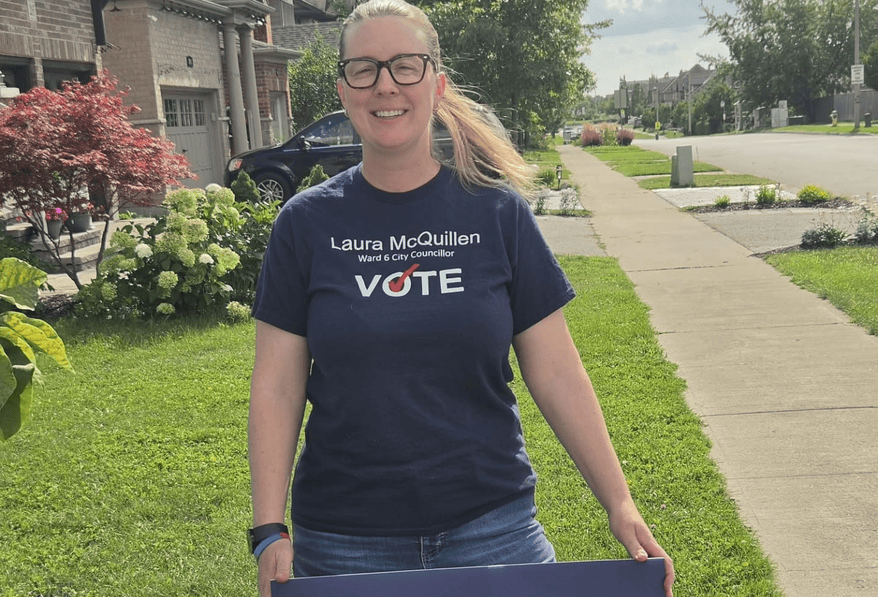
“I’m someone living the same every day life as a lot of you, and I think that’s exactly why I’d be good at this. I’m doing it because I care about our community and I want my kids to grow up somewhere that works for everyone, not just some of us. I’d be honoured to earn your vote and have your input the whole way through, not just once every four years.”
Why do you want to be a city councillor?
I’ve spent years in schools and neighbourhoods and I hear what working families are dealing with day to day; I live it myself. I’m tired of just talking about it in staff rooms and around kitchen tables. I want to be at the table where it actually gets decided; fighting for the people who don’t always have a seat there. We don’t need more politicians, we need normal neighbours making decisions that reflect our lives. I want to see my family and yours flourish here.
What is your background and experience, and how do you think that will serve you as a city councillor?
I’ve been a teacher, realtor, foster parent, and community volunteer. Those jobs all come down to the same thing: showing up for people, listening, and helping them navigate something complicated, especially when the system wasn’t built with them in mind.
Given Strong Mayor Powers, how do you see your role as a city councillor when the mayor can override the will of council with just three votes?
Strong Mayor Powers mean a lot of decisions come down to relationships and coalitions on council. I want to be someone other councillors and the mayor want to work with, because I bring good research, clear priorities, and a track record for following through for residents. I see my job as making sure Ward 6’s voice is impossible to ignore, whether that’s through formal votes or through the influence I build day to day at city hall.
Affordability is important to a lot of voters, and municipal budgeting can be very difficult. How will you balance the needs of a growing city with the demands for low or zero tax increases over the next term?
Zero increase sounds great until you ask what gets cut to get there, and it’s usually the services that working families and lower-income residents rely on most: transit, libraries, parks. I’m comfortable supporting a moderate increase if I can point to exactly what it buys. Austerity budgeting isn’t neutral, it has a cost, and I want us to be honest about who pays it. What I want instead is predictability. Not zero one year and a ten percent jump the next, but planned, known increases that people can actually budget for. If residents know roughly what’s coming and why, that’s a lot easier to live with than a surprise, and it lets us plan responsibly for a growing city instead of lurching year to year.
Council this past term has done a lot of housing policy, but that hasn’t translated into more shovels in the ground. How will you help close the gap over the next four years?
I want to close the gap between policy and actual homes getting built, and I think that starts with the money side, financing and development charges, not just more approvals on paper. I’ll push to make sure our own process is moving efficiently too, but the real lever is making sure projects that get approved can actually get financed and built. Over the next four years I also want us to seriously look at non-market and public housing options instead of just hoping the private market eventually delivers what people need.
Aside from the demands for more housing, land use planning also means assuring that there’s enough room to account for growth in business, institutional and commercial land uses, how will you balance all these priorities?
I lean toward prioritizing housing, because I think safe, affordable shelter is a right. That said, I want to protect employment lands that support good, stable jobs, especially union jobs, because a city needs both homes and the work that lets people afford them. It’s about making sure growth serves people first.
Water availability is a growing concern. How will you ensure that Guelph has the capacity it needs to support this growing city?
Infrastructure investment has to happen, we’re growing and our systems need to keep up. But conservation and efficiency programs deserve to be treated as just as important, not an afterthought. The cheapest new water source is the water we don’t waste in the first place. The city’s Water Supply Master Plan lays out what’s needed to keep pace and I want to make sure council funds and implements that plan on schedule. Land use appprovals and water and wastewater infrastructure need to stay tied together so growth only moves as fast as our capacity to service it safely.
Trust in government and institutions is a major issue. How will you keep your constituents well informed about city hall business, and help them feel included when it comes to decision making?
Door-knocking shouldn’t be something that only shows up every four years when someone wants your vote. I want to be out talking to people all the time, not just during election season. I’m not a politician, I’m a neighbour, and I think that means being someone you actually see and talk to, at the grocery, at school pickup, on the sidewalk as we pass walking our dogs, not just someone who shows up on your porch once with a clipboard. Trust doesn’t come from a campaign push, it comes from people knowing you’re around and approachable year-round, that you’ll actually listen when they bring something up in the cereal aisle, not just when it’s convenient for you. I want city hall to feel less like a building downtown and more like something connected to the everyday places people already are. Combine that with regular updates online and in-person town halls, and I think people start to feel like they’re actually part of the process, not just informed about it after the fact.
What would you say is *your* issue? What is the one thing you want to talk about on the campaign trail this fall and have a thorough debate about it before this election is over?
Before we talk about big new projects, I want us to get the basics right: roads, transit, parks, waste collection, the everyday services people rely on and pay for. I want to discuss whether we’re funding and maintaining what we already have before we keep adding to the list. It’s not flashy and glamourous but these things make our day to day lives run smoothly.
What perspective do you think you will bring to council that is not currently reflected?
I’m a young mom in a blended family. We have kids in public school, before and after school programs, daycare and my family is out here trying to make it work like everyone else. I don’t think that experience is really reflected around the council table right now, knowing what it costs to raise a family here, what it’s like to juggle school pickup and daycare waitlists and the rest of it.
I also think politics tends to attract a certain kind of person, someone who’s naturally out front, always on, always networking. I like being home with my family I support my community where I can, and I live a pretty normal, low-key life. I think there’s value in bringing that voice to council too, showing up because the work matters and the people in this ward deserve someone who understands what an average week looks like for them.
Is there anything else you want to tell voters as they make their decision?
I’m someone living the same every day life as a lot of you, and I think that’s exactly why I’d be good at this. I’m doing it because I care about our community and I want my kids to grow up somewhere that works for everyone, not just some of us. I’d be honoured to earn your vote and have your input the whole way through, not just once every four years.

