
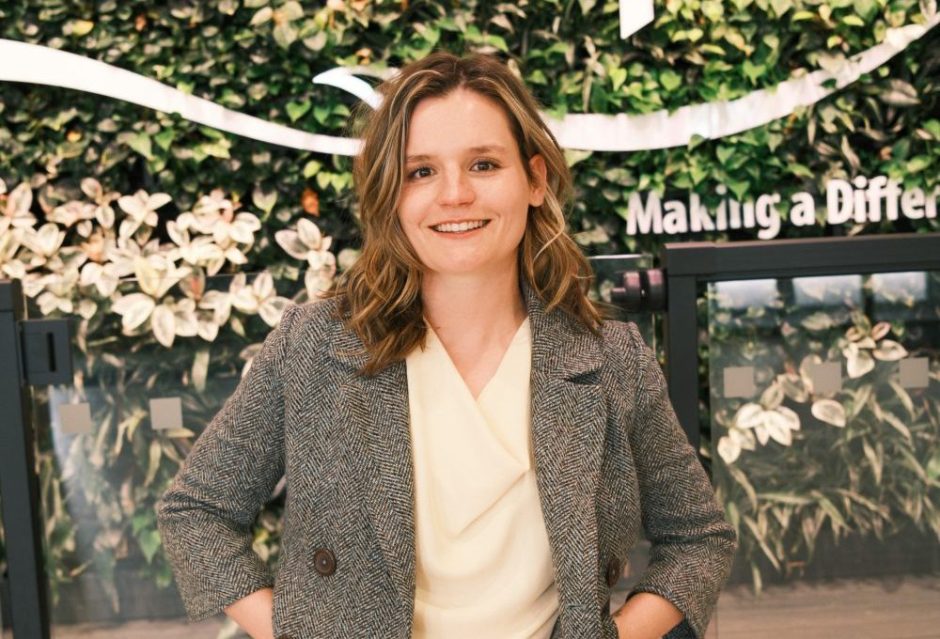
I bring the perspective of the next generation – those of us who are struggling to get started. Despite building successful careers, many young people are finding it increasingly difficult to buy homes, start families, and build the lives that previous generations could reasonably work toward. […] I’m asking Ward 5 to be the wind at the back of the next generation by giving us a chance to help shape the future that we will inevitably inherit.
Why do you want to be a city councillor?
I want to be a city councillor because, after working in the federal public service and spending years championing causes through community-based work, I’ve come to believe that meaningful change starts from the ground up and works best through collaboration. Local government is the most direct pathway to achieving this end.
At its core, a councillor’s role is to listen to the people they represent and translate their experiences into policy and action. After years of doing similar work alongside remote First Nations, I’m ready to bring those skills home and put them into action in my own backyard.
I believe that serving as a city councillor is where my own skills and experience can truly shine. My background in community engagement, my work with various Guelph nonprofits and organizations, and my experience securing funding at the provincial and federal levels are all skills that can help Guelph succeed.
Through both studying and living in major cities like Toronto, where I grew up, and Ottawa, where my aunt serves as a city councillor, I’ve learned a great deal about simple yet effective policy approaches that we can bring here to address some of the growing challenges Guelph is facing as a rapidly growing city.
Most importantly, Guelph is the community where I’m building my life and where I hope to raise a family one day. I want to play an active role in making sure it remains a place where people can afford to live, feel connected to the community, and envision a future that is green, safe, and welcoming to all.
What is your background and experience, and how do you think that will serve you as a city councillor?
I’ve always wanted to be involved in politics. As a child, both my elementary and high school yearbooks proudly proclaimed that my dream job was to be Prime Minister. When I graduated, I immediately moved to the nation’s capital to study politics.
Now, with seven years of professional experience under my belt, along with a Master’s degree generously funded by the Arrell Food Institute, I feel ready to translate that experience into meaningful policy and action for the Guelph community I love and am so deeply embedded in.
My background has given me experience in policy, research, community engagement, and securing the funding required to turn good ideas into action. I believe this combination of skills, energy, passion, and experience would be a great asset to Guelph City Council.
Given Strong Mayor Powers, how do you see your role as a city councillor when the mayor can override the will of council with just three votes?
Based on the mayoral candidates I’ve spoken with, I do not anticipate Guelph’s next mayor using Strong Mayor Powers. Each has expressed an explicit commitment to working collaboratively with council rather than overriding its will.
Regardless, I see my role as a councillor remaining fundamentally the same: to represent the interests of Ward 5 residents, make well-informed decisions, and work collaboratively with colleagues to build consensus. If Strong Mayor Powers were used in a way that I felt undermined the interests of residents or the democratic will of council, I would also not hesitate to speak up.
Affordability is important to a lot of voters, and municipal budgeting can be very difficult. How will you balance the needs of a growing city with the demands for low or zero tax increases over the next term?
Keeping taxes affordable while meeting the needs of a growing city means looking beyond property taxes as the default source of funding for every new initiative.
Thankfully, I’m a professional grant writer! Raising funds, particularly through provincial and federal streams that municipalities can also access is my expertise. I’ve helped secure over $1 million for grassroots organizations, nonprofits, and social enterprises, and I believe that skill can be leveraged on a much larger scale at the City.
For example, I plan to help bring home some of the federal government’s recent $3 billion investment through its inaugural National Food Security Strategy. This could enable our community to pilot innovative approaches, like City-run grocery stores, without leaving municipal taxpayers to foot the bill.
But grants are only one part of the equation. I also want Guelph to explore creative revenue sources used by other municipalities, including revenue from private utilities using public rights-of-way and UofG whose students rely on public services. At the same time, I want to carefully examine where existing City dollars can be used more efficiently.
My priority is keeping taxes the same, or as low as reasonably possible, until Guelph’s tax burden is more in line with comparable municipalities, while protecting the core services we depend on every day.
Council this past term has done a lot of housing policy, but that hasn’t translated into more shovels in the ground. How will you help close the gap over the next four years?
The housing crisis does not stem solely from a lack of housing supply, but from a lack of housing people can actually afford. The current “build more” strategy has not meaningfully improved affordability. So while I support getting appropriate new housing built faster, I believe council needs to think beyond shovels in the ground.
One of my priorities would be making better use of the housing and space we already have. That means reviewing bylaws that unnecessarily prevent creative, affordable arrangements such as additional dwelling units, shared or intergenerational housing, and modest secondary suites. The University of Guelph’s recent initiative connecting students with older adults who can offer lower-cost housing in exchange for companionship is a great example of the kind of creative thinking we need more of.
We also need to make it easier for homeowners to bring existing informal units into compliance, so tenants can have legally protected rental agreements rather than living in precarious arrangements, legally as guests.
Over the next four years, I would support appropriate new construction while pushing council to measure success not simply by how many units are approved, but by whether people can actually afford and securely live in the housing being created.
Aside from the demands for more housing, land use planning also means assuring that there’s enough room to account for growth in business, institutional and commercial land uses, how will you balance all these priorities?
I fervently support small businesses in Guelph and have spent the past year advocating at City Hall for businesses affected by downtown construction. My biggest priority is asking businesses themselves what they need and ensuring that planning decisions reflect those realities.
I’ve built strong relationships with many businesses across Ward 5, several of whom have publicly supported my campaign and are doing fantastic work in our community. When I say I want to bring their voices to City Hall, I mean it. Electing me means electing someone who will make sure our local businesses have a seat at the table when decisions affecting their livelihoods are being made.
My promise is to balance growth thoughtfully. We need to protect sufficient employment, commercial, and institutional lands while finding opportunities for mixed-use development and greater density in areas that can accommodate it. I will approach those trade-offs by looking at the long-term needs of Ward 5 and, importantly, consulting the residents, businesses, and institutions that will actually be affected by our decisions.
Water availability is a growing concern. How will you ensure that Guelph has the capacity it needs to support this growing city?
Guelph is the largest community in Canada that relies almost entirely on groundwater and so replenishing it needs to be a major priority as our city grows. This is an area where I believe council needs to lean heavily on the guidance of our water, environmental, and planning experts.
This is also an issue I grew up around: my father is an environmental engineer, and our family business specializes in soil and groundwater remediation. While that certainly doesn’t make me an expert, it has given me a longstanding appreciation for the importance of protecting the resources beneath our feet.
As a councillor, my job would be to listen to the experts, ask the right questions, and make sure that the pace of Guelph’s growth never comes at the expense of the water supply that growth depends on.
Trust in government and institutions is major issue. How will you keep your constituents well informed about city hall business, and help them feel included when it comes to decision making?
I plan to keep residents informed through regular in-person gatherings, as well as online opportunities for direct engagement, including surveys and polls. But importantly, my goal is to ensure that people who have historically been excluded from decision-making are actively heard and engaged.
While canvassing, I’ve knocked on the doors of people who have lived in this community for up to 30 years and have never been engaged by a councillor. Many live in lower-income neighbourhoods, face greater risks of food and housing insecurity, and have lower overall trust in government and institutions. These are often people who historically do not vote and who, according to some, I may be “wasting my time” trying to reach.
I fundamentally disagree. Trust in government is built by showing people that their voices matter, even when they have not historically participated in our political system. For me, getting even a few of those residents to feel heard and become engaged is a meaningful success in itself, and one that drives me to keep showing up and doing this work every single day.
What would you say is *your* issue? What is the one thing you want to talk about on the campaign trail this fall and have a thorough debate about it before this election is over?
I’ve woven this into many of my other responses, so it should come as no surprise that my issue is food security. I bring nearly ten years of experience working across the food system, from plant to plate, most notably earning a Master’s degree focused on these issues from the University of Guelph, Canada’s “food university,” where I had the opportunity to learn alongside world-renowned experts.
A lot of people confuse food security with food aid. Food security isn’t about handouts; it’s about empowering communities to become more sovereign and resilient within our food systems, so that we are less dependent on grocery monopolies and external imports to feed ourselves. If Canada wants to become less dependent on our southern neighbour, food security is critical. A country that cannot reliably feed itself is extraordinarily vulnerable.
That is why the federal government’s new $3-billion investment in a National Food Security Strategy represents such an important opportunity, and one that will require collaboration across all levels of government to succeed. I want Guelph to be at the forefront of that work. We already have extraordinary food-system expertise here, and I bring both the specialized knowledge and the energy to help elevate Guelph into the leadership position it deserves.
The patchwork of food banks and emergency programs we currently rely upon was never intended to become a permanent food system, and many of those organizations are themselves struggling to keep up with demand and even pay their bills. I want us to have a serious conversation this election about what comes next: how we move beyond managing food insecurity and start building a community that is genuinely food secure.
What perspective do you think you will bring to council that is not currently reflected?
I bring the perspective of the next generation – those of us who are struggling to get started. Despite building successful careers, many young people are finding it increasingly difficult to buy homes, start families, and build the lives that previous generations could reasonably work toward.
The median age in Guelph is around 40, yet the median age of council is considerably older. That means my generation has much to gain, and so much more to lose, from decisions being made today without our experiences directly represented at the table.
I’m asking Ward 5 to be the wind at the back of the next generation by giving us a chance to help shape the future that we will inevitably inherit.
Is there anything else you want to tell voters as they make their decision?
I’m extremely responsive to emails, so please reach out to me directly if you have any questions, or need clarification on any of the campaign points. My email is dakotacherry [at] live.ca. Thanks so much for your time!

