
It was a pretty big week for Guelph City Council in terms of both length and substance. The planning meeting also had scale, between the approval of a massive new project for the downtown area and the protection of a big piece of land in the south end. There were also big implications for supporting affordable housing in the city, as staff brought back three very in-demand new bylaws. So let’s get all the details from two mega meetings in this recap!
Planning Meeting of Council – June 9, 2026
It was a long one.
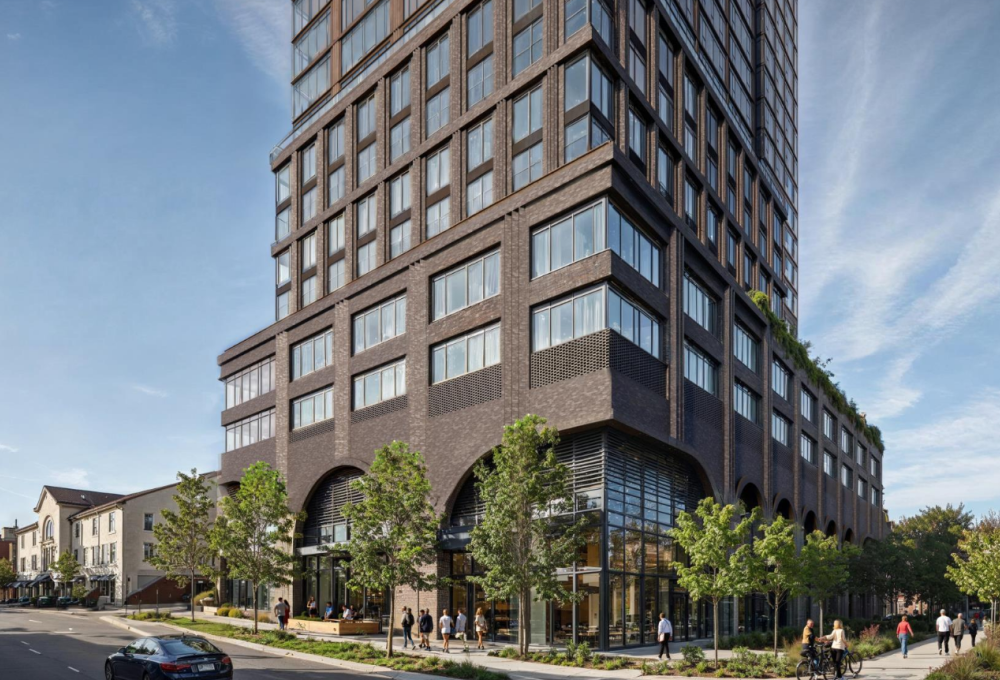
First up was the decision report for the proposed tower at 70 Fountain Street East downtown, which staff was endorsing, but the developer had a few additional notes. Eager to get the approval over the finish line, council proposed a couple of amendments to the recommendation, which staff said wouldn’t have been necessary if the Community Planning Permit System for downtown wasn’t presently under appeal.
Council approved a clearance to the rooftop mechanicals to a height of six metres, a fix to the typo for the commercial floor space, and a suggestion from Councillor Erin Caton to make 15 per cent of the bike parking large enough for larger, more accessible bikes. All the amended recommendations were approved unanimously.
 Next, was what Mayor Cam Guthrie called a “visionary opportunity”. The topic was called “Potential Opportunity to Advance Affordable Housing and Charitable Hub” but there was no formal report on the agenda. Long story short, Susan Frasson, who is the president of the Wood Development Group, wants to build a place in Guelph/Eramosa Township on Whitelaw Road that will be a central location for several non-profits plus offer hundreds of deeply affordable units.
The only advocate for the project was Melissa Kwiatkowski who was speaking for both the Guelph Community Health Centre and the Children’s Foundation of Guelph Wellington. She said that she and her colleagues were looking at multiple options to find a new home, but presently this was the only option before them given the space they need and the price they want. Kwiatkowski answered questions about the background work that had been done so far, and whether any other options had been explored. It took 17 minutes for someone to mention “Wood Development Group” and about 33 minutes to mention the name Susan Frasson.
Ward 4 Councillor Linda Busuttil lead the charge, trying to get as much information from Kwiatkowski as possible on the public record, and others joined in to express their concerns with Phil Allt raising questions about the cost and Caton noting that they’d like this better if it kept vital services inside the city limits. Mostly though this was a transparency matter. Busuttil said that there’s been a lot of conversations about this between councillors, staff members. Frassion and the non-profits involved, but despite the size, scope and logistics about a project of this scale, this was the first time it was discussed in a public form.
Guthrie, who put this on the agenda in the first place, noted that they were not talking about some property that was miles outside of town, it’s the “other side of the fence”, and it was his intent to make this cost neutral. He was also firm that annexation was not being contemplated here and that Guelph already has servicing agreements like this in place with other municipalities so enacting such a deal would not be terribly outside the norm.
At the beginning of the discussion, Guthrie said that he was withdrawing the motions included in the agenda and two new recommendations were offered. These ones asked the proponent to submit a proposal in writing that can be shared with the public in Guelph and GET, and then to direct staff to start talking with township staff about the logistics. There was some back and forth with CAO Tara Baker about the investment of staff time in this, what staff will be involved and how deep the conversations have and will go, but many on council acknowledged that there were still more questions than answers so this at least puts the project on the public record and starts some open community conversations. The recommendations were approved unanimously.
Then council heard the planning application for 220 Arkell Road, which isn’t quite on Arkell Road, but just the same. The property owner is seeking to build a new neighbourhood containing 31 or 32 single detached homes and between 70 and 94 townhouse units as well as a neighbourhood park, a stormwater management facility, and natural heritage lands.
Pretty straightforward, but one delegate who neighbours the property had concerns about construction noise during building and people trespassing on her property to access this new development. She wanted a permanent fence along her property line to make sure no one was cutting through her land for a short cut once this is done. Additionally, a land use planner representing Victoria Park Village, another neighbour, noted that this plan would benefit from the infrastructure and traffic signals they’ve established and wanted a cost sharing agreement. Council approved receipt of the application and then broke for a meal.
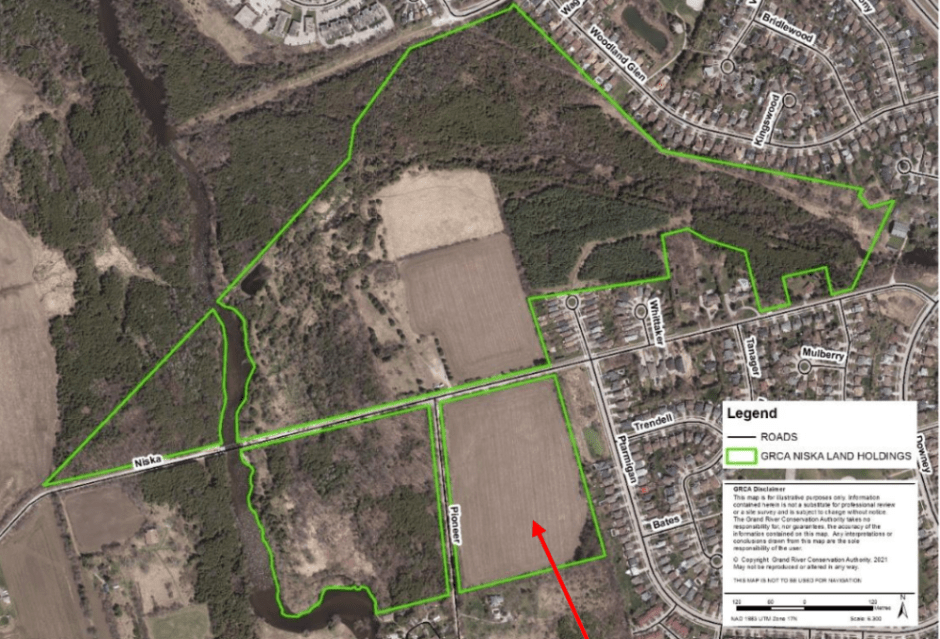
 After the dinner break, council went in-camera to start the discussion of the Southeast Parcel of Niska Lands. Mayor Guthrie said it would take 30 minutes, but it ended up being more like 50.
The report was about the re-zoning of an eight-hectare portion on the south side for Niska that’s presently being farmed though it’s actually zoned as residential. In February, council directed staff to look at how it can be re-zoned as parkland but not so fast! The staff report said it could not offer a planning justification for the rezoning of this property, which was re-zoned as residential in Official Plan Amendment 48 in 2012 and given that the Grand River Conservation still owned the property, there was no guarantee that this would actually end up becoming a park in the end.
Adding additional pressure was a notice from legal counsel for the GRCA who threatened a trip to the Ontario Land Tribunal, or more substantial legal action, in a letter to council. “The GRCA has been working with the City of Guelph for many years and acting in good faith that entire time,” Trenton D. Johnson wrote.
“If [refusing the staff recommendation] the City Guelph continues to have a keen interest in the Parcel, it of course can offer to purchase the Parcel from the GRCA at fair market value. However, should the City of Guelph not be interested in purchasing the Parcel at fair market value (as presently designated and zoned), the GRCA may consider listing the Parcel for sale.”
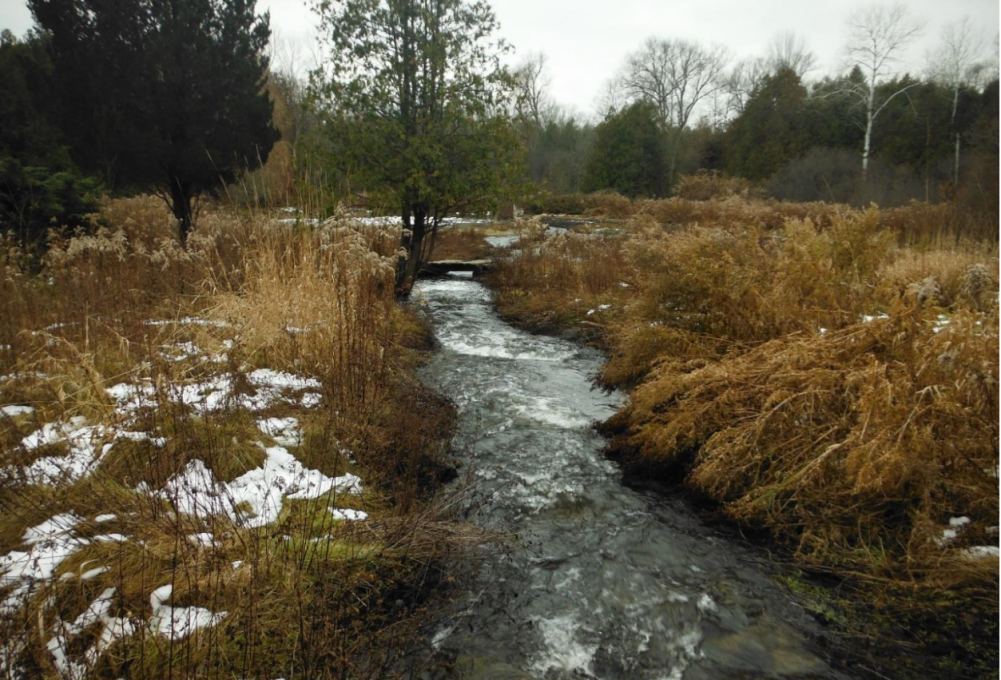
With legal threats explicit, and maybe more tacit threats to the follow through on the City’s purchase of the vast majority of the Niska property, including the old Waterfowl Park, the stage was set for a contentious back and forth between council, staff and over two dozen delegates. Accusations came fast and furious about how the GRCA misrepresented the facts about the original purchase of the property in the 1970s and why it was purchased in the first place. There were claims about what City of Guelph staff were up to when the property was redesignated residential in 2012 and allegations about the absence of supporting documents for the change. There was also speculation about motivations for leaving this land zoned residential and the potential windfall for the GRCA from the land sale and for the City in terms of development fees.
There was a lot of handwringing about the tone of some of the comments, but when it came time for council to make a decision, they seemed to be painted into a corner.
If council pushed the rezoning over the objections of staff, they would be left to navigate any future Tribunal or legal challenge without the support of their own people; councils that override the staff recommendation have to seek independent counsel and planners. Staff were asked about the potential impact on the land sale, and DCAO Colleen Clack-Bush said that there’s been “noticeably slow progress” since the February announcement that came right before council approved the investigation of the rezoning.
Council approved receipt of the report, but then Guthrie suggested a deferral of the decision which was rejected by a vote of 5-7. A compromise from Councillor Cathy Downer recommended that council close the file, and to move this to the provincial level by petitioning the Minister of Municipal Affairs and Housing in order to acknowledge the community’s overwhelming expression of interest. It had been pointed out by delegates that disposition and sale of lands owned by conservation authorities has been paused as the Ontario government seeks to turn 36 authorities into nine.
Some people still sitting in the gallery started to leave the meeting, clearly disappointed with where this was going, but many on council noted that despite the community push, the political, intergovernmental and financial risks were just too big when the fate of the lion’s share of the historic property could end up the cost of pursuing eight more hectares. Mayor Guthrie said that it was his hope to make this happen, and if he was truly concerned about his legacy, he would just force this through because he won’t be the mayor anymore in five months to deal with the consequences. Council voted unanimously in favour of the Downer motion.
Council wrapped up shortly after 9:30, but if this week’s council recap isn’t long enough… Wait, there’s more!
Click here to see the complete recap of the meeting.
 Special Meeting of Council – June 10, 2026
The meeting on Wednesday was relatively briefer especially given the importance of the topic and the community interest in it.
Staff brought back to council in record time three new pieces of policy concerning the protection of affordable housing in Guelph: a vacant home tax, a bylaw banning so-called renovictions, and the outline for an accompanying rent replacement bylaw for those tenants that need to move out for disruptive renovations.
Staff took council through the three sections one at a time. Implementation of the vacant home tax will begin this summer but will be retroactive to the first of the year. Single-family homes, condos, semi-detached homes and plexes (up to six units) will be the focus and a four per cent tax will be applied to Municipal Property Assessment Corporation’s (MPAC) current value assessment on homes deemed vacant after six months with a few notable exemptions.
The Draft Rental Renovation Bylaw will create a license requirement when a landlord serves an N13 notice to tenants; so if they’re required to move out for major renos or repairs, then the landlord has to explain why the unit needs to be vacant before a tenant has to leave. It’s a way for the City to track renovations and follow up on timelines changes, and while Bill 97 passed by the Ontario government does make some positive changes on compensation, staff noted that there’s still a big gap in justification and oversight that they’re hoping to address.
Last, but not least, was the policy direction for a Rental Replacement Bylaw. This part won’t go into effect until after staff bring the finished bylaw back next month, but the intent is to ensure that tenants in buildings with six or more units who are displaced by renovations get compensation and/or permanent replacement units that will be at the same affordable price level for 10 years or until they move out.
There were nine delegates including Douglas Kwan from the Advocacy Centre for Tenants Ontario and Stephanie Clendenning of the Legal Clinic of Guelph and Wellington County who both believed in the direction of these measures but noted that compensation needed to be bolstered to really dissuade unscrupulous landlords from future renovictions. In terms of skeptics there was Andrew Donlan, a “mom and pop” kind of landlord who’s owned 12 rental properties in Guelph and said that this bylaw will likely provoke him to liquidate his portfolio and make other landlords like him do the same. Dylan Fraser of the OnePoint Association of Realtors said that council should wait and see if Bill 97 has an impact and noted that the vacant home tax could hammer the owners of short-term rentals.
The die was pretty much cast though. Council didn’t have many follow up questions, though they did offer an additional motion under the vacant home tax to direct staff to review yard maintenance and property standards fines since the new bylaw doesn’t necessarily deal with the eroding conditions of seemingly abandoned properties. Mayor Guthrie said that entire neighbourhoods were being brought down by that one owner who’s letting their property get overgrown or suffer demolition by neglect.
Council approved that motion, and the whole slate of recommendations on the three subjects, unanimously.
Click here to see the complete recap of the meeting.


One thought on “This Week at Council: Niska Lands Blocked, Renoviction Bylaw Unlocked!”