
It was a long one at June’s Committee of the Whole meeting, and it was mostly about a bridge. But there was something for everyone at this meeting from energy equity to community grants to outside water use. We covered a closed meeting investigation, a new procurement bylaw update, and there was even a semi-planning matter in regards to building fee changes. So let’s get into all that and more in this week’s council meeting recap!
Committee of the Whole Meeting – June 2, 2026
This month’s edition of Committee of the Whole went the distance; if last week’s council meeting was one of the shortest, then this one at nearly six-and-a-half hours was one of the longest.
One of the briefer items on the agenda was the results of the closed meeting investigation into January’s emergency meeting about the daytime shelter. Mayor Cam Guthrie asked council to endorse a motion to direct the city clerk to review the closed meeting protocol and identify increased transparency and reporting opportunities in the 2027 Governance Review. That one was approved and so was the investigation report, with Guthrie adding that council takes the responsibility of closed meeting processes seriously, and that during his mayoralty he’s increased transparency for in-camera meetings.
In the Corporate Services agenda, things got started with the Community Investment Strategy update and the proposed changes that are aiming to maximize the City’s money and support for community grants. Community investment grants will now be funnelled through three streams instead of one big pot, plus there will be a new microgrant program that non-incorporated groups and smaller organizations will be able to take part in, and a new grant to cover the cost of renting City facilities. Council agreed that these were fairly positive changes and after talking about some of the technical aspects of the plan, it was approved.
Next, the Procurement Bylaw Update. Changes in trade policy, the passage of the Buy Ontario Act and all the trade war nonsense forced the update, which will come into force on September 1, but the main takeaway was that buying local, or for that matter buying Ontarian, isn’t as easy as you might think. Mostly, this will affect the purchase of new fleet vehicles and supplies for capital infrastructure; in the case of the former, if a certain type of vehicle is not available or feasible from an Ontario supplier, the City can look outside the province, but there’s no such provision for those capital supplies. There are still some implementation issues to work out, and the budget impact is still not fully known, but those will become apparent in future budget reports including the quarterly updates.
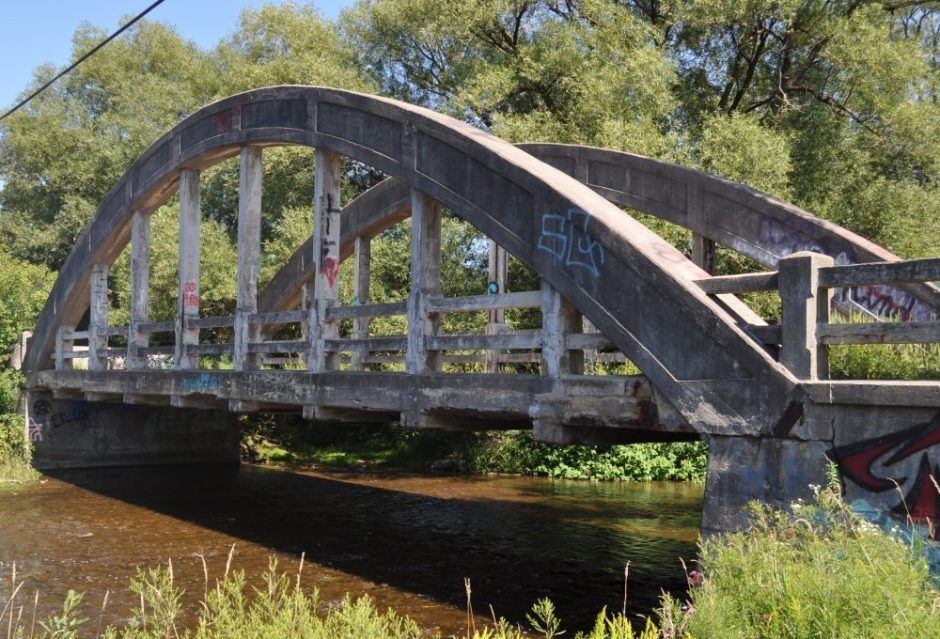
After approving Councillor Michele Richardson’s motion to report back on policy change proposals and financial implications around adding top-up benefits to the City’s military leave policy, council dug into the literal centrepiece of this meeting, the environmental assessment of McQuillan’s Bridge. After a thorough examination, staff were recommending the preservation of the bridge, and its heritage assets, while reinforcing it so that pedestrians, cyclists and trail users can continue to enjoy it for years to come. The cost is about $2.8 million, which is a little over $1 million more than the cost to replace it with something new.
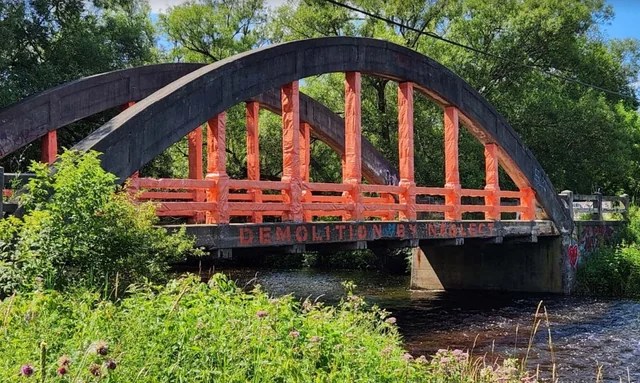 The committee fight came down to two main courses of discussion. First, obviously, was the bareknuckle cost comparison; is it better to get a brand-new bridge for the cheaper price or save the heritage bridge for a little more money. The second point, which was tied to the first, is the potential lifespan of the two bridge proposals, and while a new bridge will last 75 years, the revitalized bridge might need further remediation work in our lifetimes. This lead several councillors down rabbit holes of how hard a deadline the 30-year mark is. For instance, are we literally saying the bridge will only last 30 more years?
Then there were questions of policy. The bridge has been designated as a heritage asset, and it’s part of the part V designation of the Ontario Reformatory Heritage Conservation District, so isn’t demolishing the bridge going to cost us a lot in paperwork? Heritage planner Jack Mallon explained that the part IV can be handled through the usual process for demolition, but getting McQuillan’s Bridge out of the part V means amending the HCD and that’s more complicated. Mallon said that this would essentially mean any further individual designations would cease until the repeal of the bridge’s protections is complete.
By the time we got to the vote, council had gone through at two rounds of questions, and one round of comments, and we were all two hours older. Despite his previously announced intentions to vote against restoration and vote in favour of a new bridge, Councillor Rodrigo Goller said that he had heard loud and clear from his constituents that the bridge was worth saving. Seven other councillors joined him in supporting the staff recommendation, which was received with five councillors voting against.
After the dinner break, it was time for the Infrastructure, Development and Environment files, of which there were three in all.
First there were changes to the Outside Water Use Bylaw, an effort to make it more flexible for residents while also making it easier to understand when to act and preserve water. The previous three colour system will be replaced by a two-tier system (standard and elevated) with morning and evening watering times allowed on elevated to suit any schedule. Council again noted the positive changes, but also noted concerns about communications and ensuring the emphasis on conservation before the recommendations were approved.
 After that, there was a report called Advancing Energy Equity in Guelph with a line up of presenters from both city hall and Guelph Labs there to talk about how to ensure how equity seeking communities can be included in the fight against climate change. It will surely be affirming to Guelph environmentalists to know that this town is on the forefront of this work, which was developed by a coalition of 11 community organizations, a community working group made up of people with lived experience, and engagement with the broader public. Over 4,500 households in Guelph struggle with high energy costs, and that’s probably a low-ball number given the limitations of census data on this issue.
One interesting thing to come out of the discussion was that Guelph is working on a maximum temperature bylaw, which the Canadian Environmental Law Association describes as “an indoor air temperature in the dwelling unit that does not exceed 26 degrees Celsius.” Details on when the bylaw would come to council and what would be in it were sparse, but General Manager of Operations Doug Godfrey is working with RentSafe to develop something that can be adoptable by many municipalities at the same time. Some councillors noted that the heat map didn’t seem to overlap with several of the poorer areas of the city and that we also need to make sure that this plan addresses energy equity issues without advancing stigma, but there was mostly a positive reaction to the plans brought forward.
Last was the new Fee Structure for Building Permit Applications. Economic conditions and the nature of construction currently in Guelph has been digging this department into deficit, which is a problem that’s not unique to Guelph, but difficult to resolve given the fact that it runs on a cost recovery model. The examination of the issue in this report showed that the cost for permitting renovations and alterations were under-priced, there’s a lot of crossover in permit types and greater complexity now in the non-residential projects. The changes proposed here would increase the renovation permit fees, separate residential and non-residential renos, maintain a flat fee for small projects and modestly increase the permits for new construction.
Despite the changes, Guelph would still be in the middle of the pack in terms of fees, although Jim Bruzzese from BMA Management Consulting noted that our comparator municipalities are doing their own reviews as well. There were some questions about why some comparators were offering lower fees than Guelph, but this seems to be a case where places like Kitchener, which are building denser and taller, have an advantage over Guelph. Also, Guelph seems to be on track for the same number of permits in 2026 as the previous few years, so time to enact these changes is of the essence. The recommendations were approved.
The meeting wrapped up 18 minutes after 8 o’clock, long enough to break the technical time limit for the length of the meeting, but with time to spare before suspending the procedural bylaw.
Click here to see the complete recap of the meeting.

