

This week at city council, two was the magic number. There were two different meetings, we had the month’s second Committee of the Whole meeting, there were two heritage-related motions, and there were two major presents. Two was also reflective of the impact, because there are two different local governments and different powers between then, and that made the idea of proceeding with our own Better Tent City (see above) more difficult. Here’s the recap…
Planning Meeting of Council – May 14
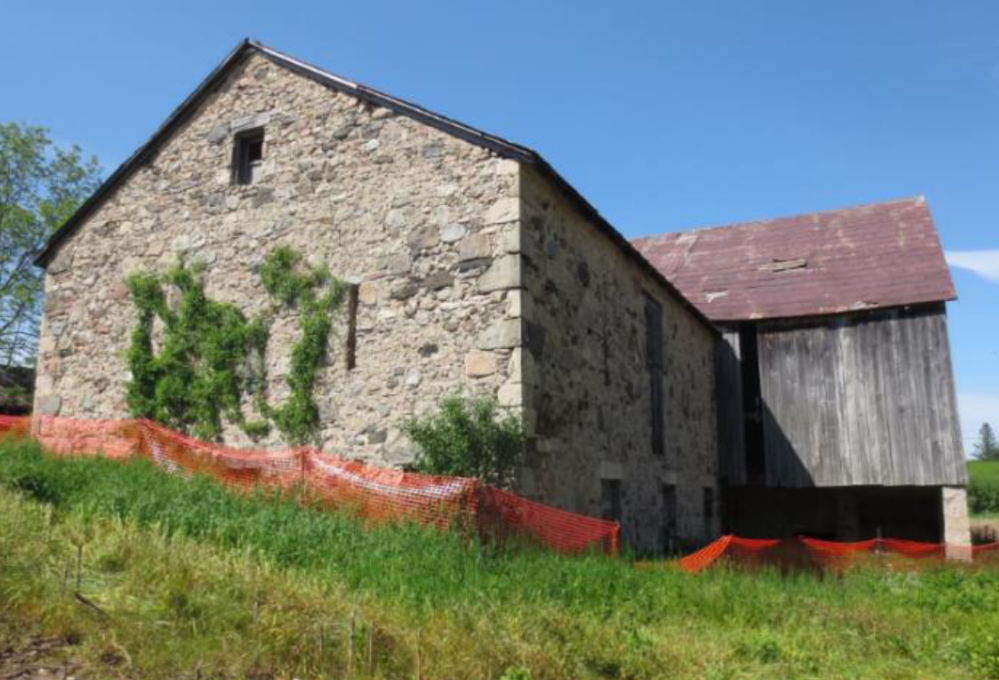
There was good news for 9 Omar Street, but bad news for the development company that owns the site of the Kidd barn and the Blair farmhouse. Council approved the delisting of Omar from the heritage registry and its demolition application, while saving the two heritage buildings on Gordon Street. The whole thing took six minutes, including the singing of “O Canada.”
Click here to see the complete recap of the meeting.
 Committee of the Whole Meeting – May 15
The real action at council this week was at the second Committee of the Whole meeting of the month. There were three topics, but only two really mattered.
Treasurer Tara Baker took committee through the year-end financials, from the capital budget to the operating budget to the reserves and debt. The presentation itself took up the better part of an hour, but the short version is that while the City is getting better at fulfilling the expenditures of the capital budget without as many postponements, inflation made it hard for financial staff to keep the operating budget on track last year. As for the reserves, the City looks flush right now, but they will be tapping into those accounts as infrastructure renewal speeds up and they’ll start to get drained over the next few years. Also, new exemptions and discounts to development fees will start having an impact.
Baker also promised that there will be more presentations about the impact of budgeting changes in the next few months. The provincial government has now given guidance on discounts for affordable housing projects, and that will come into effect in June. Staff are also looking at how best to deploy the $5 million the City received from the provincial government as a reward for reaching our housing target last year, and there will also be a report about reserves and reserve funds in the fall.
In terms of questions from the committee, there’s was a request for some relief on water rates, which is some of that infrastructure that’s getting upgraded in the next few years. There was also a question about the levy impact of the $13 million in federal money for the new library and whether committee should dedicate some of the surplus to the affordable housing reserve, which is an idea that staff weren’t so sure about because there’s no large-scale affordable housing project on the horizon right now.
Eventually, committee unanimously approved the slate of staff recommendations in terms of assigning the surplus to various reserve accounts. Also, committee approved the recommendation to order seven new ambulances this year instead of 2025 and 2026 due to the lag time in receiving new vehicles. (Fun fact: There are only two approved manufacturers of ambulances in Ontario.)
 That brought us to Mayoral Direction B4, the creation of a temporary structured encampment. Staff said that they can’t endorse the move and recommended that committee send it to the Joint Social Services and Land Ambulance Committee for their input and review. Mayor Cam Guthrie said that the report answered a lot of the questions the community has about the logistics of such a project, and CAO Scott Stewart added that staff capacity is one of the issues in moving forward with this, and that the City and County are agreed that permanent supportive housing is a proven solution that they must continue to pursue.
The six delegates disagreed with that assessment, and while they all wanted the City to pursue a structured encampment, most of the attention was on Mike Marcolongo, the representative on-hand from the Guelph Tiny Home Coalition. Marcolongo said that his group’s project is not meant to be a cure for homelessness, but a way to catch people when they fall and help them bounce back. They’ve got 65 volunteers organized, they’ve been meeting with staff at both the City and the County and they’re working with the Chamber of Commerce and area businesses about potential fundraising. What they need, Marcolongo said, is an official expression of interest from city council to show that there’s a real government desire to make this project happen.
There was a lot of unofficial interest from members of the committee, and a lot of it focused on how “temporary” the temporary encampment would be, how much the project will cost, and whether the Tiny Home Coalition has had any more luck finding an available piece of land than the City has. There was also some concern expressed about tapping already tapped social service agencies and the long wait time to get the provincial government to agree to funding wrap around care at the Kindle Communities. Marcolongo said that he believed that there was a ton of good will in the Guelph community to make this project happen.
After the delegations, council broke for a 30-minute session in-camera during which council received information regarding safety and security of potential sites, but no direction was given to staff.
In the open session staff were asked about their own plans to assist in the creation of more affordable housing, why the County’s in-house expertise is so critical and what role the City of Guelph can play to realize the project from providing services to providing financials. Regardless of their reservations, council ended up approving the original two recommendations, one to receive the report and the other to refer it to the social services and committee.
There were some subsequent motions brought by the committee members too. Councillor Leanne Caron tabled a pair of directives, one to identify potential City-owned sites and any necessary approvals and servicing it would need to host a temporary structured encampment, and the other to work with County staff to evaluate the Tiny Home Coalition’s proposal in a report by July.
There was a lot of back and forth about staff’s workload, and what happens if the County wants no piece of this. DCAO Colleen Clack-Bush noted the difficulties establishing A Better Tent City in Kitchener without the support of the consolidated service manager, and how the County has to be involved because they have the housing staff and the data. Stewart encouraged councillors to look to the social services committee meeting on June 12, getting this on that agenda, and then work on the reporting, because the County is working on their own housing directions coming out of the symposium too.
A couple of members wanted to soften the language of the motion to request the County’s help and not sound like they’re ordering them, which was amended. Before the vote Guthrie said that he knows he created some friction bringing this report to council the way he did, but he doesn’t apologize for it because housing policy in Guelph has been a failure. He added that he knows there’s a desire in the community to act, and together we can move quickly and competently to get it done. The two additional motions were approved as amended.
There was one final motion from Councillor Carly Klassen that asked for the County of Wellington to present alternatives if they find the Guelph Tiny Home Coalition unviable. Staff requested that the motion be amended to send such a report to the social services committee instead of Guelph city council, and that one was unanimously approved too.
Now, all eyes will be on the next social services committee meeting in June to see what Wellington County staff and committee representatives have to say about all of this.
Click here to see the complete recap of the meeting.
 Guelph Politico