

It’s tough to summarize a nine-hour council meeting, but it kind of helps that this one came in two parts. In the first half, council tried its best to use the limited tool kit they have to generate some housing solutions amidst the crisis, and then, in the second half, it was the usual monthly planning meeting with some big new applications, big decisions, and some big heritage designations. Here’s the (lengthier than normal) recap…
Special Meeting of City Council – October 17
We have a housing problem. Maybe you’ve heard about that.
Building on work done for the last several months, City of Guelph staff presented 17 recommendations for council’s consideration to take action and not just for housing, but for the accompanying crises of homelessness, mental health and addiction too. The recommendations were meant to encapsulate a list of about a dozen objectives that staff and council think that they can achieve by the end of this council term, while also acknowledging the limitations of municipal governance and the absence of upper levels of government. (You can read the full list of recommendations starting with this tweet in the thread.)
There were around half-a-dozen delegates who came out to speak, and they were all in favour of the directions but they also had some concerns. Helen Fishburn, the CEO of CMHA Waterloo-Wellington, said that the City needs to take the lead on community wellbeing and acknowledge that the old ways of funding mental health aren’t working. Kristen Cairney, executive director of Wyndham House, urged council to not forget youth homelessness. Shakiba Shayani, CEO of the Chamber of Commerce, asked council to help break down the walls between agencies and use the Chamber to create collective action.
Mark Walton, president and CEO of Guelph General Hospital, was also one of the delegates and he called for a “ruthless conviction that there’s a right to human health” because the hospital is seeing the effects of the crisis on the back end with more emergency room visits, more malnutrition and other health impacts from poverty. Walton also said that he and other healthcare workers are doing what they can to advocate for more action from the Government of Ontario.
In terms of the council deliberations, there was a lot of interest in recommendation #2, which focuses on reviewing the governance model with Wellington County. From the insight provided by CAO Scott Stewart and Mayor Cam Guthrie, it sounds like there might be some agreement with their County counterparts about where they can begin, but they also wanted to leave it open for council input going forward.
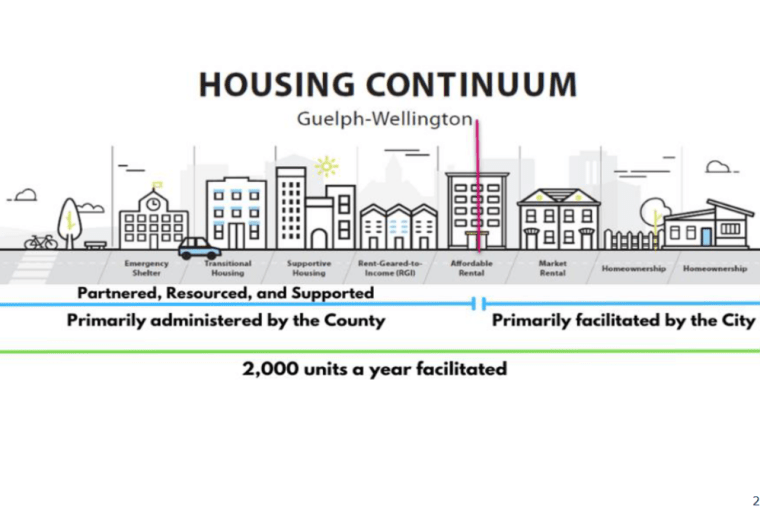
Speaking of matters of governance, two motions dealt with funding from the upper levels of government. Stewart said that cities are fighting 21st century problems with 19th century rules and the other levels of government need to either step up to fulfill their obligations or they need to empower cities to be more self-directed.
Fourplexes were also a big topic of conversation with many councillors looking for answers to questions that staff intended to answer in a report they’ll bring back to council early next year including neighbourhood impacts and the differences between fourplexes and additional residential units. Another unanswered question is about whether or not a bylaw to allow fourplexes might get wrapped up in the appeal of the Comprehensive Zoning Bylaw, which allows triplexes as of right.
Council didn’t seem to have any issue with the wording of any of the 17 recommendations, but they made an exception for #8 which was split into two recommendations; one that focused on the search for a second location for a daytime shelter space and one that focused on keeping the funding going for Royal City Mission on a month-to-moth basis until staff can figure out next steps. Councillor Rodrigo Goller asked to remove reference to the downtown so that staff can look to other areas the city for the site and thus take some of the pressure off businesses there. Deputy CAO for Public Services Colleen Clack-Bush said that should be simply done through the Request for Proposals.
All of the now 18 recommendations were unanimously approved, but we weren’t done yet.
Councillor Carly Klassen asked for an information report about the winter plan for people suffering homelessness and that was passed unanimously too. Her ward-mate, Goller, then brought forward a motion to have $1.5 million put in the Affordable Housing Reserve as part of the budget process. Goller said that Guelph needs to be on par with the County’s who puts one per cent of their annual budget away for social housing. With the budget deliberations right around the corner, it was suggested that council defer that motion, and it was so deferred.
Guthrie then tabled a motion (though since Guthrie can’t table motions it was technically tabled by Goller and Klassen) asking Wellington County to look at the possibility of starting a “temporary structure encampment site”, assumingly like A Better Tent City in Kitchener. Many councillors had no problem with the motion or its intent, but wondered about the logistics: How would community engagement work? How would they arrange services like water and washrooms? How would they find the wraparound supports? Stewart added that “structure” doesn’t mean “tent” and that means building permits.
Eventually, it was council’s direction that the question of establishing a “temporary structure encampment site” should be referred to the County’s housing symposium in the new year, and the motion was reworded along those lines, and approved.
The final motion, also from Guthrie through Goller/Klassen, was about asking the County to form and lead an integrated team that includes Public Health and Guelph Police to do wellness checks on people in homeless encampments. Guthrie said that the number of these encampments has doubled in the last year, and there should be some kind of outreach to make sure the people living there are okay. The County already works through Stepping Stone to do this work that the motion seeks to formalize and expand. The motion was approved, and the meeting was concluded with 20 minutes to spare before the next one.
Click here to see the complete recap of the meeting.
Planning Meeting of City Council – October 17
After a 30-minute break, the planning meeting got started with another packed agenda. The notice to designate Tytler School and to allow the demolition of a home in the Brooklyn and College Hill Heritage District were easy enough to dispatch, but those were about the only easy files on the docket.
First, it was the public meeting for a townhouse development at 331 Clair Road East. There was an added level of difficulty with this one because of the old James Hanlon farmhouse, a recently approved heritage asset. A portion of the farmhouse will be preserved and integrated into the development as a common amenity area, but to do that the farmhouse will have to be moved on the property where it will be set up in the middle of the development surrounded by 136 three-storey townhouse units.
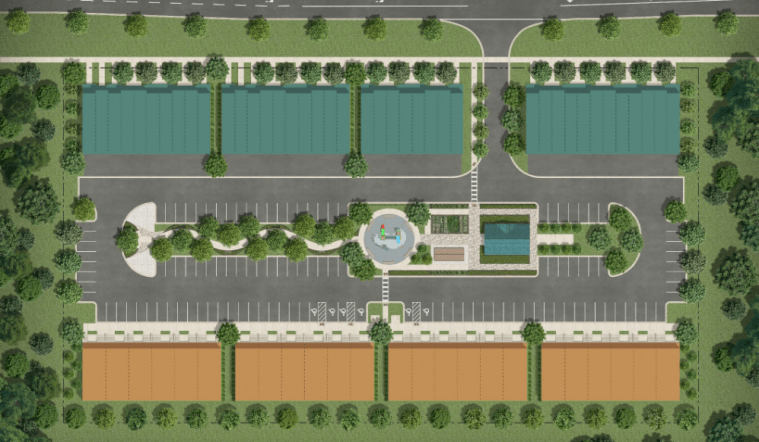
While there were concerns about moving around a really old farmhouse due to the danger that the whole thing might fall apart in the process, there was mostly praise of the project, even from the neighbour. Ward 6 Councillor Dominique O’Rourke said that it was the “right kind of density” for the area, though she also wanted to seem some changes to the common amenity areas. Council received the application.
The other new file was for the residential portion of the Baker District Redevelopment; two proposed 15-storey towers with 353 residential units between them plus 529 square metres of commercial space on the ground level between the two towers combined. The buildings will also be Canada’s second One Planet Living community, combining many the best practices in net zero builds for a low environmental impact.
The only delegate for the application was the developer, and like the Clair project there was mostly praise for the plan. Of particular note is the pledge to put aside 12 per cent of the units to be affordable housing, but what 12 per cent is still a question because the north tower is going to be sold as condos while the type of building that the south tower is going to be is still uncertain. Stuart Cooper from Windmill did say that the 12 per cent would be spread out across the two buildings.
There was also a suggestion from Mayor Cam Guthrie that the project could look at going higher if it means adding some more affordable units. Cooper said that they would look into that, and the application was received.
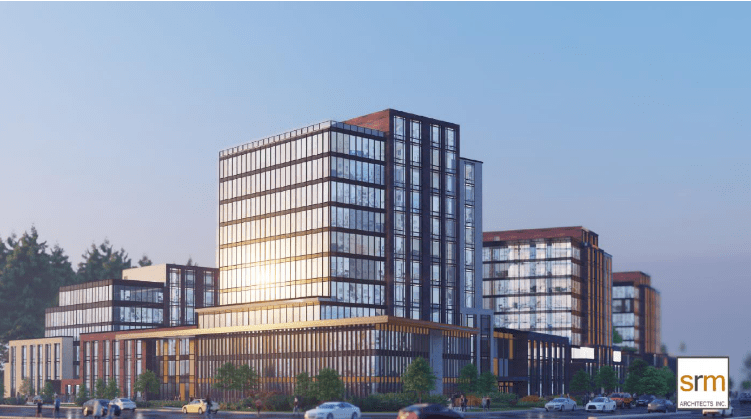
In terms of completed applications, council had to make a decision about 716 Gordon Street, the so-called student residence planned for the old Royal Brock Hotel site. The application is pretty much unchanged from when council saw it the first time; the terraces and tree removal that were problematic with the project four months ago are still there. What remained was a reticence from council that there was no planning reason not to approve the project.
At least two delegates were hoping that there was still a reason, representatives from Mayfield Park Community Association who felt like the developer had dragged their heels on the project and were not following the letter of the decision reached at the Ontario Municipal Board 10 years ago. Council did the only thing it could do, which was approve Councillor Cathy Downer’s motion allow the community group to provide feedback during site plan.
Many councillors expressed sympathy for the neighbourhood and their concerns, but staff explained that the application is “generally in keeping” with the OMB decision, and then there’s the desperate need for purpose-built rental, especially in the realm of student housing. Council voted in favour of the project with the exception of Councillor Phil Allt who noted his lived experienced from when he was a university student that alcohol, balconies and young people don’t always necessarily mix.
After a quick break, council had the mandatory public meeting for the DC changes. The current Development Charges Bylaw expires in March and the City needs to approve a new one. The final vote won’t be until January, and this update covered work done since the DC workshop in July and an explanation why Guelph is going with a more uniform charge that applies the same city-wide as opposed to an area-specific rate.
There was one delegate on this, and it was Dustin Davis from the Guelph & District Association of Realtors. He called the increase “steep” and said that it was going to have a further dissuasive impact on new builds in the city. Davis also said that projects are getting cancelled because of high cost of the new proposed development charges, but when asked he wouldn’t say how developments would pass the savings on to buyers if council approved lower rates.
Staff reiterated again that Guelph is one of the first municipalities to do a DC review and while the new rates seem like a big increase, we will once again take our place in the middle of the pack as other cities and towns catch-up. Guthrie said that the DC rate is merely an equation. It’s cold, dispassionate math and there are many ways that the City is able to work with developers on discounts and exemptions on a per project bases. Council approved the recommendations.
The last item was the heritage designation of 2187 Gordon Street, the Kidd barn and the Blair farmhouse. The developer has expressed some objection to the idea of approving these heritage assets, which meet six out of the nine criteria for designation under Ontario regulations (a property only needs to meet two to qualify), but they were not on hand at the meeting.
Instead, council heard from former Heritage Guelph chair P. Brian Skerrett and Mike Marcolongo, whose family owns the farm across the street. Both pushed for the designation, and Marcolongo explained that he’s essentially been acting as caretaker for the property and that Mattamy Homes has been largely absent, letting the buildings, especially the old stone barn, degrade.
Council didn’t need much convincing and they unanimously approved the designation to bring a long day in the chambers to a close.
Click here to see the complete recap of the meeting.
 Guelph Politico