
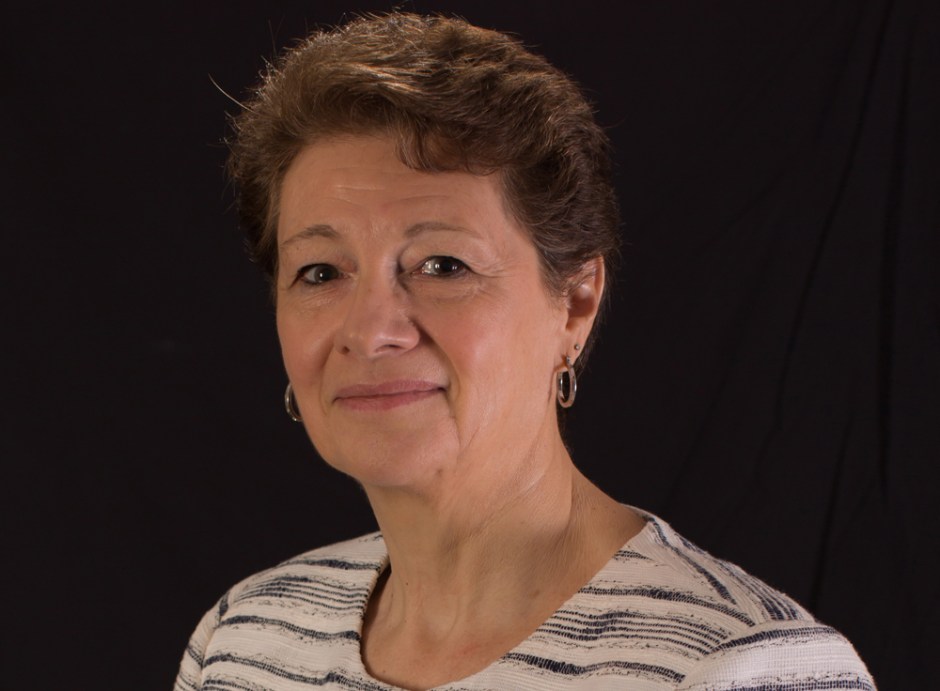
“The trustee role is one of governance. Education is provincially mandated, and there are many parameters to the Education Act that must be followed, but as trustees we establish our system’s mission statement and governing values. This governance is at the municipal level, and as elected officials we are accountable to our community regardless of the makeup of your family.”
Why do you want to be a school board trustee?
Education has always been deeply important to me. My father’s parents immigrated from Italy, and because an education wasn’t available to them, they could not read or write. They were determined to give their children more opportunities than they had, and all of their children went on to receive educations that provided the literacy they lacked, greater opportunities and ultimately better lives. That commitment continued with their grandchildren and great-grandchildren.
That family history gave me a first-hand understanding of how transformative education can be. Combined with my lifelong passion for helping children thrive, it is a big part of why being a trustee is so meaningful to me.
I believe that education can help level the playing field for all children—not only through what they learn, but through the experiences, opportunities, relationships and presence of caring adults. The impact of a good education can alter the course of a child’s life, reaching far beyond the classroom, influencing their confidence, resilience and future.
As a trustee, I feel privileged to have a voice in the decisions that shape the school years for students. I see the role as both a responsibility and a calling: to listen, to advocate for students and families, and to help ensure that every child is equipped to reach their full potential.
What’s your background and experience, and how do you think that’s relevant to the job?
I was born and raised in Guelph, the eldest daughter of Lanny and Eleanor Sorbara. My four sisters and I attended Sacred Heart School, St. James (when it was still a middle school) and Bishop Macdonell. I had the privilege of growing up in the ward with a large, extended Italian family. I graduated from the University of Waterloo and am retired from the City of Guelph were I worked for Recreation and Parks for 48 years (I started as a camp counsellor!). I managed a number of portfolios in a variety of roles throughout my career, but each position always with high expectations of customer service and fiscal responsibility. My last position, before retiring, was Manager of Operations for the city’s recreation facilities.
I am married to Jake Dupuis and have four children, who are all graduates of Wellington Catholic, and six (soon to be seven) grandchildren. One granddaughter graduated from Wellington Catholic this past June, four are attending Catholic schools and our youngest grandson will start next fall. I am a practicing member of the Basilica of Our Lady Immaculate and an active volunteer in the parish.
As a long-standing trustee, I am honoured to be serving as the current chair of the board. I also sit on the Special Education Advisory Committee, the First Nation, Metis, Inuit Education Committee, the Sustainability Committee and the Supervised Alternative Learning Committee, and I chair the Director’s Performance Appraisal Committee. In 2019, I was awarded the Ontario English Catholic Trustee Award of Merit.
In addition, I am in my seventh year as a board director with the KidsAbility Centre for Child
Development that serves Guelph, Cambridge, Waterloo, Kitchener and Fergus. In the past, I served on the board of Guelph Family and Children Services.
All of this experiences supports the fact that I feel called to support children and their growth and success, in their schools, in the community and beyond. I carry a deep sense of gratitude for the opportunities education has given my family, and with that gratitude comes a strong desire to give back.
I do not see being a trustee as a position or a title. I want to be part of ensuring that every child has someone in their corner, that every student is able to discover what they are capable of, and that the circumstances a child is born into never determine how far they can go. That is why I serve. That is why I care so deeply. And that is why being a trustee means so much to me.
How do you see your role as a trustee? What are your main responsibilities?
According to Bill 101, as of September 2026, the role of school board trustees in Ontario has shifted more toward governance, accountability and oversight. Trustees are not directly involved in day-to-day operations.
Under the Education Act, trustees are board members rather than managers of individual schools. Their statutory duties include the following:
– attending and participating in board and committee meetings;
– consulting with parents, students and supporters;
– bringing community concerns to the board;
– implementing board resolutions once adopted;
– leaving day-to-day management to board staff through the Director of Education;
– maintaining a focus on student achievement and well-being; and
-complying with the board’s code of conduct.
This means that, conceptually, the trustee’s job is governance rather than administration: setting direction, approving policies and budgets, overseeing the Director, representing the community and holding the board accountable.
For me personally, being a trustee is about knowing your community and connecting the needs in that community with the resources and programs available. The school board should take on the role of being those connectors, of being able to answer a parent’s call, to recommend a process or direction of outreach, of addressing concerns so every child has the school experience they deserve.
Like many governments and boards, school trustees are facing a budget crunch. Without an increase in provincial funding, how do propose to ensure that your board balances student needs with fiscal prudence?
Many people may not realize this but it’s actually illegal not to present a balanced budget to the Ministry of Education annually. If there is a demonstrated deficit, you must provide a plan for balancing the budget in the next year. It would then need to be accepted by the Ministry. This means that our administration works very hard at all levels of spending to work with the funds we’re provided. Reduced funding is a huge challenge but our leadership excels at identifying priorities and adhering to our strategic plan.
Partnerships are also critical to our everyday programming. Involving the community in sharing and delivering of programs makes a huge difference. This involvement means that we’re able to maintain opportunities that funding alone may not fully support.
How will you support teachers and education workers as they begin contract negotiations this fall? How will you support parents concerned about labour disruption?
The Ministry of Education has taken responsibility for contract negotiations this year. They have not asked for input at the local board level or from the Ontario Catholic Trustees’ Association. Parent voices will be critical at Queen’s Park in order to have the Ministry come to the table and bargain in good faith. Trustees will also add our voices to the conversation about the needs of our staff, with the expectation that the Ministry will not want a labour disruption.
Guelph is a rapidly growing town, how will you ensure that the school system is able to grow and accommodate the new students and the changing demographics?
Wellington Catholic has experienced consistent growth for the last several years. We have added additions to our schools, we’ve added daycare sites, we’re building a new school and daycare in Drayton and we will continue to advocate for a new county high school. We also work closely with Immigration Services and other community agencies to support newcomers. Every school has its own unique makeup and the staff at each one works hard to address the needs of their school family.
Absenteeism seems to be a growing problem in Ontario high schools, what are the ways that you can support teachers and administrators to assure that students are getting the proper instruction?
Absenteeism happens for a lot of reasons. Students are faced with a broad spectrum of circumstances and we need to understand where the challenges lie. Admittedly, some truancy occurs. Some students are pulled from school for sports or trips, and that requires conversations with parents about the importance of staying on pace with curriculum. However, some children are medically fragile and miss days for treatments or other challenges. Today’s statistics tell us that four out of five children struggle with different levels of mental health and, again, that requires supports and working relationships with parents.
The ministry has now linked attendance to success in a subject. This was in place a number of years ago and was called “employability skills.” Teachers could award extra percentage points for consistent effort, readiness to learn and a commitment to the course. This is really a return to that practice. We will work to support administration and staff in this change to student evaluation.
School safety is a big concern, from behavioural issues to school resource officers. How can schools be safe places for learning while also not making it feel like kids are learning in a security state?
Wellington Catholic has had resource officers in our schools for decades. We work in close partnership with these individuals from the Guelph Police Services, and they form relationships with staff and students, assist in teaching in certain classes (Civics), coach teams and oversee activities. This means that they have long been an important part of our school communities, and they add much to the fabric of our system.
Our resource officers also strive to be a safe place for kids, to bring concerns that they may not feel comfortable telling the adults in their everyday lives. This gives schools the opportunity to provide wraparound services, so no child feels alone.
If you get elected to be a trustee, and considering the increase in provincial influence, do you think you will serve a full four year term?
If you’re asking if I’ll stay committed and fulfill the privilege of serving Wellington Catholic for the full four years—absolutely, without hesitation. If you are asking if we expect the next four-year term to be shortened by the Ministry of Education, I also do not expect that outcome. There may be further changes to the role but I’m hopeful that the government has seen and will respond to public concern about losing local voices in education.
Let’s say I don’t have kids, and thus no proverbial “skin in the game” when it comes to my local school, why should I care about who’s my school board trustee?
Even if you don’t have children, your tax dollars still support education, and it’s the root of so much. You may have a business that employs skilled laborers, need creative minds for community project or be looking for future leaders. It may sound cliche but kids are the answer to all of these future needs. So, everyone has skin in the game. A healthy generation is exactly the goal for the future of a municipality, a region, a province, a country.
The trustee role is one of governance. Education is provincially mandated, and there are many parameters to the Education Act that must be followed, but as trustees we establish our system’s mission statement and governing values. We provide governance for budgets, special education, facilities, multi-year strategic plans and much more. This governance is at the municipal level, and as elected officials we are accountable to our community regardless of the makeup of your family.
Is there anything else you want to tell voters as they make their decision?
When I think about why serving as a trustee matters so deeply to me, I come back to my family and to the extraordinary power of education to change a life.
My grandparents were illiterate, yet they understood, perhaps better than anyone, what education could mean for their children. Their kids became educated, built better lives and then gave their own children—including me—the opportunity to achieve more than they ever dreamed possible.
That is not something I take for granted. I have seen, within my own family, how education can open doors, change circumstances and create possibilities that may otherwise never exist.
It is also why I have always believed that Catholic education in particular is about so much more than what happens in a classroom, or even what is written on a report card. At its core, it strives to educate children mind, body and spirit. It is about the teacher who believes in a child when they may not yet believe in themselves. It is about the opportunity that allows a student to discover a talent or passion. It is about the experiences that build confidence, the relationships that provide support and the educators who can change the trajectory of a young person’s life.
Those moments matter. They stay with a child forever.

