
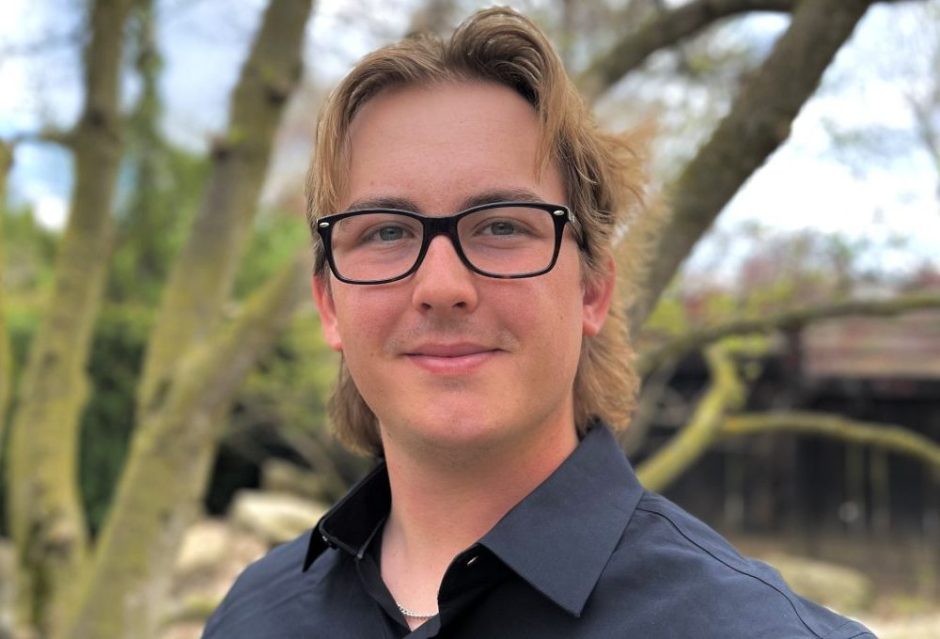
“My request is straightforward. I was born here, raised here, and now I am running here. The decisions that council makes today will impact the rest of my life, and I will be living with them for decades to come. If you want a councillor with a vested interest and a real stake in Guelph’s future, I would be honoured to earn your vote on October 26.”
Why do you want to be a city councillor?
As I grew alongside Ward 1, I watched the community experience tough realities. Property taxes rising, public services faltering, and accountability at City Hall falling below expectations. After completing my Political Science degree at the University of Guelph, I thought about how I can apply it, and my calling comes from the city that raised me. I am in a unique position as I was born here, raised here, educated here, and continue to build my life here. I feel an obligation to step up and help Ward 1 with the tools and foundations they gave me, and that is why I am running in this election. I want to give back and support this community any way I can, and that requires using my education to get things done for Ward 1.
What is your background and experience, and how do you think that will serve you as a city councillor?
I have lifelong experience throughout the city. I’ve volunteered with the Grange Hill East Neighbourhood Group, Onside Sports (now Epic and Onside), and the Guelph Minor Baseball Association. I have worked for the Guelph Lake Conservation Area (GRCA) and seen first-hand how tax dollars are put to use. Similarly, I have worked for AIM Environmental (now Convertus) at the Guelph Waste Facility where I learned how city services are run from the inside. I build fences where I have learned how permitting and inspections work at a granular level. Each of these equips me with valuable skills and abilities applicable to city council’s oversight. Above all, I have a Political Science degree from the University of Guelph which has given me an understanding of the intricacies of local government, and how it is operated. I will be living with council’s decisions today for the foreseeable future, and I have every reason to get those decisions right.
Given Strong Mayor Powers, how do you see your role as a city councillor when the mayor can override the will of council with just three votes?
The role of a city councillor is two-fold: to represent the views of their constituents on council, and to advocate tirelessly for the betterment of their geographical area. Strong Mayor Powers do not diminish that role—instead, they increase its relevance. If the mayor is capable of carrying a decision with one third of councillors, then an individual councillor’s votes matter more. My solution is to stick to my commitments from the start of this campaign: to put everything on public record. If council is overridden by our mayor, residents should know what their councillor(s) brought forward, what they advocated for, how they voted, and why. Strong Mayor Powers have been granted by Queen’s Park, but how they are used is a decision made by the people Guelph elects to council in October.
Affordability is important to a lot of voters, and municipal budgeting can be very difficult. How will you balance the needs of a growing city with the demands for low or zero tax increases over the next term?
My campaign promise is this: I will never promise what council cannot deliver. This includes zero tax increases—Guelph is a growing city with real costs, and Strong Mayor Powers grant budgeting powers to the mayor, so any councillor guaranteeing a bottom line is promising something they cannot deliver. What I will promise is a set of actions ensuring every dollar spent gets its maximum value. First, I will scrutinize city spending by assessing every budget before property taxes are raised. Next, I will vote to freeze council pay until the role is re-classified as full-time. City councillors should not be getting raises while retirees worry about losing their home. Finally, I will push Queen’s Park and Ottawa for Guelph’s share of funding towards roads, housing, and infrastructure. I will show residents what was requested, what was denied, and where Guelph still needs funding. I will assess every budget based on one principle: does this dollar provide maximum value to residents? If the answer is no, or if council cannot give an answer, then residents should not have to foot that bill.
Council this past term has done a lot of housing policy, but that hasn’t translated into more shovels in the ground. How will you help close the gap over the next four years?
Closing Guelph’s housing gap starts with an honest conversation. Approvals take too long, and we have no public accountability measures making sure spending is producing housing. I will be an advocate for housing development where roads, transit, water, and services already exist. These are the places we can get shovels in the ground fast. I will push to cut permitting delays and approval process delays which are driving house prices up and halting important projects. In my job building fences, I have seen how permitting troubles slow simple projects like a wood fence, let alone large investments. I will propose a detailed public housing-supply report which includes what we have spent and how many units have been produced by our numerous housing programs throughout the year. This allows residents and council to evaluate our efforts, and to find gaps we have yet to address, guiding us towards greater housing policy.
Aside from the demands for more housing, land use planning also means assuring that there’s enough room to account for growth in business, institutional and commercial land uses, how will you balance all these priorities?
Ward 1 is aware of the challenges created when housing development outpaces other land use. As I canvass the East end, residents tell me about challenges they face driving across the city for groceries, and about their concern regarding empty storefronts in their communities. Housing should be a priority, especially with provincially mandated growth targets. However, without the infrastructure for jobs and services surrounding housing, those communities are inherently less attractive to buyers. The 115 Watson Parkway development is set to bring more than 1,100 housing units to Ward 1, and commercial amenities accompanying this many homes must be planned properly. This requires removing obstacles for small businesses and having an eye towards employment lands. Growth is inevitable, so we must plan properly before it arrives.
Water availability is a growing concern. How will you ensure that Guelph has the capacity it needs to support this growing city?
Guelph is one of Canada’s largest groundwater-reliant cities. Therefore, water planning is a critical component of council’s oversight. Guelph’s Water Supply Master Plan says demands will intensify through to 2051 when we will approach the limits of our system. To support this kind of growth, council must protect aquifers and recharge areas our wells depend on. We must invest in growing our supply and conserving it before it is too late. As for the 115 Watson Parkway development, water must be properly planned before completion, ensuring we stay ahead of any unforeseen issues. As developments come before council, I will raise capacity concerns, and question our plan to make sure Guelph can sustain our water needs. We are bound by Queen’s Park’s growth targets, but we are in control of how we grow in the context of our water supply constraints. I will never vote to approve growth which the city cannot sustain.
Trust in government and institutions is a major issue. How will you keep your constituents well informed about city hall business, and help them feel included when it comes to decision making?
I will put things on record so residents can hold me accountable. I will establish a regular ward report to residents on what I have voted for, and why. This will give the community all the information on how I came to conclusions when voting on various issues. Additionally, I will propose accountability measures such as a detailed public housing-supply report forcing City Hall to hold itself to account. I have heard a lot about housing from residents, and it is time for the City to show its work on this file. Residents should know which housing initiatives council is supporting, where they are going, and what our plan is for the future. Right now, that information is not easy to come by; it should not be that way.
What would you say is *your* issue? What is the one thing you want to talk about on the campaign trail this fall and have a thorough debate about it before this election is over?
Accountability. The 2026 municipal election will go down as the “Property Tax Election.” Yet, there is a tangible, growing sentiment among Guelphites that accountability is an afterthought for council. As a young person building a life in Guelph, I want to know that elected councillors have my best interest in mind, and that they will always inform the community about their decisions and their motivations. That is why I will never promise what council cannot deliver. Why I will put things on record so residents can hold me accountable. Why I will establish a regular ward report to residents on what I have voted for, and why. And, why I will propose accountability measures such as a detailed public housing-supply report forcing City Hall to hold itself to account.
What perspective do you think you will bring to council that is not currently reflected?
The perspective of a young person who has spent their entire life rooted in the same ward, who was educated solely in Guelph, and who intends to spend the rest of their life in this city. I find myself in the unique position of having a wealth of experience growing alongside Guelph while simultaneously representing the city’s most under-represented group. Council does not adequately represent its younger generations. Our only councillor under 30 years old is Ken Yee Chew, who is now running for mayor. Bringing in councillors who represent the generation of people responsible for Guelph’s future is necessary to make sure they maintain a vested interest in our city. We are going to see a slew of new councillors around the horseshoe in the next term—let’s make sure Guelph’s future is represented among them.
Is there anything else you want to tell voters as they make their decision?
Yes. One thing that was not addressed in this questionnaire was basic services. Last winter, my residential road was plowed just once. At the door, residents have told me about seniors who have missed important appointments due to uncleared snow. Pothole repairs have been reported fixed in our public reporting system, but they are untouched when residents check the city’s work. If you are paying thousands of dollars in property taxes for services, they should hold up. Affordability and accountability are the headlines of this questionnaire, but the reliability of our services is just as important. Residents feel the impact of public services every day, so I will treat them as a priority on council.
Beyond that, my request is straightforward. I was born here, raised here, and now I am running here. The decisions that council makes today will impact the rest of my life, and I will be living with them for decades to come. If you want a councillor with a vested interest and a real stake in Guelph’s future, I would be honoured to earn your vote on October 26. If you would like to get in contact with me, just knock on my door the way I have been knocking on yours: contact [at] owenmartens.ca.

