
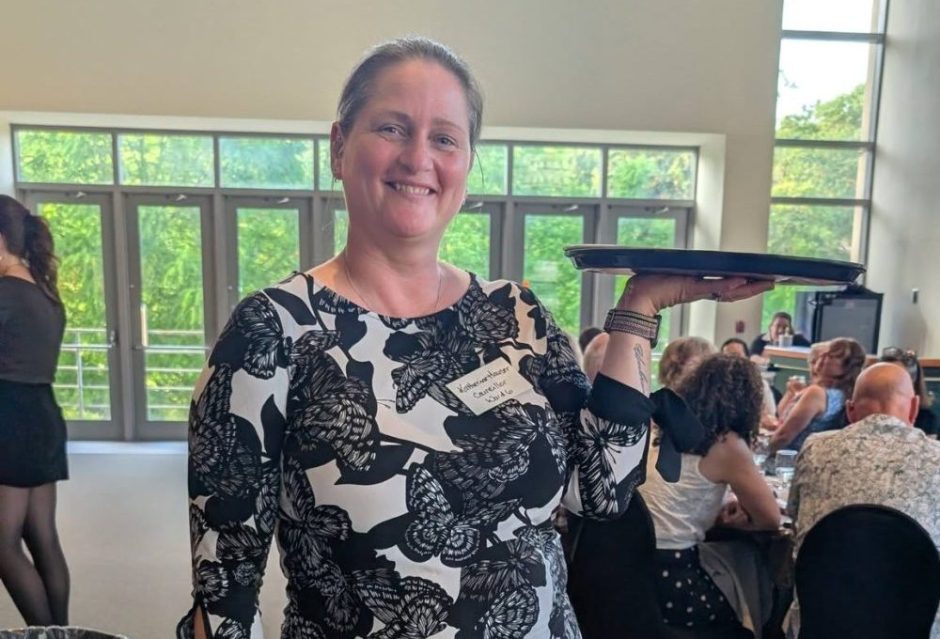
“Serving Ward 6 over the past year has been a privilege. I have asked questions, listened, learned and committed myself every day to being worthy of the responsibility I was given. I am grateful for the opportunity, proud of what I have done and excited about what comes next. I know I have more to contribute, and I would be honoured to continue serving as your City Councillor.”
Why do you want to be a city councillor?
I want to be a city councillor because I believe that public service matters. I genuinely love the work. I love listening to residents, asking questions, solving problems and helping people navigate City resources. I see the seat as a responsibility, not a reward. I also believe that I am good at it. I always come to the table prepared, ready to listen, ask questions and consider different perspectives. This past year on Council has only strengthened my commitment to public service. I have learned a tremendous amount and I know there is much more that I can contribute.
What is your background and experience, and how do you think that will serve you as a city councillor?
I bring experience from several sides of public service and governance. I was elected as the UGDSB Ward 6 and Puslinch School Board Trustee in 2022. There I served as Vice Chair of the Board and as an member on the Board of Trustees at the Art Gallery of Guelph for the duration of my tenure. In 2024, I was elected to serve on the U of G’s Board of Governors as the Alumni Staff Representative where I also sit on the Finance Committee and Executive Committee. In July of 2025 I joined City Council as one of the Ward 6 councillors through the appointment process that replaced the vacant seat left by Dominique O’Rourke.
I have a degree in Political Science and Criminal Justice and Public Policy from the U of G, a certificate in Forensic Studies from Mount Royal University, and I recently completed the Osgoode Certificate in Municipal Law and Governance.
Just as importantly, I have spent my entire career in customer service. I know how to listen, communicate with people who may be frustrated, solve problems and find answers. I understand that you don’t have to agree with someone to hear them and treat their concerns with respect.
This combination of governance experience and frontline service has prepared me well for Council. I understand how complex systems operate, but I never want to lose sight of who those systems are there to serve.
Given Strong Mayor Powers, how do you see your role as a city councillor when the mayor can override the will of council with just three votes?
Strong Mayor Powers make the role of individual councillors more important, not less. My responsibility is still to represent the people of Ward 6, ask difficult questions, scrutinize decisions and vote according to what I believe is in the best interests of our community.
They also make relationship-building around the Horseshoe incredibly important. Thirteen people come to that table with different experiences, priorities and perspectives, and we have to find ways to work together to move Guelph forward. When so much authority can be concentrated in one office, we need councillors who are willing to think independently, work across differences and build consensus.
Good governance is not about assembling enough votes to get your way. It is about making good decisions, being willing to defend them and respecting the people who disagree with you. Disagreement doesn’t have to mean division. Respectful debate and strong working relationships lead to better decisions.
Affordability is important to a lot of voters, and municipal budgeting can be very difficult. How will you balance the needs of a growing city with the demands for low or zero tax increases over the next term?
Affordability has to be at the centre of every budget discussion. People are struggling, and we cannot continue to solve every new pressure by adding it to the property tax bill.
We need to be much more aggressive in advocating to the Provincial and Federal governments for sustainable funding for the responsibilities and costs that have increasingly fallen to municipalities. Property taxes were never designed to fund every social, housing and health-related challenge our communities are now being asked to address.
We also need to work with Wellington County to take a hard look at our current approaches to housing, homelessness and social services. We are spending significant public dollars, and if the outcomes are not improving, simply spending more on the same solutions is not the answer. We need to be willing to ask what is working, what isn’t, and what we can do differently.
At the same time, we cannot balance budgets by continually deferring necessary infrastructure and maintenance. Those costs don’t disappear — they often become more expensive later.
I will continue to scrutinize spending, look for efficiencies and outside funding, and push for better value and better outcomes. Keeping Guelph affordable requires more than chasing the lowest possible tax increase in a single budget year. It requires addressing the pressures that are driving those increases in the first place.
Council this past term has done a lot of housing policy, but that hasn’t translated into more shovels in the ground. How will you help close the gap over the next four years?
Approving housing and building housing are two different things. Guelph has made significant policy changes and created capacity for thousands of new units, but Council cannot make a private development financially viable or make someone buy a home.
We need to be honest about the barriers. Construction costs, borrowing costs, market demand and the price people can actually afford to pay all influence whether a project moves forward. The City should continue to streamline its processes and remove unnecessary barriers, but we also need to recognize where the limits of municipal control are.
Where we offer incentives or public investment to encourage development, I want clear expectations and measurable outcomes for that investment. The goal isn’t simply more approvals – it is getting the kinds of housing people need built at prices they can afford.
We absolutely need more housing. Over the next four years, I want our focus to move from how many units have been approved to how many have actually been built and occupied.
Aside from the demands for more housing, land use planning also means assuring that there’s enough room to account for growth in business, institutional and commercial land uses, how will you balance all these priorities?
Growth cannot just mean building more housing. A growing city also needs places for people to work, learn, shop, access services and enjoy parks and public spaces. We need to protect employment lands and ensure commercial, institutional and recreational needs remain part of the equation as we plan for residential growth. Protecting and expanding access to parks and green space must also remain a priority as our population grows.
Planning ahead and good forecasting are essential, but our plans also need to be flexible. Growth patterns change, developments happen faster or differently than anticipated, and the needs of a neighbourhood can change with them
Water availability is a growing concern. How will you ensure that Guelph has the capacity it needs to support this growing city?
Guelph has always had to think differently about water. As one of Canada’s largest communities dependent on a limited groundwater supply, protecting and expanding our capacity has to remain fundamental to how we plan for growth.
Fortunately, we aren’t starting from scratch. We have a long-term Water Supply Master Plan, new supply projects underway, and a strong history of conservation and water efficiency. We need to keep those investments moving while continuing to find ways to reduce demand and make the best use of the water we already have.
I also strongly support our new approach to water and wastewater servicing allocation, including “Use it or Lose It”. In a city with finite servicing capacity, we should not tie up capacity indefinitely for developments that aren’t moving forward. Reallocating that capacity to projects that are ready to build helps turn housing approvals into actual homes.
The next step is continuing to look at water as one interconnected system – drinking water, wastewater and stormwater – while regularly testing our plans against actual growth and demand.
Growth and water capacity have to move together. We cannot approve growth today and simply assume the water supply and infrastructure will catch up tomorrow.
Trust in government and institutions is a major issue. How will you keep your constituents well informed about city hall business, and help them feel included when it comes to decision making?
Trust starts with accessibility and transparency. I make myself available to residents and am always willing to have a conversation – including the difficult ones. People may not agree with every decision I make, but I am happy to explain and defend my reasoning, how I got there, and the information I considered along the way.
Just as importantly, I am willing to listen. I don’t assume that I have all the information just because I read the reports. That is just the start. Residents bring lived experience, history and perspectives that can change how I understand an issue. I am willing to consider new information, reassess my position and change course when the facts support it. Being open to new information is essential to sound decision-making.
My first year on Council involved a tremendous amount of catching up, keeping up and learning. Going forward, I want to be more proactive about keeping residents informed. I now have a website that I intend to maintain beyond the election and use to share important City information, upcoming decisions and opportunities for residents to participate.
I will also continue to be accessible and show up in the community. Some of my most valuable conversations happen outside City Hall, and those conversations help me bring the community’s perspective back to the Horseshoe.
What would you say is *your* issue? What is the one thing you want to talk about on the campaign trail this fall and have a thorough debate about it before this election is over?
My issue is how we manage growth. We need more housing, and the Province has made it very clear that municipalities need to increase housing supply. I agree that we need to get housing built. But faster cannot be our only measure of success.
We still have a responsibility at the municipal level to make sure infrastructure keeps pace with development. That means roads, transit, sidewalks, drainage, water, parks and other services. It also means looking at the cumulative impact of development rather than considering every project as though it exists in isolation.
I also want us to be more agile. We can plan ten years ahead, but when development changes the reality of a neighbourhood, we need to be willing to revisit those plans and move infrastructure priorities when necessary — particularly where safety is concerned.
We may not control every rule or every decision about growth, but we do control how thoughtfully we respond to it. Building faster has to be accompanied by building smarter.
What perspective do you think you will bring to council that is not currently reflected?
I bring a perspective shaped by a life that has taken me through many different sides of the same issues. I have been an employee and a business owner, a union member and served on governance boards. I have been a homeowner and I am now a renter. Even recently, breaking my ankle has given me a new appreciation for accessibility and how easily I once took things like driving, taking transit and simply getting around the city for granted.
I have also known what it is like to raise a large family with a strong partner and a successful business, and what it is like to lose that security, become a caregiver, become a widow and carry on as a single parent. I am resilient, and I understand how important it is that the decisions we make recognize the realities people are actually living.
Those experiences have made me a stronger decision-maker. I know the same issue can look very different depending on where you are sitting. I look beyond the most obvious perspective, ask who else will be affected, and I am comfortable sitting in the grey long enough to understand the complexities. The best decisions are rarely found at either extreme. Finding common ground is what will allow us to move the business of the City forward.
I have brought this perspective to Council for the past year, and I hope the people of Ward 6 will give me the opportunity to keep doing so.
Is there anything else you want to tell voters as they make their decision?
Serving Ward 6 over the past year has been a privilege. I have asked questions, listened, learned and committed myself every day to being worthy of the responsibility I was given.
I am grateful for the opportunity, proud of what I have done and excited about what comes next. I know I have more to contribute, and I would be honoured to continue serving as your City Councillor.
I’m just getting started.

