
This week at Guelph city council was the monthly planning meeting, and it was the first time that the debate was pushed to nearly midnight in a long time. So what was so controversial? Well, there was a couple of new projects on both sides of College Avenue, one big and one small, but it was the smaller one that got the biggest reactions. Then there was the plan to get more affordable units downtown, which didn’t not turn out the way we might have hoped. Here’s the recap!
Planning Meeting of Council – April 15, 2026
It was a night of surprises as council raced to midnight for the first time in a long time. We kicked things off by deferring the decision on the long-awaited subdivision at 115 Watson Parkway North; we will see that one at the next planning meeting at the request of the applicant. Instead, they headed to College Avenue.
On the east side, there was plan for a new privately-owned student residence right next to Cutten Fields, a 10-storey build with 153 units of two-, three-, and four-bedroom units ideally situated right across the street from campus. This would the eighth such building to come forward in the last several years; three under the University of Guelph plus five privately-owned projects.
Obviously, Cutten Fields itself had some objections. Their representative, Juliane vonWestherolt, noted issues with the massing, concerns about wind mitigation, the blockiness of the building, and the amount of shadow that will affect play and grass quality at the ninth hole. They also have concerns about trespassing and student overflowing parking, especially in the case of people dropping off food or picking up and dropping off people. The development team assured council that they were thinking of those things and that this type of project is well within their portfolio. The Yarra, as they’re dubbing it, is designed to be scalable to communities across Ontario – particularly for university towns with housing issues – integrating into the community as builders and managers to create students’ first choice in accommodations.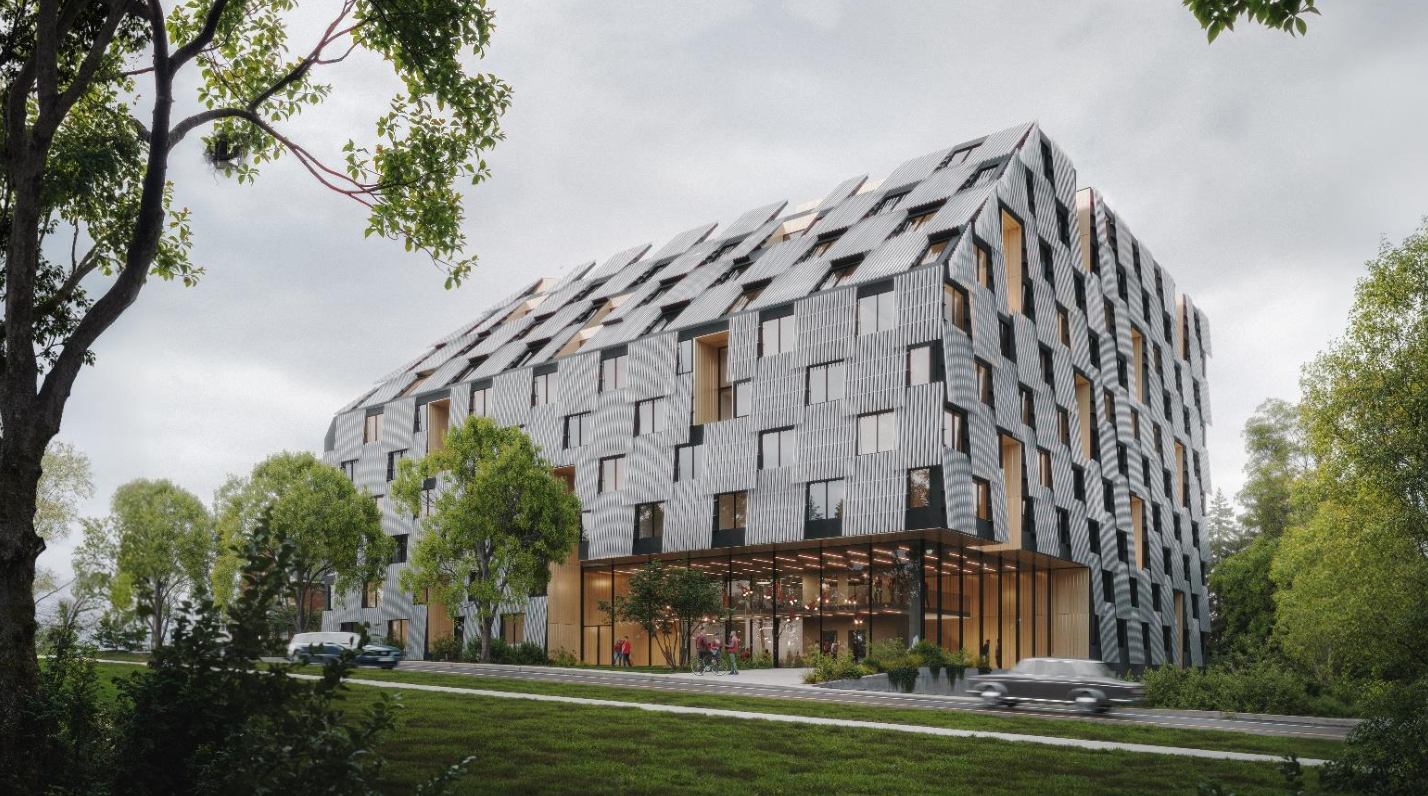
Council was open to the possibility but raised the issue of safety with errant golf balls being fired off the course next door and traffic concerns on College in terms of pedestrian safety. Also, some councillors raised the question of building specifically to the student market, which may be near saturation with those seven other projects in progress, so could the Yarra be fit for family rentals too. Mayor Cam Guthrie acknowledged that there is some tweaking that needs to be done, and some neighbour relations to build, but council voted to receive the application.
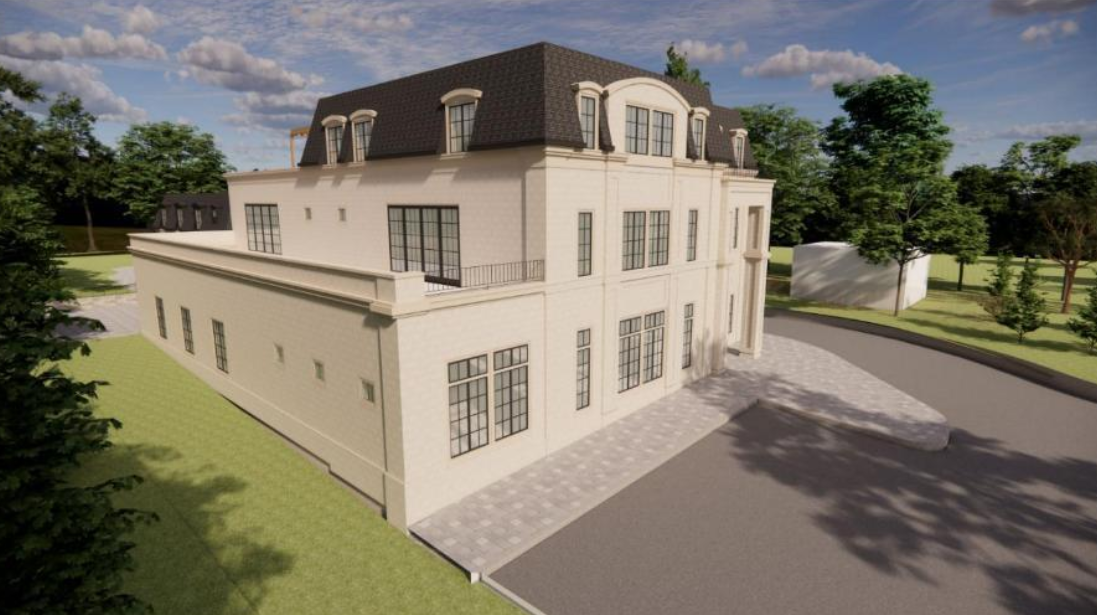
Interestingly, the more controversial application was the smaller project on the west side. The Chabad of Guelph will be demolishing its current building, and they want to replace it with a new three-storey place of worship that includes a daycare facility as a complementary use, along with an attached two-storey residential dwelling containing an additional dwelling unit (ADU). Planner Jay McGuffin assured that they had done a lot of public engagement on the proposal, but it was soon clear that they haven’t done enough.
Three neighbours came to the podium to list their many concerns including the impact on trees and vegetation, overflow from stormwater, more light and activity with the expanded services, the setbacks, the parking, and a lost of trust with the limited consultation. It was also a problem that this was both the statutory meeting and the decision meeting, and that was because it was a mere zoning bylaw amendment, which cut the timeline to 90 days.
Most of the council questions had to do with closing the gap between the neighbours and the Chabad, particularly in the case of “duelling arborists” where the applicant’s review reached one conclusion and the neighbour’s review reached another. Guthrie again encouraged neighbourly relations and mentioned Rabbi Raphi Steiner’s invitation to meet and discuss their concerns and said that this was a “great application.”
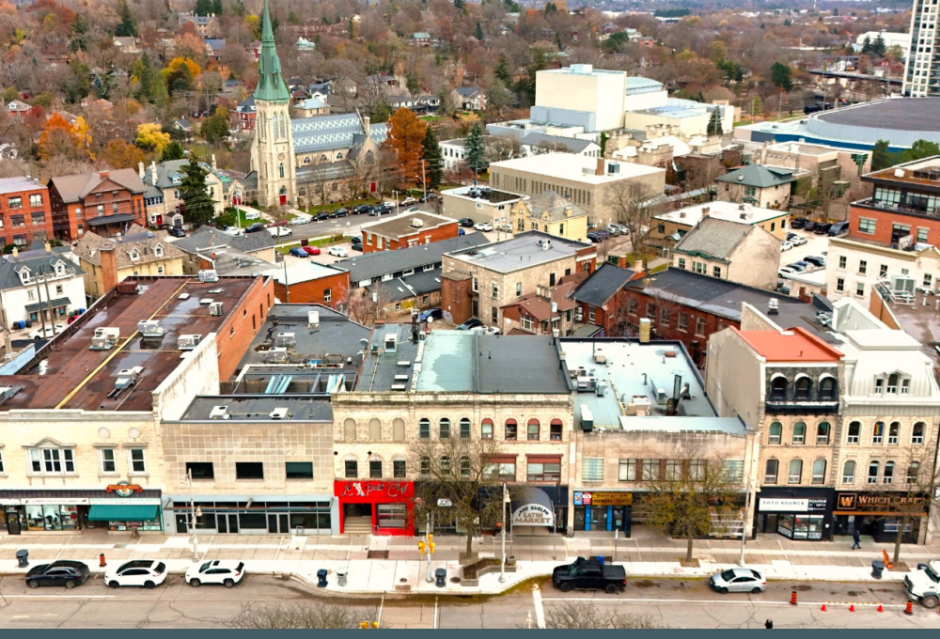
 The brought us to the decision report on the Downtown Community Planning Permit. Since January, staff paired down the affordable housing requirement from the previous sliding scale to just five per cent for a project with the new heights granted in Official Plan Amendment 106, which increased the height limits in many sections of the downtown core. The option was also there for cash-in-lieu or some combination of units and cash, but such a drastic difference in the requirements was still not good enough for a couple of downtown developers.
Over the next hour, representatives for at least five different downtown projects offered a recital of why the CPP was not going to work, why it will bring construction to a halt, and why it might even be unenforceable legally speaking. The Wood Development Group sent two delegates who both said that the CPP requirements would effectively scuttle their Plant No. 2 project and make it unfeasible. A couple of councillors already point out that developers have already been granted substantial discounts in fees, or the elimination of DCs completely, and there are also no more pricey parking minimums which should all theoretically reduce the cost of construction, but the delegates were firm that this was going to strangle any development, especially given the current economic conditions.
General Manager of Planning and Building Services Krista Walkey assured council that the CPP was inline with expectations and the rules, and she also noted that city hall is bullish on downtown development too or else they would not be spending over $100 million in infrastructure upgrades. She added that there are some projects downtown that are looking at upwards of 30 per cent affordable units, which proves that its not unobtainable. (For these purposes, it’s important to note that the definition of “affordable” is the provincial one.)
Council went back and forth with staff about timelines, previous discounts, and the equity of applying the community benefit to get more affordable units, plus they looked at the success so far of the other CPP in the area around Stone Road Mall. Eventually, Councillor Cathy Downer made the move to restore the sliding scale, saying that this was a lot of work to get only two affordable units in every 10-storey tower, but council ended up split on the question, literally. The amendment failed in a 6-6 tie due to the absence of Councillor Michele Richardson.
At this point, council approved a motion to continue past 11 pm.
Councillor Rodrigo Goller proposed a motion to allow staff delegated authority to approve development variations that deviate up to 20 per cent from established guidelines and standards, but staff have previously explained that this would be a lot of extra work for them, so it was pulled.
Next, Councillor Ken Yee Chew tried to extend the transition period from two years to three, a direct response to one delegate who said that they wanted more time to adjust, at least five years. Mayor Guthrie was open to that, but when no one else was enthusiastic about five years, he wondered about three. Staff noted that two years is the standard transition time for all new policy like this and making it a three-year transition was probably not going to do a lot for the requested economic stability. The amendment failed 4-8.
One last amendment was put on the floor to only apply the percentages on projects that go over and above their approved heights, but there was a lot of concern that this would result in even less affordable housing than the staff recommendation. Many councillors noted that the CPP was not lining up with the city’s Housing Affordability Strategy, and that the additional height approved in OPA 106 was “transformative” and unique, and the only caveat was that the extra height would come with affordable housing. The die was cast and this amendment failed too.
Ultimately, the CPP recommendations passed 8-4, except for recommendation #1 which received the report because that was one approved unanimously.
There was one last item before the meeting wrapped. Ian Panabaker from Wood mentioned that they had just acquired 39 Elizabeth Street which completes their plan for Plant No. 2, but it needs a redesignation to bring it into the fold. Councillor Goller moved a motion to redesignate the property, but staff, when asked, said that this was technically an Official Plan Amendment, which requires a specific timeline of public notice and process. As Councillor Phil Allt put it, approving this at 11:30 at night with no public notice was not a good look.
Unable to determine how best to proceed with the motion, Guthrie asked Panabaker himself to comment who noted that this is something Wood can take care of in the Urban Design Master Plan, so there was no need to handle it tonight.
Council wrapped up before midnight when city hall would turn back into a pumpkin. (Just kidding!)
Click here to see the complete recap of the meeting.


One thought on “This Week at Council: More Heights, Less Affordable Housing with Downtown Community Plan”