
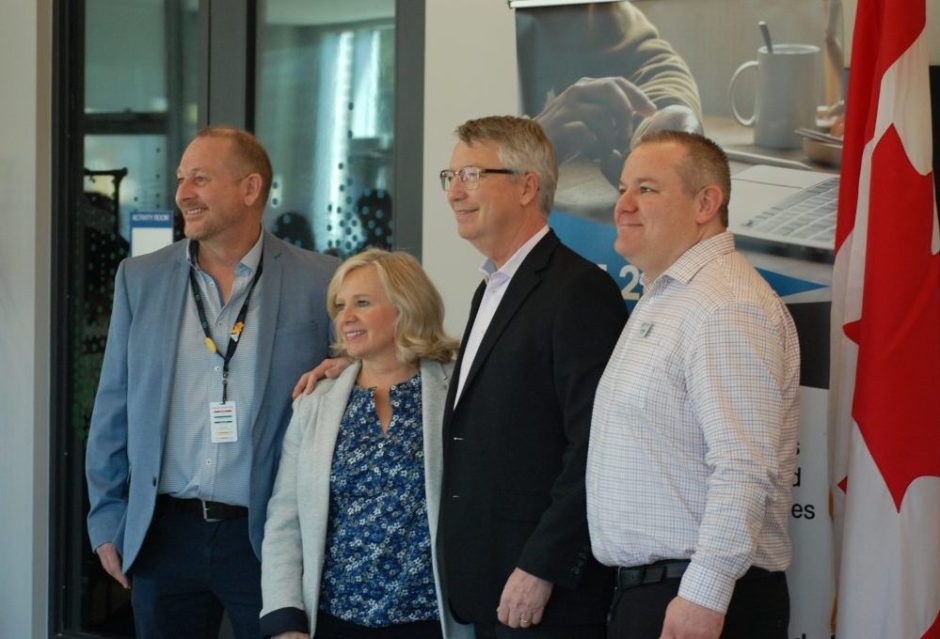
As a result of the pandemic, and other outside factors, we’ve seen an increased need for mental health services in the last few years. What you might not be aware of though is that there’s no one size fits all approach for people seeking mental health assistance, but a funding announcement Thursday morning at the new Guelph headquarters of the Canadian Mental Health Association of Waterloo Wellington hopes to change that.
This morning, in an area of the first floor of the Woolwich Street building that houses the services of The Grove Youth Wellness Hub, Guelph MP Lloyd Longfield announced $245,161 in new funding for CMHAWW, plus $78,230 for Compass Community Services, which will be used to help these services reach marginalized communities in the Guelph area.
“It’s an honour to be here and to be part of this initiative that reflects the commitment to mental health that we have in Guelph, and that every individual in Canada has different needs as we look at ways that we can support people where they’re are,” Longfield said. “Knowing the collaboration that exists here in Guelph with all the partners around the table and the relationships that we have here, this is a commitment that really transcends the financial support.”
The money for CMHA will go to the Here 24/7 crisis response and referral system to address equity, diversity, and inclusion service gaps including multilingual services, education for racialized communities, research into the mental health needs of racialized
communities, and increased diversity in distress centre volunteers. Compass meanwhile will be using their funds to better serve 2SLGTBQIA+ people, racialized and Indigenous persons and older adults.
Helen Fishburn, the CEO of CMHAWW, explained that the funding will be used to eliminate barriers for people who have experienced racism and other forms of discrimination, people who don’t necessarily trust the system or are looking for ways of healing that better suit their own traditions and experiences.
“It’s about our approach, and how we serve our community. It’s about building those trusted relationships, and reaching people that we know are not calling us,” Fishburn told Guelph Politico after the announcement. “We’re also looking at increasing texting ability, because that’s another avenue that people want as well. We just have to think differently, and we have to think about what the needs of equity deserving communities are versus what our system needs are and then tailor our approach.”
One of the ways that that CMHA is trying to tailor their approach is by working with groups like the Crow Shield Lodge, which offers land-based healing for Indigenous people in New Hamburg and Cambridge. Fishburn said that working with Crow Shield Lodge let’s CMHA offer some accommodation for local Indigenous people, while they can help the Lodge access those official channels for funding and support that they may not be able to access alone.
“We need to build trusting relationships, and then there are new services and new pathways that open up because of that,” she said. “I couldn’t just walk into an Indigenous community and say, ‘Hey, let’s do a program together.’ You have to build that trust, that respect. They have to know that I’m sincere, and that I’m gonna follow up on behalf of my agency.”
“We have to approach these conversations with humility, and grace. I just feel so fortunate to have a number of people who’ve been helping me and guiding me through it and our agency,” Fishburn added.
You can see the full video from the announcement below:
 Guelph Politico