
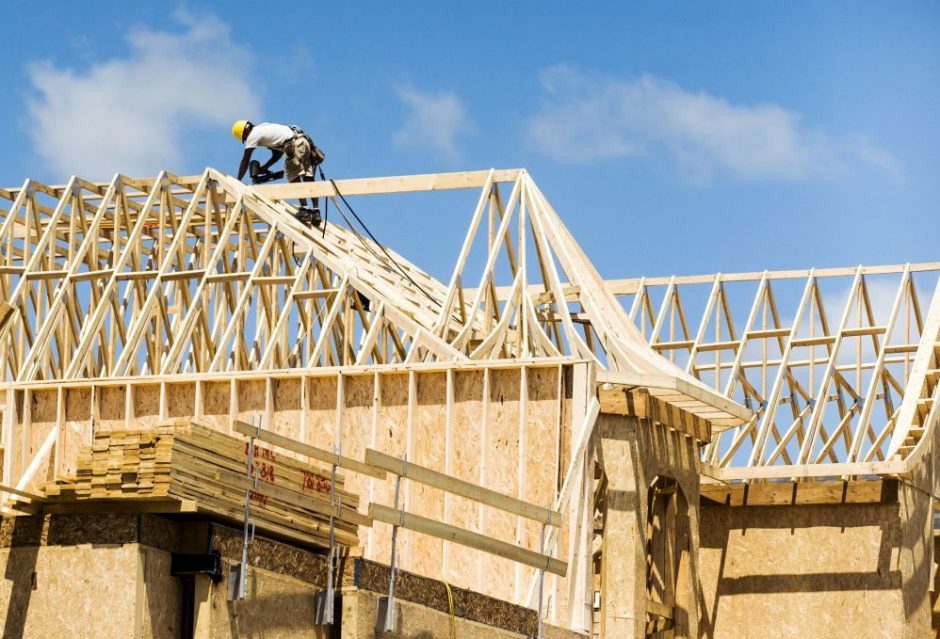
The first entry in a packed day at City Hall (which also includes an Accessibility Advisory Committee meeting and the planning meeting of city council) is all about housing. Following up on other recent meetings about the subject, city council will offer some further and firmer direction on how to combat the local housing crisis. Will Guelph City Council be finally able to make an impact? Let’s see what the plan is…
NOTE #1: Delegates will be able to appear at this meeting in-person or via tele-presense but you do have to register with the clerks office before 10 am on Friday October 13. You can also submit written delegations and correspondences for agenda items.
NOTE #2: In addition to meeting in-person, this meeting will also be live-streamed on the City of Guelph’s website here.
NOTE #3: This is the first of two council meetings that’s taking place on Tuesday October 17. The regular planning meeting will begin at 6 pm.
NOTES #4: The open session for this meeting will begin at 1 pm.
CLOSED MEETING:
Before the meeting, council is going to meet in closed session to talk about the Collective Results report from the last meeting and other housing matters. This portion is being held in-camera under section 239(2) (f) of the Municipal Act for “advice that is subject to solicitor-client privilege, including communications necessary for that purpose.”
Housing in Guelph Workshop Actions and Responses – Following up on September’s meeting, this special session of council will turn a lot of that research and recommendations into a plan with actual directions. City staff have laid out a list of 10 objectives to achieve by 2026 including advocacy to higher levels of government, the leverage of incentives to drive housing development, modernizing the application processing, prioritizing collaborative solutions, and achieving zero appeals at the Ontario Land Tribunal.
In terms of the financial picture, the staff report notes that the Ontario government has yet to offer anything concrete about “making us whole” (which staff seem to phrase as something of a joke in the report), and the hope now is that the Housing Accelerator Fund (HAF) and the Streamlining Development Approval Fund might be able to fill that widening gap.
Here’s the full 17-part recommendation, which pretty much speaks for itself:
1) That the City of Guelph adopts a human rights-based approach to housing, including a Housing First philosophy, to align with the National Housing Strategy.
2) That the Mayor and CAO be directed to work with the County of Wellington Warden and CAO to conduct a review of the governance model of the County of Wellington’s Social Services Committee, to establish clarity and accountability regarding the City and the County’s role in the approval of priorities and spending related to Social Services, and report back to Council no later than Q1 2024.
3) That Council supports the County of Wellington’s plan to host a Housing and Homelessness Symposium, no later than Q1 2024, including key community stakeholders to address the urgent needs facing the community. The planning committee should include representatives from the City of Guelph, the GW Ontario Health Team, WDG Public Health, the WG Drug Strategy and the Guelph and Wellington Task Force for Poverty Elimination. The Symposium should consider the community needs for housing on the left-hand side of the continuum including shelter services and permanent supportive housing, as well as the integration of health services in the housing sector.
4) That Council call on the County of Wellington to develop and lead a coordinated, joint community advocacy effort as articulated in Appendix A of the County of Wellington’s preliminary Homelessness Plan presented to Council on September 12, 2023.
5) That the Mayor be directed to send a letter to the Minister of Municipal Affairs and Housing, copied to the County of Wellington, the Premier of Ontario and area MPPs, requesting that that the Government of Ontario develop and adopt a provincial housing strategy that considers the donation of provincial lands for affordable and supportive housing and incorporates measurable targets and sufficient funds for ending homelessness and ensuring access of all Ontarians, including those of limited income, to housing of an adequate standard without discrimination.
6) That staff be directed to work with the County of Wellington, GW Ontario Health Team and local supportive housing service providers to provide letters of support to the Ministry of Health expressing the urgent need for accessible base funding to support wraparound health supports on the left-hand side of the housing continuum; and that staff work with CMHA Waterloo Wellington to provide any necessary letter of support for the application to the Ministry of Health to establish an alternate care destination clinic.
7) That given the recent success with donated land for the Kindle Supportive Housing project, Council urge local developers and the Chamber of Commerce to discuss and consider opportunities for land donation to address urgent housing needs in Guelph; and that the City continue to utilize the Strategic Real Estate program to look at all opportunities to repurpose City land and assets in ways to address housing needs.
8) That staff are directed to seek feedback from the DGBA, local downtown social service agencies and the County of Wellington to consider the best location(s) and delivery method for the provision of 12-hour service, 7 days a week daytime shelter space in the downtown secondary plan area, reporting back to Council on recommended next steps no later than November 2023. Options presented should consider issuing a Request for Proposals to identify interested service partners, and identification of possible funding sources. Staff are also directed to work with Royal City Mission to consider a month-to-month extension of the current Community Benefit Agreement, to ensure consistent service provision until Council has time to consider next steps.
9) That the Housing Affordability Strategy be completed with a goal to enable a greater supply and mix of housing and to enhance capacity, awareness and support for affordable housing throughout the community.
10) That the newly hired Development Advisor develop and support partnerships by establishing a community Housing Affordability Strategy focus group to advance the housing supply initiatives along the right-hand side of the housing continuum.
11) That the Development Advisor and Housing Stability Advisor review all available incentives to increase supply in the housing market of both affordable and market rate housing.
12) That staff be directed to immediately prepare a zoning by-law amendment that would permit, as-of-right, up to 4 residential units per lot within residential zones where the Council-approved (subject to appeal) Comprehensive Zoning Bylaw (2023)-20790 permits a maximum of 3 residential units per lot. The implementing zoning by-law may address criterion such as servicing capacity to support the proposed units.
13) That the City use the Housing Accelerator Fund (HAF) funding, if received, to incentivize approximately 975 additional new residential units by prioritizing and implementing initiatives such as advancing a cash-in-lieu program for parking, stormwater, and parkland, developing an evaluation framework to optimize city-owned land, and supporting, incentivizing, and attracting development of housing types that the City has identified as most needed. Attachment 1 provides a detailed overview of the City’s HAF Action Plan initiatives.
14) That the Mayor be directed to follow up on his correspondence to Minister Calandra, dated September 7, 2023, to discuss the provincial actions identified in Guelph’s Housing Pledge to help reach our housing targets, including making us whole financially.
15) That Council call on the Province of Ontario and the Government of Canada to reconsider the fiscal framework in a new deal for municipalities to achieve healthy, equitable and thriving communities, and refine the way we engage across orders of government.
16) That the City support local post secondary institutions in requesting funding from other levels of government, beyond those already provided by the City in the form of development fee exemptions to expedite the development of more post secondary accommodation spaces.
17) That the Development Advisor work with the Guelph and District Homebuilders Association and Developers Association to advance outstanding sites that have approvals in place but have not been built and that the City maintain the list of approved and unbuilt sites.
 Guelph Politico