
It was another long one at Guelph City Council in terms of the planning meeting, but it was not so divisive as it might have appeared at the beginning. It was a packed agenda including a couple of new residential projects, the next heritage conservation district, and the annual report about Guelph’s growth and its relative success. Also, a key piece of Guelph’s affordabile housing strategy was complete. Here’s the recap!
Planning Meeting of Council – July 14, 2026
It was a long way to go to secure what was a lot of agreement this week at the planning meeting. If you thought all the people who were signed up to delegate were spoiled for a fight, you were probably disappointed with how it was all pretty collegial in the end.
After approving the consent agenda, which was two new heritage designations, council got a brief presentation about the completed rental replacement bylaw and Official Plan amendment. This bylaw, which works with the renoviction bylaw passed last month, outlines when and how landlords are required to offer tenants replacement units if they’re forced to move out for their affordable accommodation for some advanced renovation work. After being in the works for months, and a whole meeting about the subject just last month, council didn’t have much more to say and swiftly approved the bylaw.
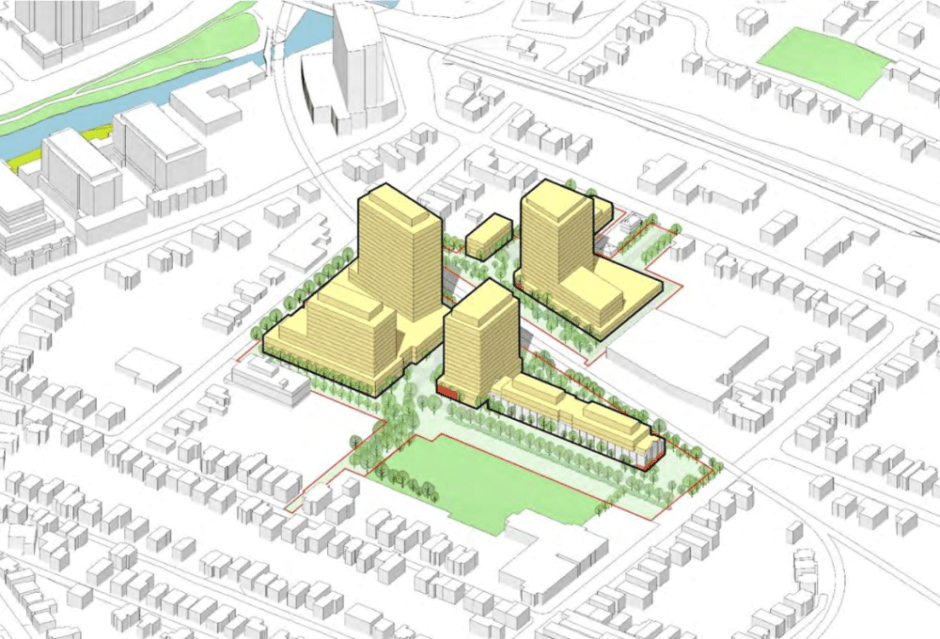
Less swift was the statutory planning meeting for 266-280 Clair Road West and 950 Southgate Drive. Sandwiched between Bishop Mac and Southgate Drive, the applicant wants to rezone the area, an open space, to build a residential development comprised of one 16-storey apartment building, one 14-storey apartment building, 15 blocks of back-to-back townhouses, and 16 blocks of stacked townhouses for a total of 940 dwelling units with site access from Clair. And, as a bonus, half the available units will meet the market definition of affordability.
Staff did have some concerns around the loss of more employment lands, as this property is currently zoned in the Official Plan, but Hugh Handy, the applicant’s planner countered saying that leaving this area as employment lands could only deliver another 100 jobs max given the economic character of the area. Also, this project actually was about jobs! Mike Labbe of Home Opportunities Non-profit Corporation said that there are 5,000 vacant positions in Guelph right now across several businesses and that’s because there’s a lack of affordable housing opportunities; people don’t want to work here because they can’t afford to live here. Labbe also noted without citing a source that 50 per cent of Linamar employees currently commute to and from their plants every day. This was a recurring theme among the delegates, some of whom said that there were Linamar employees themselves.
 The other major piece of the project was provided by Jeremiah Vanderlaan of Guelph-based builder Kiwi Newton. Venderlaan explained how Kiwi Newton’s precast system makes projects like these 20 to 30 per cent cheaper than similarly sized construction projects, and that it would take between 12 and 18 months to complete once construction on the buildings themselves actually begins.
There was a lot of support from the nearly 20 delegates for the project, including two members of the Guelph Community for Active Transportation. A couple of delegates did have concerns about the environmental impact of the project especially with the placement of the stormwater management feature and the ecological linkage to connect various natural spaces. Staff had those concerns too, with some councillors asking for staff to bring back more information about the potential impacts on animal life in the area when this project comes back to council for final approval in September. Council voted unanimously to receive the application.
It was heading toward eight o’clock by the time council returned from dinner break to tackle the rest of the agenda. On the statutory meeting about the plan and guidelines for the Ward Heritage Conservation District there was more praise for staff efforts. One delegate did suggest that there should be a way of restoring buildings to their original purpose as well as their original exterior look, while Mayor Cam Guthrie had concerns that some of the measures like the so-called “street rhythm” were too prescriptive. Still, staff were given lead to finish up this work, which will be the fourth completed HCD for the city, and council unanimously received the report.
 Next was the Guelph Growth Management Monitoring Report as council heard about the progress of key pieces of housing policy including the Housing Pledge made to the Ontario government to build 18,000 new units by 2031. The highlights were decidedly mixed because while the City of Guelph has made great gains from a policy perspective, you can’t see it from the number of new units built in 2025, which was 664, or about 300 off the 20-year annual average.
The report also noted that building density downtown in terms of the number of residents and jobs is flat thanks to the Co-operators moving to the south end and the proposed Conestoga campus in their old building being on hold for the foreseeable future. When asked if the City will be financially ready when the market turns, CAO Tara Baker explained that Guelph will only start to see a fiscal recovery when building permits start being issued because city hall keeps approving new units but they only get counted towards the Pledge when a shovel goes in the ground.
The last item of the agenda was the Proposed Urban Design Master Plan (UDMP) Application for 64 Duke Street – Mid-town Village, also know as the much-discussed Plant No. 2 project being built by the Wood Development Group. No formal building plan or land rezoning was being considered, just the overall layout of the nearly four-hectare property with a train track running through it. The end result will have between 800-875 units, an undetermined amount of commercial space and public common areas and trails.
There were six registered delegates, including three from Wood. From the more community-based delegations there were thumbs up for the active transportation network proposed for the site, but there were some concerns that the project goes against the working-class character of the Ward, and the likelihood that there will be a lack of affordable options in the development. Members of the Ward Residents Association also noted that developers in Guelph need to start leveraging their influence to get better public transit in the city so that we can become less car reliant.
As for council, they want to know more about how the project’s evolved, and how the potential timeline for construction. Ian Panabaker, Vice President of Development at Wood, said that it’s a matter of confidence and there’s not really any in the current real estate market. In terms of changes, the Wood team explained that they tried to move all the taller buildings to the centre of the site, and they also took a lot of lessons from Metalworks about how to integrate the exteriors at the base of the building into the existing streetscape. And yes, we will have to keep calling it Plant No. 2 because “Mid-town Village” is only the project’s legal name.
Council approved the plan, approved the bylaws, and wished everyone a good night before 10:30. Next week, the last three meetings before summer break!
Click here to see the complete recap of the meeting.


One thought on “This Week at Council: A Good Night of Planning”