
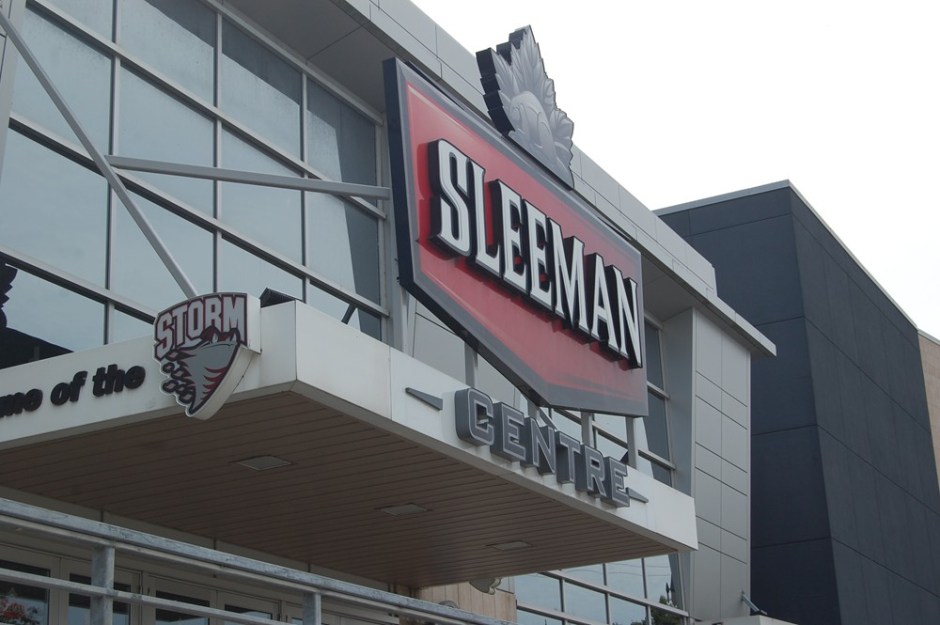
It was all Sleeman Centre all the time at this month’s Committee of the Whole meeting. Well, almost. First though, the committee had a discussion about development fees and whether or not they’re an impediment to new home construction, and there was really no final resolution there, but coincidentally that was also where they left the Sleeman Centre construction. For all the details, check out the recap below…
Committee of the Whole Meeting – March 4, 2026
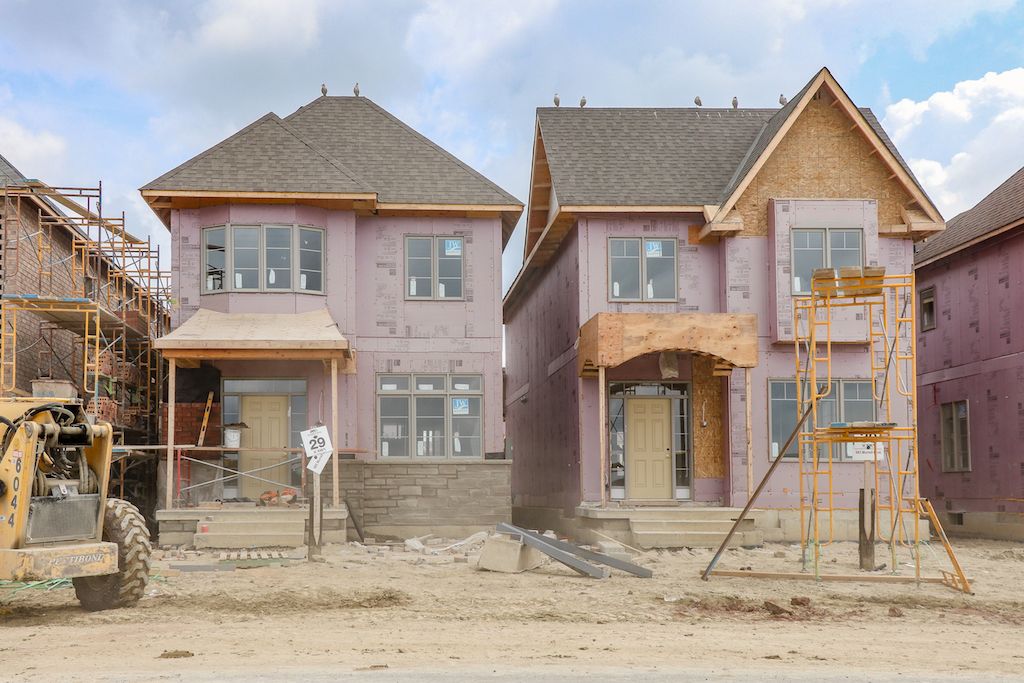
After approving the update to Lobbyist Registry without much of a fuss, committee dug into money matters. The Administrative Development Charge Bylaw Update was mostly administrative as it made changes prompted by provincial legislation, but it became a deeper discussion about all the holes in the budget being dug by those changes.
Of primary concern is the cash flow pressures created now that cities collect DCs when the built units are occupied and not when the building permit is issued. It will mean less liquidity, and more uncertainty about the receipt of DC payments with an impact of between $10 and $20 million over the next 10 years. It will likely mean more capital deferrals will be required in the future.
The other part of this report concerned staff’s evaluation about what other municipalities are doing with DCs. General Manager of Finance and City Treasurer Shanna O’Dwyer explained that Mississauga has expanded grant-in-lieu programs for targeted rental housing, London has a temporary Community Improvement Plan (CIP) for first time home buyers, and Burlington is looking at time-limited but broad exemptions. She also noted that cutting DCs doesn’t make infrastructure any cheaper, it just means having fewer financial resources to pay for it, and municipalities have very few options to fund itself already.
Between the longer wait for DCs and the number of new exemptions, Guelph is left to prioritize growth at the expense of asset management, which means that this money, approximately $18 million, needs to be made up somewhere if Guelph is going to stay on top of capital needs. Staff reminded committee that Guelph’s DC rates are in the middle of the pack in Ontario, and are actually closer to the cheaper side of the grid, but the point is that all municipalities in Ontario need a new, stable and predictable funding for growth infrastructure from upper levels of government, or at the very least they need the Ontario government to stop fiddling with planning policy so that the market can reclaim its footing.
 Committee further interrogated the fiscal impact, particularly around future potential deferrals. O’Dwyer said that any level of deferrals in future budget cycles will depend on how the projected delays bear out in reality. She also noted that the City has already delayed all the medium priority items so the next step from here is deferring some high priority projects. On top of that, there’s no expectation on the part of the developer to pass on any savings enjoyed on municipal fees, and no way to force them to pass the savings on either.
Committee approved the recommendations.
After approving the 2026 Property Tax Policy, committee pivoted to Public Services, which was entirely about one public service, culture and recreation. After learning a bit more about the department in a service profile, General Manager Danna Evans laid out the two complimentary reports.
First up was the Recreation Facilities Allocation Process Update, for which Evans explained that there will be changes to how community groups can rent ice time at Sleeman Centre once the two new pads at the South End Community Centre open later this year… On September 1. (Deputy CAO Colleen Clack-Bush made that announcement a little later in the meeting.)
This connected to the second report, the new Sleeman Centre Operating Model. In order to make the Sleeman Centre more desirable to rent as a venue for film shoots, concerts, and other events, not to mention make it more fiscally sustainable, the Sleeman Centre will no longer be used an auxiliary ice pad for long-term bookings, and along with that the youth facility discount for renting Sleeman will end.
On the allocation policy, Evans was asked about people going outside the city to find ice time, and there’s a perception that there’s a preference for certain sports too. Evans said that her staff has done robust communication with community users, which caused someone in the gallery to burst out laughing. Evans continued specifying that Patty Pizziola, Recreation Supervisor for Bookings, Events and Promotions, did surveys and outreach through consultants with active user groups but they were looking at the process for securing ice time and not the policy.
As council got into the Sleeman Centre operating model discussion, the focus was not on the efforts to make from money from the Centre, but on what becomes of the youth groups and leagues that rent the ice there seasonally. Despite the repeated assurances from DCAO Clack-Bush that everyone getting ice time in the Sleeman Centre will be accommodated elsewhere in the system, and the relative urgency to get all this completed by September 1, some members of council couldn’t let it go.
Councillor Rodrigo Goller led the charge asking for clarity: youth groups can still book the facility, but they just have to pay the full rate? Evans said that’s right, which brings the rental of Sleeman inline with the rental policy of the River Run Centre, where the youth facility discount also doesn’t apply. Goller pondered if there was some way to make the Sleeman Centre available to youth leagues with the caveat that their practices might be cancelled if something bigger comes up, but Evans said that they we’re aiming for consistency and not putting groups in that position.
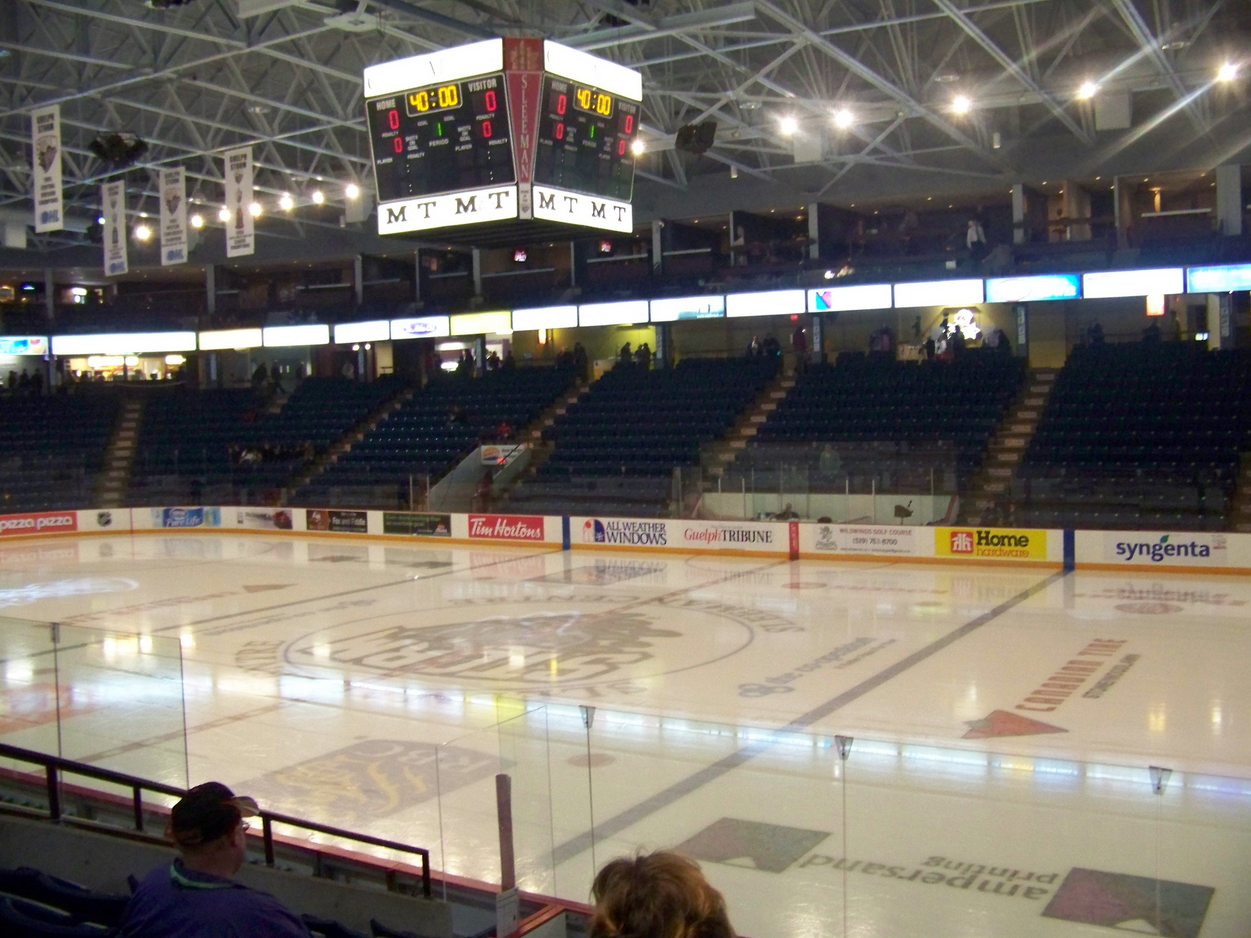 Evans also explained that it was about flexibility. Sleeman Centre manager Ryan Giles has had to turn down a couple of different opportunities in the last eight months because of the existing contracts, including a film, some trade shows, and a cheerleading event. She added that there are booking opportunities in the form of one-offs or limited time bookings, but giving out a season pass makes the mission to monetize the Sleeman Centre harder.
There were some questions about what happens next, once the SECC opens how will the demand for ice-time change? Evans explained that the City is still relying on the needs assessment done in advance of approving the SECC, which said that Guelph will need one more ice pad by 2033 but there’s presently nothing in the 10-year capital plan, and Clack-Bush said that it’s more likely that any future capital is going to go to the upkeep of the aging ice pads. Staff will be undertaking a follow-up inquiry about ice-time and capacity once the SECC is open.
In summation, Clack-Bush said that Guelph is not the only municipality that’s struggling with not having enough ice, but she doesn’t want to lose track that they’re adding ice, which is a good news story. In her comments, Downer said that when the Sleeman Centre opened it was intended to be an event venue and we haven’t been able to exploit that to its fullest. She added that for years councils have been looking for ways to better utilize Sleeman, and one of the issues has been the delays over the SECC, which is a reminder that delays in starting projects can cost the city in many different ways.
Committee unanimously approved granting authority to the DCAO to negotiate all Sleeman Centre rates and fees, and to apply a service charge of $2-$3 on tickets that will be applied to the capital reserve fund. Goller and Councillor Leanne Caron moved to refer a decision on no longer applying the youth facility discount, but it failed by a slim 5-6. Council ended up approving it outright 7-4.
Of course, everything will come back to the regular meeting at the end of the month for one final vote.
Click here to see the complete recap of the meeting.
 Guelph Politico