
There were back-to-back meetings at Guelph City Council this week, and the topic at hand was money. At Committee of the Whole, council had to deal with their own money, or at least the money that the councillors in the next couple will be paid as remuneration came up for debate. Then, at the other meeting, the 2026 budget process came to a close with the seven shared services and local boards. Let’s dig into the recap!
Committee of the Whole Meeting – February 3, 2026
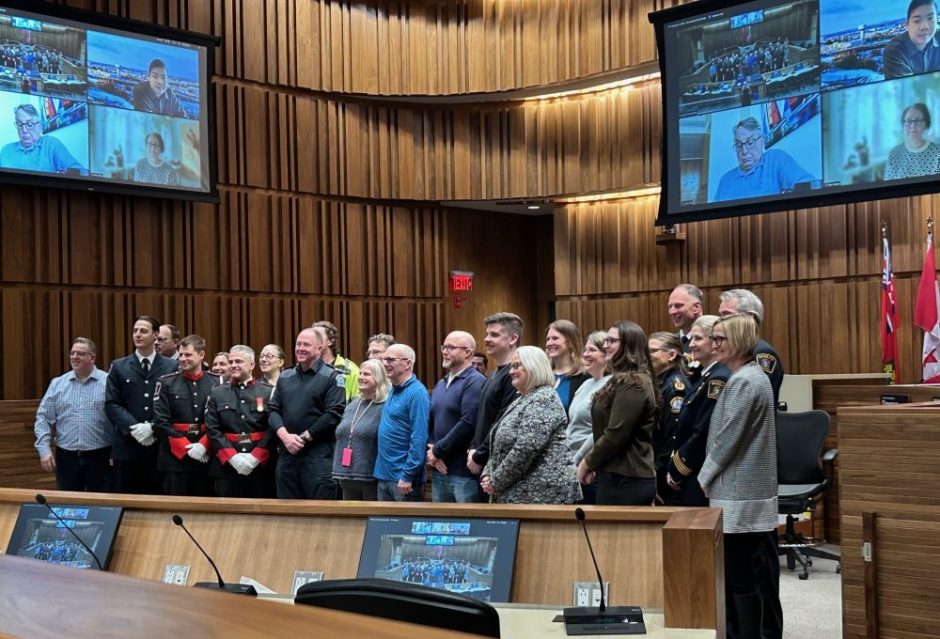
A big week for council business started with the Committee of the Whole meeting, and it began, following the monthly staff recognitions, with the annual objectives of the Chief Administrative Officer. Tara Baker laid out for the public (she had already laid it out in-camera for council) her priorities for 2026 including the successful completion of the 2026 election, turning affordable housing policy into deliverables, and kicking off downtown infrastructure revitalization.
In committee business, they heard first from internal auditor GM Robert Jelacic whose own work plan for 2026 includes a review of winter road maintenance. Mayor Cam Guthrie, who’s been reportedly eager to see this item on the agenda, asked if there was a way that operations staff could work in tandem with the audit; while the auditors looked at the quality of the current service, could operations look at changes and improvements to service delivery? Jelacic said that makes sense, but DCAO Colleen Clack-Bush warned that staff capacity was already being used to work on the renoviction bylaw so it wouldn’t be an immediate project.
Committee voted to approve the internal audit work plan and then voted in favour of an additional motion from Guthrie directing staff to investigate and report back about winter control and winter maintenance levels, including additional services, but didn’t give them a timeline to bring that back to council.
Next, council tackled a matter involving their own paycheques, or rather the paycheques of the next council. Staff were recommending that for the 2026-2030 term of council that the mayor should make $187,067 while each councillor should get $70,218. There was one delegate who said that he had issues with how much council salaries have increased over the last few terms and insinuated that it’s an arms raise where Guelph raises council pay to match comparitors who then increase their own councillors pay in reaction.
 Speaking of our council, there was a lot of handwringing about the difficult position they were put in here, some missives about not going forward with a community committee to make this decision, and some reflections about how much the job has changed in the last term. Councillor Rodrigo Goller took a victory lap about how council might have missed the boat in 2021 when they failed to approve the ward boundary and council composition review recommendation of eight full-time councillors for eight wards while Councillor Cathy Downer discussed again that the Municipal Act doesn’t define councillors as either a full-time or a part-time job.
Councillor Linda Busuttil asked to separate the two recommendations believing that the mayor’s pay deserved increase due to the more complex challenges and powers the position’s demanded, though she said explicitly that she has no plan to run for mayor herself. Still, council could not agree with even that much and voted down the staff recommendations, 4-9 for the mayor’s pay and 5-8 for council.
Goller then put forward a motion to keep compensation for next term the same as this one aside from the cost-of-living increase as outlined in the City’s Non-Union Municipal Employee Policy. Many councillors felt that given current economic conditions it was incumbent on them to “hold the line” when it comes to not giving themselves (or the ones replacing them) a big raise, while others wondered if the pay should be commensurate with the responsibility that they managed. Ultimately, Goller’s motion was approved 8-5, while a recommendation from Councillor Erin Caton directing the city clerk to do another ward boundary and council composition review, including a review of pay and benefits, in 2028 was approved unanimously.
After a break, committee looked at the Water and Wastewater Servicing Allocation Policy and Bylaw, which was perhaps most notable for the long-awaited “use-it-or-lose-it” provision for the allocation of water resources, meaning that developers will be given a set time to get shovels in the ground after approval or else lose the water capacity reserved for that project to others who are actually building. Under the policy there are informal and formal checks where the City holds the capacity for up to 48 months while the developer seeks the necessary approvals, but extensions can still be sought.
GM of Planning and Building Services Krista Walkey said that the policy was customer focused and that staff wanted to send the message that the City of Guelph is open for business even while we protect our water sources. Council’s going to get more information about that capacity in the next couple of months, but staff seemed confident that capital infrastructure planning will keep pace with the rate of development. The main point is to finally get some of these thousands of approved units built, some of which, apparently, go back nearly 40 years since the block plan was approved. Committee approved the recommendations.
Lastly, there was the commencement of the City-Wide Parking Strategy with a discussion of the terms of reference. The City’s never done a full review of on-street parking needs apparently, but with all the planning changes in the last 18 months, especially in the attempted creation of more gentle density, there are new pressures that requires the City to take stock of the “parking ecosystem”. The review will look at the financial model for managing parking, the provision of equitable access, and what other studies are needed for parking planning and management in the future. Consultation work about the terms had already been done with some members of council so there wasn’t much extra ground to cover, but there was a lot of interest in seeing what the results of this strategy will be. Committee approved the terms, so stay tuned for who you can weigh in some time later this spring.
Click here to see the complete recap of the meeting.
Budget Meeting of Council – February 4, 2026
On Wednesday morning, council met to handle one last budget matter before the 2026 confirmation process was well and truly finished, and that’s the budgets for the seven organizations under the local boards and shared services category.
 For the most part, this was a conversation about three services: The Guelph Police Service, the Guelph Public Library and social services administered through Wellington County. Shanna O’Dwyer, General Manager of Finance and City Treasurer began the meeting by pointing out that in 2019, the Guelph budget was split 66/33 between the City and the LBSS, but for 2026 that ratio is now 64/36. (More on that shortly.)
Chief Gord Cobey hit the usual highlights about the necessary expansion of police to meet the needs and challenges of the growing community and how the initiatives have reversed Guelph’s back slide down the crime severity index. In terms of new business, Cobey pointed out that provincial direction to increase security in Guelph courts and to reinitiate the school resource officers has put added fiscal pressure on Guelph Police that was relieved, this year anyway, by reserves. Cobey noted that they don’t have the resources, or the personnel, to put an officer in every school, but they were looking for synergies with neighbourhood patrols.
Next was the Guelph Public Library, who’s board shaved down their requested increase by $600,000 at January’s meeting. Library CEO Dan Atkins said that they accomplished this by delaying hires for the new main library, but noted that for the 16 per cent increase over the 2025 budget Guelph gets $7 back in economic impact for every dollar spent, plus they’re giving 59 per cent of people technological access they might not have been able to get otherwise. If there was an area in this budget where council might have felt compelled to get the pencils out, it was the Library, but no one looked to make any cuts.
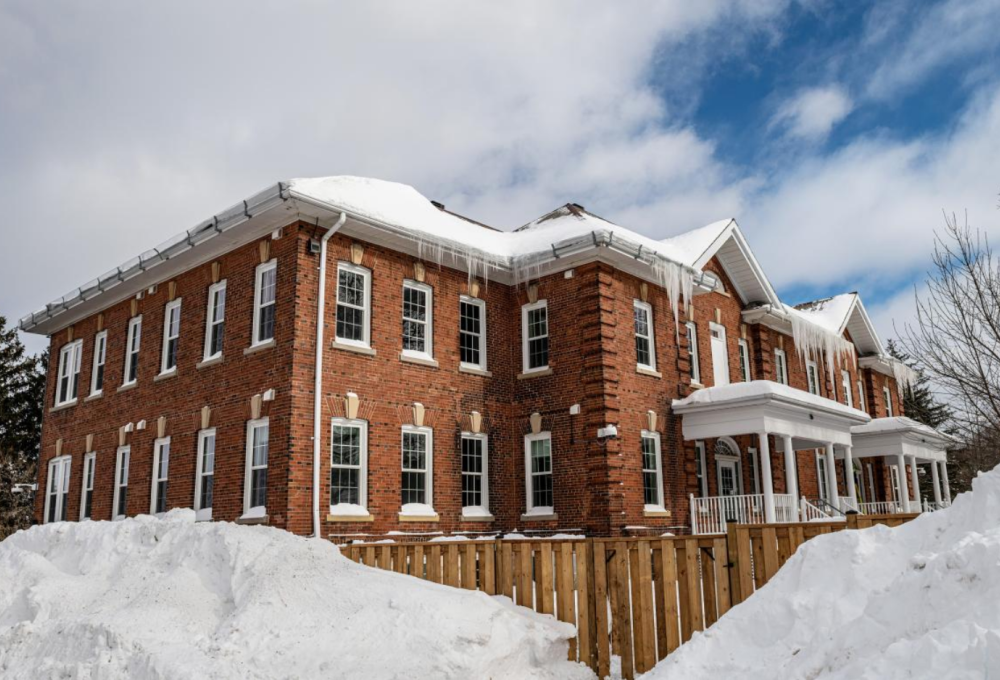 That just left social services. Social Services Administrator Luisa Artuso and County treasurer Shauna Calder walked council through childcare, Ontario Works, and housing, but the biggest impact on the bottom line was that last one. They noted that 65 per cent of the budget for emergency response to homelessness and 70 per cent of the funding for permanent housing solutions comes from the municipalities, and for 2026 those costs come in at $55.4 million. This includes an approved increase to the number of households receiving rent supplement support every month and increased costs to the winter response plan.
Artuso said that low-income working families that used to be able to make ends meet no longer can, and that is what’s driving the new demand for service. They’re working with community partners on things like food insecurity, and while this budget “holds the line”, they need more support from the Ontario government if they’re to really turn the trend around. In the meantime, the City of Guelph gets hit with an 18.5 per cent increase over 2025 funding levels and 16.4 per cent increase in the County.
With no further questions, and no further motions, council approved the LBSS budgets. The 4.4 per cent for the proverbial group of seven, plus the 3.36 per cent approved for the City’s portion and the 0.11 per cent for the hospital levy brings the total levy increase to 7.87 per cent for 2026; that’s an annual increase of $401.62 based on the 2025 median residential property assessment for a single detached home based on 2025 property tax policy.
Before wrapping, the changing ratio “Although it is concerning to me, and I’m sure it’s concerning to all of us, it’s important to remember where these pressures are coming from, and I’ll be straightforward, it’s the provincial government mostly downloading or underfunding in key areas,” said Mayor Cam Guthrie in his closing statement.
“Do we like increased property taxes, like what we’re experiencing this year to accommodate these outside boards? Maybe not, but the alternatives, nobody would like those either,” he added.
For the record, The Elliott Community, the Downtown Guelph Business Association and the Grand River Conservation Authority asked for a nil increase in 2026 while Wellington-Dufferin-Guelph Public Health asked for 0.01 per cent more.
Click here to see the complete recap of the meeting.
The next meeting is planning meeting of council on Tuesday February 10 at 4 pm. You can see the agendas on the City’s website here.
 Guelph Politico