
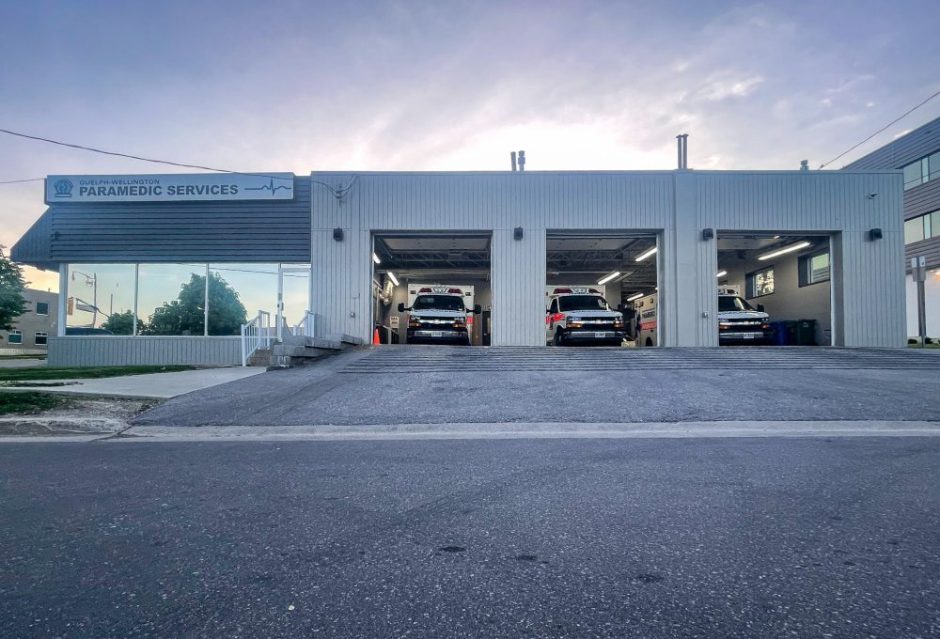
To start February (at least in terms of city council business), there was a consideration of the fairly unsexy but important business of the internal audit, including future value-for-money audits. But in the realm of the sexy, there was a discussion about the future needs of the Guelph Wellington Paramedic Service in terms of station locations and the constructions of those stations. Let’s dive into the recap!
Committee of the Whole Meeting – February 4, 2025
This month’s Committee of the Whole started late. Council went overtime in-camera due to discussions about corporate cyber security and negotiations with the Guelph Storm. Nothing formal came out of those discussions in terms of motions.
After the staff recognitions, committee quickly approved the new administrative penalty system for parking infractions, and then dug into a pair of reports from the internal auditor, Robert Jelacic. The work plan for the next few years was presented, and the only questions that committee had was learning how they could direct their own input for future value-for-money audits and when they can expect results for the one two that are currently underway.
On the Enterprise Risk Management Framework and Policy overview, Jelacic said the intent was to promote risk-informed decision making and then integrate that into all departments at city hall as they’re making decisions. It’s not that staff don’t do this already, but this is one of those things that Jelacic is aiming to formalize with a policy that standardizes all that work and establishes a universal set of expectations, as well as the roles and responsibilities of everyone from staff to the CAO to council. The goal is complete the integration over the next three years.
Why so long? Because internal audit is a two-person team and there’s only so much they can do on a job this big. Naturally, there was a request from Mayor Cam Guthrie to have Jelacic put some numbers to those extra resources to see how fast council can speed up the integration. Other committee queries were around transparency, which is tricky because some elements in discussing risk management means talking about things that are confidential, but CAO Tara Baker said that they could try and a find a middle ground. There were also some warnings about getting bogged down about risk on any one issue or file because this is more about the big picture than focusing on any one project or department.
The last item at this meeting was a report to council from last fall, the Update to the Optimal Resource Deployment of Paramedic Services, aka: Where will be put future paramedic stations and how much will it cost?
GWPS Chief Stephen Dewar discussed the 2024 update to the facility needs assessment, and while many of the current stations are in good locations, most of the buildings are not made-to-order, meaning that they don’t have the capacity to fit the needs of paramedics like their own standalone shower facilities or private quiet spaces for staff experiencing a traumatic episode. They will also need the space to accommodate 40 new staff members over the next decade, at least if GWPS doesn’t want to lose ground in response times.
The service is looking at building 10 new stations over the next 10 years, and that includes two in Guelph. The challenges are two-fold, finding the right location for a station and the cost. Making a building to the Post-Disaster Building Standard – meaning that it can withstand an earthquake or other national disaster – costs about $4.7 million each, and that’s before the land purchase. Presently, staff members at the City of Guelph and the County of Wellington are looking at how best to finance new buildings through one of two options, either the City builds them and owns them, or the County builds them and owns them and the City leases them back.
So it’s a money issue. While the Ministry of Health does pay 50 per cent of the costs for paramedic services, it does take a year for that to kick in, but even in year two that leaves the City and the County splitting the remaining 50 per cent 30/20. Guthrie asked about economies of scale, like matching new paramedic stations with other municipal building projects, but GM of Facilities and Energy Management Antti Vilkko said that the real economy of scale here is designing one station and then building it 10 times. Guthrie then pivoted to suggesting that staff should look at having one contractor build two or three stations at a time as a way to save money.
In any event, staff said the intent was to put this on council’s radar because there will be budget considerations they’ll have to think about as we get to the budget confirmation process this fall.
Click here to see the complete recap of the meeting.
The next meet of city council is the planning meeting on Tuesday February 5 at 4 pm. See the Politico preview here.
Photo courtesy of Gar FitzGerald/X.
 Guelph Politico