

Two meetings at council this week; one was easy and the other was somewhat harder. The easy one was the planning meetings, some straightforward applications and designations, but the hard one had to do with the budget. The added workshop meeting about finding options to reduce the budget was predictably difficult, but there’s still a few more days until a final decision has to be made. For now, here’s the recap of this week’s meetings…
Planning Meeting of City Council – November 21
It was a pretty straightforward planning meeting this month with the swift approval of two heritage designations, and some relatively straightforward applications that might have had one or two complications.
The first application heard was 151 Bristol Street, which looked to build a configuration of 12 new units on this one plot. The planner for the site noted that if the 2023 comprehensive zoning bylaw were in effect, then this would have never had to come to council to begin with, but having said that there were still some concerns about potential flooding, and that the design was too unrealistic for the shape of the property, which still needs room for parking, waste bins and greenspace.
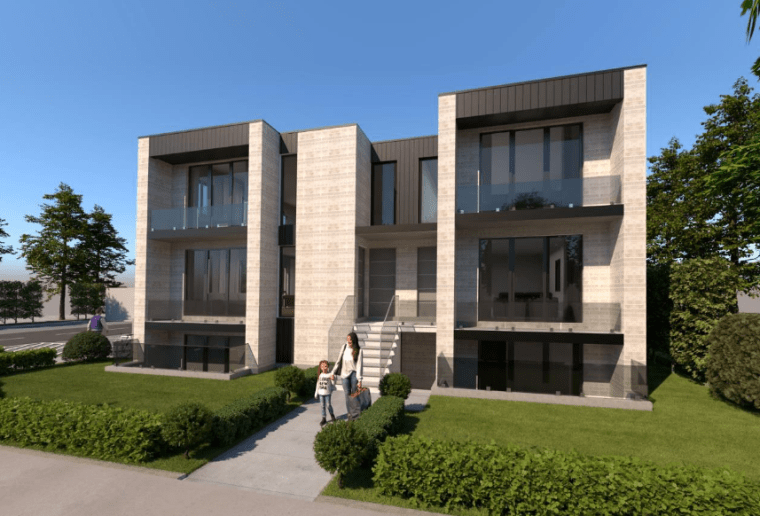 The second application was for a 10-unit apartment at 14 Stevenson Street North. Most of those units are going to one or two bedrooms, which are the kind of units that the city could really use, but the emphasis of the debate was around something that the planner can’t control, the Metrolinx tracks that run south of the site. Metrolinx demands a crash wall, and they are very prescriptive about what that entails: The wall must be 45 centimetres thick and the only thing they can put on it is ant-graffiti paint. Individuality is not allowed.
There were two community delegates, one was curious about the standards he needed to meet to build a tiny home in his backyard, which is also next to that stretch of the Metrolinx tracks, and another from a man who lives nearby and doesn’t want to live in a “concrete jungle”. Despite that, council seemed mostly bullish on the project despite concerns about the effects of train traffic and the potential loss of trees on the site.
Both applications were received by council for further consultation and will return to in the future for final approval.
Click here to see the complete recap of the meeting.
Budget Meeting of City Council – November 22
It’s uncertain if anything was settled, or if any budget savings were found, but it was a very busy budget workshop meeting of council, the last budget meeting before D (Decision) Day on November 29.
Getting the meeting started in front of gallery full of staff from various departments, plus Guelph Police Chief Gord Cobey and Guelph Library CEO Steve Kraft, Mayor Cam Guthrie said the goal was to do a deeper dive on the budget and discuss options for reducing the budget. The options were separated into several different “buckets”, and a facilitator was used to take council through each of those “buckets”.
The first “bucket” tackled was around the local boards and services. To the library, Kraft was asked about the five new staff members, why were they important? Could they be phased in over a couple of years? To the police, Cobey was asked about public input on the budget and what would happen if council decided to vote against the increases approved by the police board. Although CAO Scott Stewart began the meeting saying that the discussion wasn’t meant to be personal, Cobey said that the budget ask from police was personal because it’s the bare minimum that the service needs in order to face a multitude of challenges.
 “Bucket” #2 was new operating expenses. City Clerk Stephen O’Brien had to defend three new positions for his side of the building, but most of the questions were saved for Guelph Transit staff. Council looked at phasing in electrification and whether the City had the capacity for additional EV buses that are scheduled to be purchased. There was also some question about whether or not council could defer active transportation projects and using those savings to fund transit.
Councillor Dan Gibson raised a procedural matter. There’s $10.9 million in salary increases dedicated to expansions and enhancements of service, but what if they asked staff to take off one per cent, and lose $3 million in new salaries? Stewart said that was a direction staff could be given, but he reminded council that all actions have consequences. Gibson also suggested that council could take a wait and see approach to budget increases; inflation is coming down and the Ontario government might still come through with those elusive “making us whole” funds.
Transit electrification came up again in the 100 per cent Renewable “bucket”, specifically in relation to the cost of the EV buses. Indeed, it was hard to find savings in this “bucket” because so many projects have funding from multiple sources. The new operations facility also came up in conversation, but there’s going to be a new new plan for that project sometime in 2024.
As for slowing the pace of growth, Gibson noted that the operations side of the budget was growing at about six per cent per year while the capital side has only been growing by two to three per cent. Guthrie noted that although City staff had deferred $690 million in capital projects it doesn’t quite seem to have much of an impact on the tax levy rate. GM of Finance Tara Baker said that was understandable because much of the capital budget is funded through DCs and even though so many items were deferred, there’s still new capital projects proceeding over the next four years.
It was around this point that we learned that the City collects 4,000 tonnes of leaves every fall, and that cutting collection was not going to be a windfall in tax savings ($131,000 per year). Council also looked at maybe if we’re too quick with playground renewals, refreshing them every 18 or 20 years given that some municipalities still have jungle gyms from the 1970s.
All that was left was intentions, and in no particular order councillors said that they were looking at phasing in some positions over two or three years, cutting the bicentennial planning budget, creating growth targets for the operations budget, deferring the Emma-to-Earl pedestrian bridge, starting a community committee for the G2G Trail and the bicentennial, and covering this year’s hospital levy with reserves.
There one more town hall tonight in Ward 4 at the West End Recreation Centre, and the budget board will be open for new questions until Sunday before council comes together for the final vote on Wednesday.
Click here to see the complete recap of the meeting.
The next meeting of city council will be the regular meeting on Tuesday November 28 at 6:30 pm. You can see the Politico preview here.
 Guelph Politico