

It was a very busy 30 hours at council this week with three meetings. First up, there was Committee of the Whole with one item main item about governance. Next, a special meeting of council that determined the fate of one development, it was a big development but it was still just about the one. And then, speaking of big items, we dug into the 2024-2027 multiyear budget and it’s big tax levy increase. Here’s the recap…
Committee of the Whole Meeting – November 6
The debate at this month’s Committee of the Whole meeting mostly came down to one item, “Redesigning Advisory Committees of Council – A Governance Framework.” Essentially, it involves the reorganization and realignment of the committees that contribute to the work of the council, such as the Committee of Adjustment, Heritage Guelph, and the Public Art Advisory Committee.
The clerks’ office put the report together with the help of Guelph Labs at the University of Guelph and the input of senior staff, councillors, current members of ACOCs and members of the public. The team revealed a framework that included seven commitments for each of the committees plus a list of six critical features including effective communication, revised terms of reference, new recruitment efforts to encourage diversity and increased resourcing. This was the first phase of the report, the second and final phase scheduled to come back to council this time next year.
Deputy Clerk Dylan McMahon explained that the team will dedicate the next year to applying the new framework to all the ACOCs as if they were brand new. This means some committees may experience changes in scope, acquire new or additional responsibilities, or possibly amalgamate with other committees. One thing is certain; it appears to be everyone’s preference that the ACOCs remain free from council participation, with the exception of Heritage Guelph, where Councillor Cathy Downer currently serves as an ex officio member.
There was only one real point of controversy, which revolved around the second of the seven commitments: “ACOCs should shape the City’s strategic goals.” Some members of the committee felt that this might grant the ACOCs too much influence on policy, as it’s ultimately up to the council to strike the best balance for all the competing interests seeking formal attention. Although no formal amendment was tabled, one is currently being workshopped for the regular meeting at the end of the month.
Click here to see the complete recap of the meeting.
Special Meeting of City Council – November 6
There was one item on the agenda, and it was a massive development on Victoria Road South. The fourth and final revision of this plan has 486 units. The northern part is comprised of 24 cluster townhouse units, 75 stacked back-to-back townhouse units while the southern portion will have two, 10-storey buildings containing 303 apartment units and 84 stacked back-to-back townhouse units.
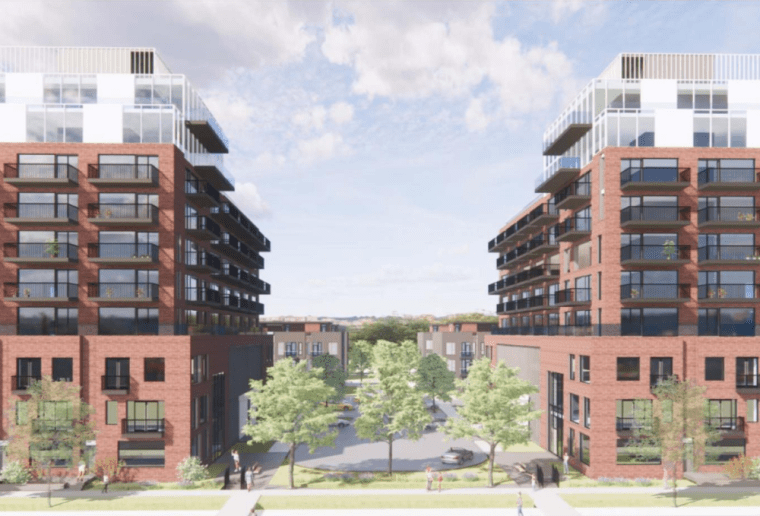
Staff recommended that council approve the development, which was contrary to what most of the delegates wanted. Five people took turns explaining why they didn’t like the project: It didn’t match the rural/urban interface, it was too big at six storeys and now it’s even bigger, there aren’t enough amenities in the area, and there’s too much additional traffic. The only pro-vote among the delegates came from the developer and his planner.
Many of the council’s questions to the developer concerned the number of EV chargers on site, specifically the lack of a prescribed number of chargers for the southern portion of the development. It was Councillor Phil Allt that hit on a key point about the nature of this application and whether council had a justification to vote against it: This was not an Official Plan Amendment. The developer could build something with this much density on the property as-of-right.
Turning to questions for staff, the point about amenities was answered by senior planner Lindsay Sulatycki who said that staff take into account future commercial development and not just what’s presently available. Concerns about the rural/urban interface were almost moot because the Town of Puslinch had nothing to say about the project. Traffic? Yes, that was going to be an issue and another signalized intersection was being considered for the area. A consensus was forming, and it was not in favour of the majority of delegates.
Allt’s point about as-of-right was acknowledged, and Councillor Cathy Downer noted that the area had been designated high density for a while, so more traffic was always anticipated. This project was compared to one at Paisley and Whitelaw, which was initially rejected by council nearly four years ago, and resulted in a showdown at the Ontario Land Tribunal that flipped the council recommendation. Mayor Cam Guthrie said that he didn’t want history repeating itself and told area residents to look at this as an opportunity to welcome new neighbours.
Council approved the project 10-2 with Councillor Leanne Caron being one of the no votes. Before the vote, she clarified that her decision did not imply she’s anti-housing or anti-development, she was just expressing her desire to build the best possible project. Caron then proposed a similar motion to one approved by the council a couple of weeks ago regarding the old Royal Brock site, asking staff to invite area residents to provide feedback during the site plan process, which received unanimous approval.
Click here to see the complete recap of the meeting.
Budget Meeting of City Council – November 7
Mayor Cam Guthrie started the budget presentation meeting by saying that council will need 13 heads to figure this out, and by “this” he means affordability. This budget presents the largest tax levy increase in one year that anyone’s ever seen, and council has to figure out how to get to something affordable and help the community. Oh, and they have to balance that with addressing community needs and maintaining service levels.
CAO Scott Stewart outlined the fundamentals, including the housing pledge and changes to fee collection. He emphasized that cities cannot run deficits (not that he was suggesting they should), and how the Province has placed “fiscal handcuffs” on the City. Guelph is taking action to allow growth at an accelerated pace, investing in pre-housing infrastructure, all while trying to keep costs in check.
Senior staff took turns reviewing each of the four sections of the strategic plan and what things have to be delayed or deferred in order to bring the tax levy down to 10.32 per cent for 2024. The presentation also split the budget into three different areas with various degrees of council control. Of the 10.32 per cent increased levy, the City only has complete control over half (4.97 per cent), while the rest is divided between the local board and shared service committee (1.98 per cent) and the Government of Ontario (3.37 per cent) for services and programs they should really be covering.
On the capital side, Treasurer Tara Baker explained that the goal is still to work towards a sustainable level of funding so that the City can stay on top of infrastructure renewal. That pace has been throttled back in the name of affordability, and the loss of Development Charges (DCs) due to new exemptions has created a bump around 2026 that the City needs to overcome before getting back on track. In terms of debt, the City will pass the S&P threshold of 30 per cent in 2027, but the amount will be still well within Guelph’s debt capacity.
After a break, council got into questions starting with the Police Services Board. The focus of those queries was on staffing with Chief Gord Cobey repeating the justifications discussed at the October 5 Police Board. New officers will fill gaps created by an increasing number of personnel on medical leave, while also allowing the City to increase the number of police officers per capita. Cobey mentioned that this request was informed by their own third-party service review, and the pressure on a small number of police officers dealing with more and more traumatic calls.
Guelph Public Library CEO Steve Kraft faced questions about the big expansion of the service approved by his board in September, which was mostly driven by new hires for the new main library. Kraft explained that current staff is overextended, and post-COVID changes have forced managers to focus more on day-to-day concerns versus preparing for changes at the new building. Kraft was asked for further documentation regarding the review of library operations for cost savings and the increased costs of additional services from the business case in 2018.
Wellington County staff were asked about spending increases, and Social Services Administrator Luisa Artuso explained that these costs are due to the growing number of people in need. There’s been between 15 and 20 evenings this fall where they had to turn people away from shelters, and the number of families seeking shelter has also increased from 10 to 17 in the last month alone. Identifying how the City and the County are compensating for a lack of funding from the Province will be part of an upcoming housing symposium, and the County has extended the contract to use the Holiday Inn Express as a shelter.
When it came to questions for City staff, councillors expressed concerns about evaluating provincial impacts on the budget beyond housing, the current state of the impact from Bill 23, and whether there is sufficient time for staff to implement new housing policies properly. There were also concerns about accommodating growth as housing starts slow down due to external economic factors, and whether staff could provide a more detailed breakdown of the budget increase if the City proceeds with all planned projects as originally scheduled.
There were some questions too about specific projects like what’s affected by downgrades to the downtown infrastructure renewal project, which in this case seems to involve less extravagant streetscaping. There was also some concern about the keeping York Road a two-lane road instead of the originally proposed four-lane improvements. DCAO Jayne Holmes said it was a tough call, but it was matter of proceeding with a reduced road or stalling the project. For example, with two lanes, the City doesn’t need to move Clythe Creek and that was one of the biggest line items on the project.
Eventually, Councillor Rodrigo Goller put a motion on the floor asking for staff to look for an additional two per cent that can be shaved off the City budget, along with a request to local boards to find another two per cent saving in their budgets.
Some councillors said finding a further two per cent was their job, while others didn’t like the one-week deadline or coming back to council with further changes ahead of budget delegation night next Wednesday. Other councillors said that perhaps it was a worthy initiative so that they can have more information about the risks and rewards of choosing where to cut, while others noted that most boards didn’t ask for major increases.
With so many disparate thoughts on the matter, Guthrie asked Goller if he might pull the motion and table something that was suggested by Stewart: A special meeting of council on November 22 to workshop various changes to the budget in a more informal setting. After a five-minute break, Goller came back with a motion to set the date of Wednesday November 22 for that workshop.
Guthrie wrapped up the nearly seven-hour meeting by saying that council has a lot of work ahead of them.
Click here to see the complete recap of the meeting.
 Guelph Politico