
It’s been a busy couple of months so far in 2025 for Heritage Guelph, and March is no exception. In fact, this agenda is stacked with stuff that they didn’t have the time to cover at last month’s meeting! Among those items are the future of a major piece of infrastructure downtown and the potential proactive designation of several buildings at the U of G, but in new business the committee will take a long look at Paisley Street.
NOTE #1: If you would like to delegate to one of the items at the meeting, or to access an alternative meeting format, get in touch with Jack Mallon, Heritage Planner, by email at jack.mallon [at] guelph.ca or by calling (519) 837-5616, extension 3872. Deadline is February 28 at noon.
NOTE #2: This meeting will take place in-person at City Hall and virtually on Cisco Webex. You can find the link on the agenda page for this meeting on the City’s website.
328 Victoria Road South: Draft Council Designation Report – This location is the G. F. Frost Research and Information Centre, or what’s more conventionally known as the Turfgrass Institute. This is an important designation because it’s within the area of the Guelph Innovation District that’s owned by Fusion Homes and being primed for development. This is also interesting because it’s a relatively modern building, though it’s a notable example of the work by accomplished Guelph architect Karl Briestensky. According to heritage staff, the building meets five of the nine criteria to designate under Ontario Regulation 9/06. (This item was deferred from the February meeting.)
136 Glasgow Street North: Draft Council Designation Report – According to the staff report, this is “one of the City of Guelph’s most impressive Italianate redbrick residences.” Built in the late-19th century, this was the home of Thomas Gowdy, a successful business man and Mayor of Guelph, and as it stands today it meeting eight out of nine criteria for designation.
52 Paisley Street: Draft Council Designation Report – We begin a trip down Paisley Street with a stop at the top of the hill leading to and from downtown. This flat looking building, which is actually a row house, has been around since the latter part of the 19th century and has almost always been some kind of rental housing. The report notes that this is an example of both Georgian and vernacular styles, and how it’s “broadly symmetrical” with the doors and windows equally spaced apart. It meets three out of nine criteria for designation.
54 Paisley Street: Draft Council Designation Report – This is the middle unit of the Paisley Street row house.
56 Paisley Street: Draft Council Designation Report – This is the end unit of the Paisley Street row house.
15 and 17 Paisley Street: Draft Council Designation Report – On the north side of Paisley is this yellow-tinted building which has hosted an number of commercial establishments over the decades, including W. G. Mitchell who capitalised on a new transportation craze in the last-19th century with a bike shop at this location. Architecturally, it’s a “Georgian and late-Italianate” style with a “side gable roof form with a medium pitched roof; tall, narrow windows and an ornate cornice between the first and second floor.” It meets four of the nine criteria for designation.
9 and 13 Paisley Street: Draft Council Designation Report – These units are part of the same row as 15-17 Paisley, so they have a shared history. This also meets four of the nine criteria for designation.
Macdonell and Allan Structures Municipal Class Environmental Assessment: Allan’s Bridge Preferred Solution – Although there’s a lot of heritage value with this structure, it may be the subject of some radical change. There are four different pieces being considered: The Macdonell Street bridge, the Allan Bridge, the dam sluiceway and spillway, and the not-yet-constructed Ward-to-Downtown pedestrian bridge. In looking at all the potential options, staff are recommending the removal of the Allan Bridge, which is apparently too far gone to be repaired, but with its absence it will be easier to establish active transportation connections and to improve traffic flow. Now this is the not the end of the story as the City will start to undertake a community engagement process about all of this, starting with the feedback of Heritage Guelph. (This item was deferred from the February meeting.)
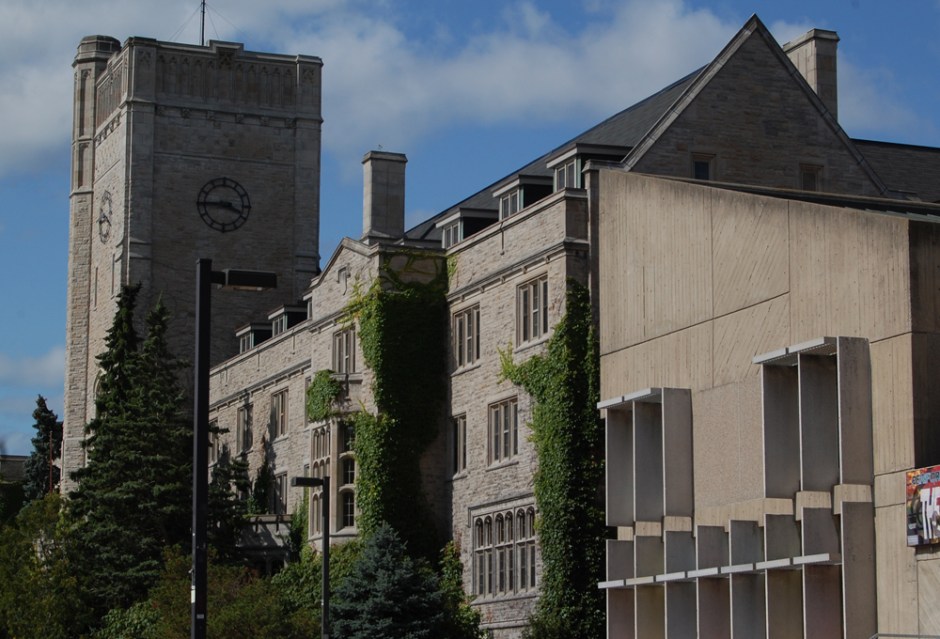
Evaluation of campus properties for Part IV designation – In the wake of the conservatory demolition deconstruction on the University of Guelph campus, committee member Alexandre Krucker is seeking Heritage Guelph’s approval to initiate part IV designations for several buildings on campus including the MacLachlan Building, Day Hall, the Arboretum Centre, War Memorial Hall and the McLaughlin Library. (This item was deferred from the February meeting.)
 Guelph Politico