

This month’s planning meeting had more than a few surprises, including a cliffhanger! The stacked agenda covered an important heritage designation, a new plan for affordable housing, the approval of new housing geared to students, and the beginning of the final phase of the Heritage District study for the Ontario Reformatory Lands. Easy-peasy, right? Don’t be so sure until you’ve read till the end of the recap!
Planning Meeting of Council – November 13, 2024
After getting information and giving staff direction on matters concerning the Public Space Use Bylaw in closed session, council passed the consent agenda and then starting on the rest of the reports working backwards.
The last report went first, the matter of designating 37 Christine Lane, which is the old conservatory next to the University Centre on the University of Guelph campus. The building meets eight out of the possible nine criteria for designation under the Heritage Act, but the U of G Board of Governors recently voted to demolish it. Apparently, there were some discussions between council, staff and the U of G in emails about maybe preserving parts of the conservatory, but the staff presentation focused on the designation, which both heritage planner Jack Mallon and Heritage Guelph member David Cameletti said were in line with the provincial requirements.
Acting U of G President Rene Van Acker delegated and explained that essentially the conservatory is too far gone to save, but they do have a plan to incorporate some elements into a new commemorative garden, perhaps even with a design contest for the landscape architecture students. When pressed, Van Acker said that the price tag for repairs is in the neighbourhood of $5 million, and if the U of G is going to spend that much money, it’s going to be on something big like a student residence.
Councillor Cathy Downer asked about limiting the number of heritage attributes mentioned in the designation to just the steel structure, which, again was despite the fact that the conservatory met eight of the nine criteria for heritage protection under Ontario regulations. Council moved the designation, and then put Downer’s amendment on the floor to limit the heritage attributes to just those salvageable steel elements.
There was some back and forth about whether or not that means the U of G can proceed with a demolition, but GM of Planning and Building Services Krista Walkey only conceded that the steel frame will remain until its condition is evaluated for salvage. Councillor Dominique O’Rourke then made the situation even more opaque by moving to amend Downer’s recommendation to add the words “to the satisfaction of the University of Guelph.” The confusion stemmed from whether or not leaving a decision about saving the steel to the U of G contravened the motion to designation, and though it took a few minutes to figure it out, Mayor Cam Guthrie eventually decided that it did, which made the amendment contrary to the main motion’s intent.
The amended recommendation to designate (steel only version) passed with a bare bones 6-5 vote.
 Then council took a 20-minute break because the delegate for the next item on the agenda wasn’t available yet (?), so council went back to the top of the agenda, the public meeting for the Community Improvement Plan. This uses just over $5 million from the Housing Accelerator Funding to create new incentives and get new affordable housing units built, from potential conversions of office buildings to the construction of new additional dwelling units, or ADUs.
Delegates didn’t really want to talk about what the plan was offering, but rather what the plan wasn’t offering, specifically Tax Increment Financing or TIF. What’s a TIF? This is the definition from a City of Toronto report:
“In general, tax increment financing is a method of using future incremental property tax revenues generated by the redevelopment of a property to offset the upfront costs of redevelopment. In other words, as a property or area is redeveloped, the increase in the assessed value of the property raises the amount of taxes payable by that property. The difference between the taxes paid by the property prior to redevelopment and the taxes paid following redevelopment is referred to as the ‘tax increment.’”
As fate would have it, Councillor Rodrigo Goller had a motion ready to direct staff to look at a TIF program for non-profit housing projects through the Affordable Housing Strategy, and to also look at a no-interest deferral on permit fees for those same non-profit developers. After some wordsmithing, both of Goller’s recommendations were approved, and the report itself was received for information. The finished plan will come back to council for final approval in January.
Next, council moved to approve the second phase of the Alma, the private student residence developed on the site of the old Holiday Inn on Scottsdale. Staff were recommending approval, but the one delegate was from the developer Forum Asset Management.
Danya Gilbert drew attention to a letter she sent to council from the company’s lawyer asking council to defer a decision because it’s their opinion that this project is exempt from paying development fees under the student housing provision in Bill 185. They want to skip right to getting the building permit in order to build this much needed project (accommodating nearly 500 new units geared to students) faster.
When consulting with staff after the delegation, they were clear that the definition of “student residence” in this case only applies to residences being built on the campus proper, and though the U of G owns this land, the project is actually designated as “residential suite” because not all units have their own kitchen. Council seemed mostly unconvinced about the exemption argument, and O’Rourke remarked that it would be case of serious special treatment if they allowed this project to skip the normal processes. The plan was approved.
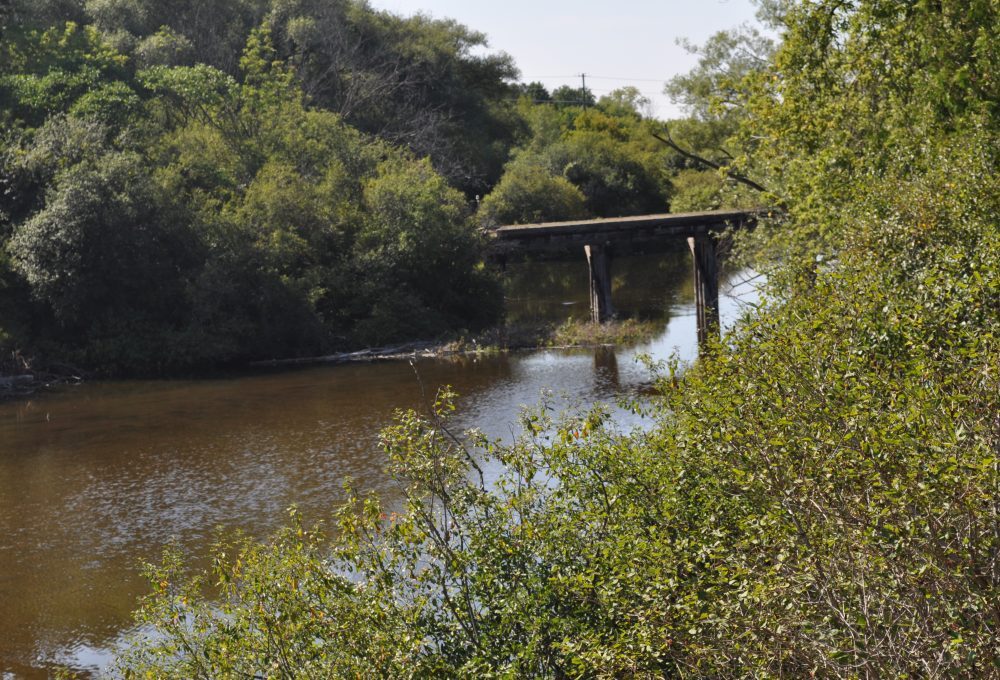 The last item was the draft plans and guidelines for the Ontario Reformatory Lands Heritage Conservation District. No final decision was being made on this one either, which was good because there was a lot of concern from the delegates who spoke to the matter.
Before that though, council passed a motion to go past 11 pm with time to spare. Representatives from the Yorklands Green Hub, Urban Park Guelph, and regular average residents pretty much unanimously spoke to their concern that the language was too passive about the protection of the property, and there was too much emphasis on future rezoning and reuse of some portions. There was also some concern about tying the HCD too closely Guelph Innovation District Secondary Plan, and depending on policy like the Private Tree Bylaw, which hasn’t even been completed yet, to inform unspoken part of the plan.
There was also some concern about the tight timeline for this meeting, that residents only had a week to absorb a nearly 100-page report (which had a number of formatting and spelling errors, we were told), and there was no indication that there would fulsome public engagement about it before the final version comes back to council for approval.
With the delegates done, council went in-camera for five minutes to consider some advice about the “proposed or pending acquisition or disposition of land by the municipality.” Direction was also given to staff though it was never said what that direction was.
The recommendation to receive the report was put on the floor, and the door was opened to council questions. There was follow-up on the potential for rezoning and the exploration of more public input, and a request to include Urban Park Guelph as a stakeholder group in any future engagement.
Council had barely gotten started when Guthrie asked for a motion to pause the Procedural Bylaw to go past midnight, and there was some uncertainty about that. Councillor Carly Klassen had already gone home and was appearing at this point via video and O’Rourke said that she wasn’t feel well, which is why she was appearing remotely. Councillor Phil Allt then asked the question: What happens then if they lose quorum?
It was clear at this point that council had run out of steam. Do they refer this to another meeting? They could, but it would mean starting this topic again from scratch, including delegates. Instead, a motion was put on the floor to recess this meeting until a future date. The motion was approved by another slim vote, 7-5, so the planning meeting was effectively paused until a latter, and still unknown, date. Also paused are two sets of follow-up motions, including one from Councillor Erin Caton that could see council endorse the National Urban Park proposal for the OR Lands.
Click here to see the complete recap of the meeting.
 Guelph Politico