
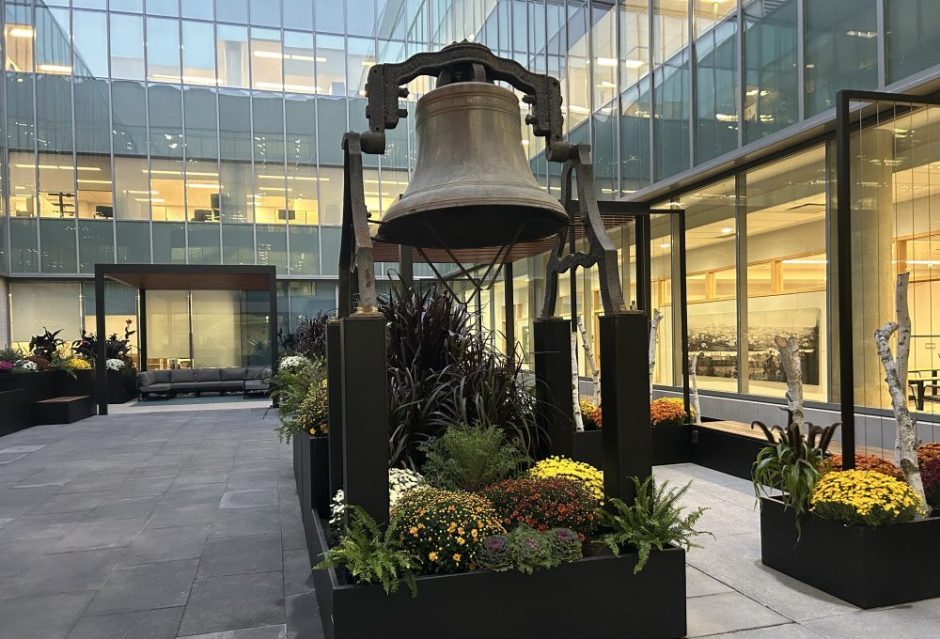
The October Committee of the Whole meeting was, in part, about a bell, and the bell tolled for more participation around Guelph’s cultural and recreation activities. There was also a real bell, the old city hall bell that now has a home in the courtyard of the present city hall (pictured above). A lot of plans and master plans came home for committee approval this month, and here’s how it all went down.
Committee of the Whole Meeting – October 3
Home from away, Mayor Cam Guthrie was back in the centre chair, at least for the beginning of the meeting. After a closed session, Guthrie announced that he and his colleagues had received information about the “Clair-Maltby Secondary Plan – Ontario Land Tribunal Update” and gave direction to staff in return.
Public Services Chair Cathy Downer then took over for the rest of the meeting, and swiftly took committee through the staff recognitions, an update to the Emergency Management Bylaw and an update to the Community Grant Policy.
The first big subject was the Public Art Policy Update, which was pretty straightforward because the changes to the policy were mostly in the realm of language and administration. Still, there were some questions about how public engagement is done around the initiation of public art projects, how public art is protected from vandalism and how the City works with community partners to develop public art.
Councillor Leanne Caron proposed her first amendment to make sure that the words “Community Engagement Framework” was in the policy. There was apparently some confusion on the part of staff about what exactly Caron wanted to see when it comes to the application of the framework to the policy, and while Caron was willing to work with staff, she still wanted a formal motion to make sure the City’s official means of engaging the public was recognized on the record.
And then we got to the bell.
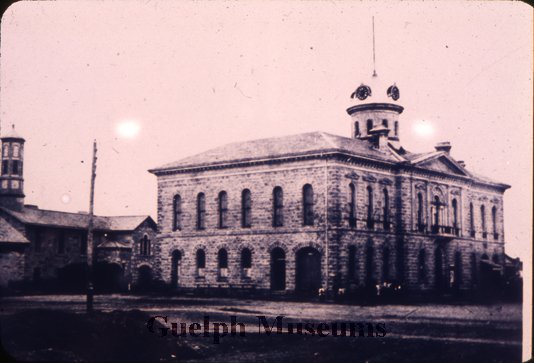
The bell in question was in the tower that used to sit atop the old city hall building. The bell and clock were removed in 1961 when the tower was demolished; the clock went into storage at a City facility on Municipal Street, and the bell was on display in Riverside Park for a while before it too was also put in storage. While the clock is still in mothballs (and pieces), the bell was since been re-homed in the courtyard at City Hall, which is the open area behind ServiceGuelph and the Marg MacKinnon meeting room.
Caron’s motion wanted to refer the potential relocation of the bell and the clock to staff in consultation with the Public Art and Guelph Museum advisory committees so that they could potentially be part of the bicentennial celebrations in less than four years. How is this public art? Caron said that these two items fall outside the definitions of what is “art” and what is “artifact”, and it was staff’s advice to bring this motion under the file.
Guthrie moved an amendment to the motion to strike mention of the bell saying that it’s current home in the courtyard was a done deal and that it’s in a “public enough area”. Caron noted that the courtyard was not exactly publicly accessible by most standards of the term, and when staff were asked about the decision to place the bell there, DCAO Jayne Holmes said that staff thought it was a great idea since it got the bell out of storage and its placement would protect it from vandalism. The bell was craned into the courtyard back in August and is one of a couple of heritage items on display there along with the circle from centre ice in the old Memorial Gardens, which is where city hall now stands.
Councillor Phil Allt, who seconded Caron’s motion, said that the courtyard may in fact be the best location for the bell, but making that decision should have been a public process. The conversation also leaned into bicentennial plans with questions about a guiding committee and when that will get started. General Manager of Culture and Recreation Danna Evans said that the committee won’t start until the multiyear budget is approved, and to that budget, DCAO Colleen Clack-Bush warned that it won’t be worth millions and millions of dollars.
The Guthrie amendment was approved by a vote of 10-3, and the amended motion was adopted unanimously.
The meeting moved on to a discussion of the Culture Plan 2030, which has been in the works since 2019 and delayed through the pandemic as the culture sector, especially public performance venues, were hit hard by lockdowns and restrictions. The plan is meant to deal with issues impacting the sector like affordable housing, affordable arts space, community vitality, economic prosperity, promotion, and expanding access to cultural events.
There were three delegates who all talked in favour of the plan, including former Ward 4 City Councillor Mike Salisbury who’s helping to shepherd a community art space proposal for the old Drill Hall. He said that the various arts and culture communities in Guelph are too siloed and there needs to be some more opportunities for them all to get together and share their experiences and challenges. The people presently on council talked about the need for placemaking and connectivity, and to make sure that small venues where art is made are highlighted as well as the big venues like River Run Centre.
The Cultural Plan was approved unanimously.
That left one last item, and it was the biggest one in terms of the size of the document, the refresh of the Parks and Recreation Master Plan. The centre piece of the plan are 97 recommendations (which can be found here starting on page 114) and cover a variety of directions from the creation and maintenance of recreation spaces to improvements, new programming and the creation of more accessibility and inclusion opportunities.
Like the Cultural Plan, the Parks and Rec Master Plan seemed like a fait accompli with members of the committee trying to find the various gaps. There’s presently no plan for dog parks, and there’s some concern that Bill 23 means it will be harder to make parkland targets, but the plan also looks at healthy options for food at rec centres, and how best to maximize space by making rooms multifunctional. Committee also had some concerns about how best to engage with the community to get a holistic picture of their needs, but staff assured members that they’ve learned some best practices from public engagement around replacing playground equipment.
Mostly though, there was praise for the work done by staff and the plan was approved unanimously. Aside from some requests for more information on a couple items, all the plans will be submitted as is to the end of the month meeting on October 24 for ratification.
Click here to see the complete recap of the meeting.
 Guelph Politico