
It’s going to be a full slate in this last Joint Social Services and Land Ambulance Committee Meeting before summer vacation! We will finally get a look inside one of the biggest operations to come out of last year’s Health and Housing Symposium, and we will also get a look into the affordable housing needs of Wellington County. Plus, there will be budget information, paramedic reports and planning for childcare. Let’s begin…
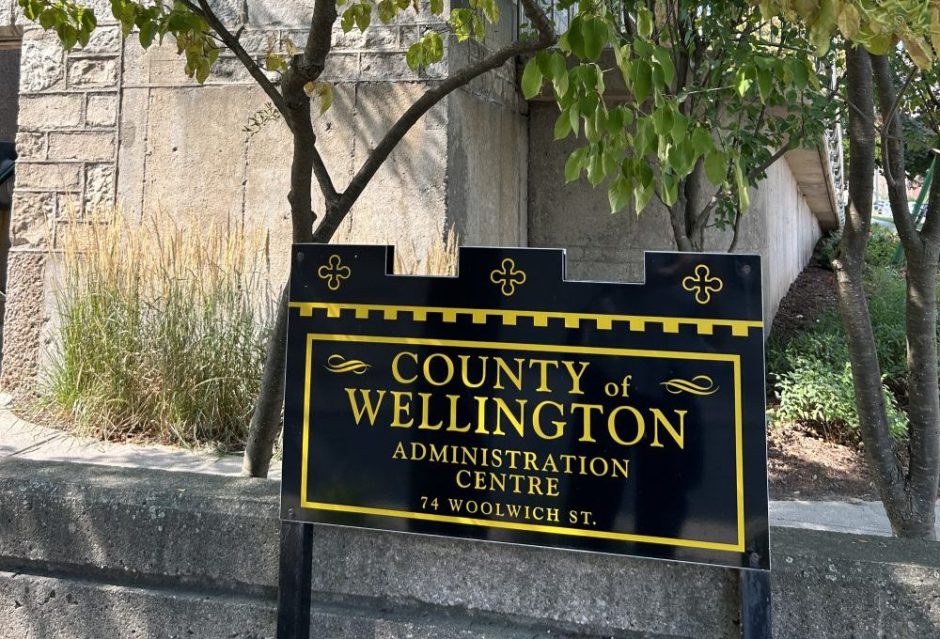
NOTE: This meeting takes place at 1 pm in the Guthrie Room at the Wellington County Administration Building on Woolwich Street.
Social Services Financial Statements and Variance Projections as of May 31, 2025 – As promised in the last meeting, we get this more fulsome breakdown of this year’ social services spending so far. Ontario Works is $800,000 over budget due to increased caseloads, but there’s no impact on the County’s levy because of that, while childcare is tracking under budget as the system transitions to a new funding model. Social housing is actually tracking mostly positive with more grant money than expected, and more rent revenue, but maintenance is tracking ahead because of all that snow. Staff says that there may be a positive variance at year’s end but there are still a number of uncertainties in the area of housing stability.
Preliminary Housing Services Needs Assessment for Wellington-Guelph Service System Area – This is an information report, and the intent is to “stimulate discussion, planning, further investigations and more in-depth inquiry into housing needs and solutions in Wellington-Guelph.” The report uses a variety of data points to paint a picture of housing needs in each municipality including the 2021 census, which points out that Guelph has a total population of 143,740, and the Canada Mortgage and Housing Corporation (CMHC) Rental Market Survey, which says that the vacancy rate in Guelph is 1.9 per cent, and though that’s an improvement over 2022 and 2023, it’s still below the threshold of three per cent indicating a healthy vacancy rate. What does this all tell us? “[T]here are an estimated 10,250 low and very low-income households that would need subsidized,” the report says. “Using the number of low and very low-income households as a proxy measure for need, we can estimate that there are enough units for only a fraction of households who need them (approximately 20 per cent). Moreover, we can use this information to estimate that there is a deficit of 8,202 units of affordable housing in Guelph.”
Growing Great Generations Planning Table Update – This goes beyond childcare, although the Children’s Early Years Division does play an important role in overseeing the work of “strengthening and building a coordinated system of services and supports for children, youth, and families in the Wellington-Guelph service delivery area.” Now in the middle of its three-year strategic plan, this report will review recent accomplishments and what they’re currently working on to implement the 13 actions and 37 activities.
Expansion of Wellington Place Child Care and Early Learning Centre in Aboyne – This project looks to add a new room that will accommodate 15 new toddler spaces in Centre Wellington. This will be funded through the New Canada-Ontario Early Learning and Child Care Infrastructure Funding, but the money has to be spent by the end of the year, which is why the County is concentrating on projects like this, which is just waiting for a committee, then council, vote to get going.
Wellington-Guelph Health and Housing Community Planning Table One-Year Update – Remember the Health and Housing Symposiums last year? This project was one of the things that came out of those events. Meeting on a monthly basis, and co-chaired by the Social Services Administrator and the Director of Transformation of the Guelph Wellington Ontario Health Team, the table has spent the last year setting up its administrative structure, action areas and the development of a community plan. A website will be launched in September and there will be a webinar in November.
Paramedic Services First Quarter 2025 Budget Variance Report – This first quarter report is anticipating a negative variance (read: deficit) for 2025, but it’s still to early to tell for sure. There will be more news on that in the fall. What’s driving the negative variance? Just about everything: increased leaves, increased supply costs, increase training costs, increased vehicle maintenance and building repairs, and even increased uniform costs.
Paramedic Service Response Performance 2024 and Performance Plan Recommendation for 2026 – Presented here for the first time (I believe these numbers have not come to Guelph council yet), are the performance numbers for last year, and for the most part paramedic services met or exceeded response times, but they did fall shot in Level 4 calls and Sudden Cardiac Arrest incidents. Broken down by city and county, the service has improved their response on Level 4s by three minutes to 6:12 in the city, and in the county it’s been increased by eight-and-a-half minutes to 9:38. The recommended compliance rate will remain unchanged for 2026.
Paramedic Facilities: County of Wellington Sites Update – If you remember March’s Committee of the Whole meeting this might be mostly old news, but this report does outline the issues facing each station in the county and in what order they need to be replaced starting with the station in Erin/Hillsburgh. The first four stations are expected to cost $18.8 million or $4.7 million each and there’s still the matter of who’s going to pay for them and how. City of Guelph staff are suggesting that they pursue the option where the County owns and builds the new stations and then leases them back to the City.
 Guelph Politico